Passive Income and Affiliate Marketing: Best Models, Systems, and Strategies That Actually Work in 2026
Passive income and affiliate marketing get lumped into the same “get rich while you sleep” conversation constantly, and most of that conversation is noise. Here’s what cuts through: 15% of affiliate marketers report annual incomes between $80,000 and $1 million, which means this isn’t a lottery, it’s a skill set that compounds when you build it like a real system. The difference between the people in that 15% and everyone else isn’t luck or a secret tool. It’s structure.

Table of Contents
Key Takeaways
| Question | Short Answer |
|---|---|
| Can affiliate marketing actually generate passive income? | Yes, but only when content and traffic systems are built correctly upfront. It requires real work before it compounds. |
| What’s the best model for beginners? | Content-based affiliate marketing via a niche blog is the most accessible entry point with real long-term upside. |
| Do you need a huge audience to earn commissions? | No. A small, targeted audience consistently outperforms a large, disengaged one. Niche wins over scale. |
| How long does it take to see passive income from affiliate marketing? | Realistically, 6 to 12 months to build momentum. Anyone promising weeks is selling you something. |
| What tools do you actually need? | A small, practical stack. See the tools and reviews section for recommendations based on actual use, not commission rates. |
| Is blogging still a viable passive income idea in 2026? | Yes. Blogging for profit works when you treat the blog as a digital asset, not a journal. |
| Can AI automation tools help? | Yes, when used as a system accelerator. No, when used as a content shortcut. The distinction matters. |
What Passive Income and Affiliate Marketing Actually Mean Together
Most “make money online” content treats passive income and affiliate marketing like they’re the same thing. They’re not. They’re two different concepts that work extremely well when you connect them properly.
Affiliate marketing is a business model. You promote someone else’s product or service, someone buys through your link, and you earn a commission. That’s the whole mechanism.
Passive income is an outcome. It’s what happens when the content and systems you built six months ago keep generating affiliate commissions today without you touching them.
The overlap is real, but it’s not automatic. You don’t get passive results by posting affiliate links randomly. You get them by building content that pulls in targeted traffic consistently, so commissions come in while you’re doing something else.
That’s the system. That’s what actually matters. And it’s what most beginner-focused affiliate marketing advice completely skips over.
Best Affiliate Marketing Models for Building Passive Income in 2026
Not all affiliate setups compound the same way. Some require constant promotion. Others build a foundation that keeps working. Here’s how to pick the lane that matches what you’re building.
Content-Based Blogging (The Long-Game Model)
A niche blog with targeted articles is the most reliable passive income machine in affiliate marketing. You write once, the article attracts traffic for months or years, and commissions compound.
This is blogging for profit done correctly. Not journaling. Not publishing for the sake of numbers. Building articles that answer real questions and naturally recommend relevant products.
The guide on how to start a blog that makes money covers the exact setup path, from niche selection to monetization. No padding. Just the structure that actually works.
Email List-Based Affiliate Marketing
A small, engaged email list is one of the highest-ROI assets in passive income and affiliate marketing. You don’t need thousands of subscribers. A few hundred dedicated readers who trust your recommendations will outperform ten thousand cold followers every time.
This is one of the most underrated passive income ideas in the space. Build the list once, set up automated sequences, and relevant affiliate recommendations go out without you writing a new email every day.
Review and Comparison Content
Review-style content is evergreen affiliate fuel. People searching “tool A vs. tool B” or “best X for Y” are already in a buying mindset. One well-structured comparison article can generate consistent commissions for years.
This is where affiliate SEO and content marketing intersect most directly. Target the right queries, build the content properly, and the traffic does the work.

This infographic outlines a 5-step process to build passive income with affiliate marketing. It covers choosing niches, content strategies, promotions, and optimization for earnings.
How to Start Affiliate Marketing Without the Guru Nonsense
Affiliate marketing for beginners is drowning in bad advice. Overpromised income screenshots. Courses that cost $997 and teach you to sell $997 courses. Frameworks that work for someone with 200,000 followers and zero applicability to someone starting from scratch.
Here’s the no-BS version of how to start affiliate marketing in 2026.
- Pick one niche with real commercial intent. Not a “passion topic.” A topic where people spend money to solve a problem.
- Build a content home base. A blog or content hub. This is where your articles live and compound over time.
- Choose relevant affiliate programs. Products your audience actually needs, promoted without sounding like a pushy salesman.
- Build traffic before worrying about conversions. No traffic, no commissions. This is where most beginners get the sequence wrong.
- Add an email list from day one. Don’t wait. The list is your most durable passive income asset.
That’s the roadmap. It’s not flashy. It’s functional. And it’s why the people running online income systems built on these fundamentals are still earning while everyone else is pivoting to the next shiny tactic.
The Start Here page walks through how to choose your model and skip the confusion that buries most beginners in random advice.
Blogging for Profit: The Passive Income Engine Most People Build Wrong
Make money blogging is one of the most searched phrases in the “make money online” space. It’s also one of the most misunderstood.
Most people start a blog the wrong way. They pick a broad topic. They write inconsistently. They add affiliate links too early, before they have any traffic. Then they quit at month three because nothing is working.
The blogs that generate serious passive income and affiliate marketing revenue are built differently from the start.
What a Profitable Blog Actually Looks Like
It’s a digital asset. Not a diary. The niche is specific enough to attract a defined audience but broad enough to sustain dozens of articles. The content structure is built for traffic, not just reads.
Blog monetization that compounds comes from content that answers high-intent questions, earns trust, and recommends relevant products naturally inside useful articles.
There’s no shortcut here. But there is a system. And systems are replicable in a way that “hustle harder” never is.
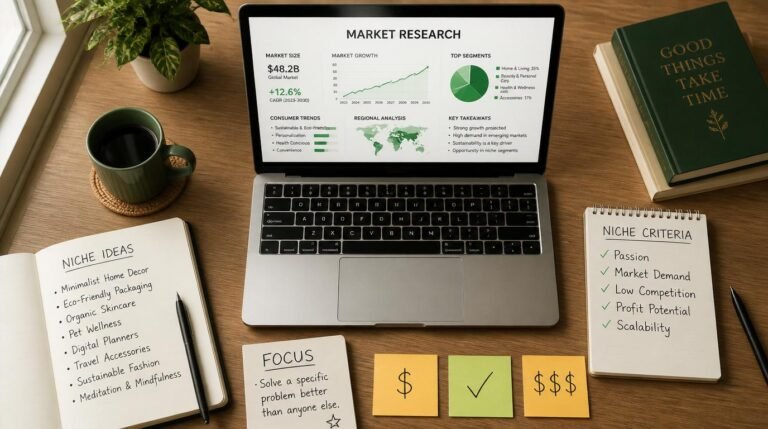
Niche Selection: The Decision That Determines Everything
Pick the wrong niche and you can write hundreds of articles and still earn nothing. Pick the right one and even a small site earns consistently.
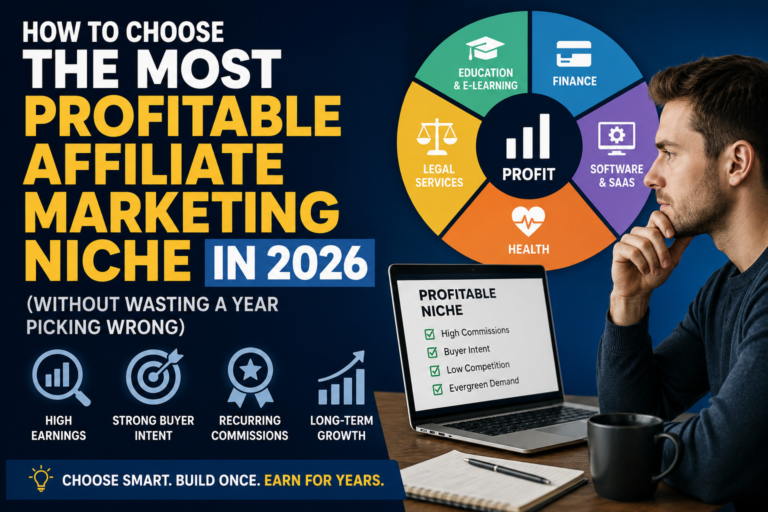
Good niche signals: clear buyer intent, products with affiliate programs, questions people search regularly, and competition that doesn’t require a media company’s budget to compete with.
This is covered in depth in the content and blogging hub at makemoneyq.com/content-blogging, which includes practical guides on structure, planning, and making articles actually pull their weight.
AI Automation Tools That Actually Support Your Passive Income System
AI automation tools are getting louder in every “make money online” conversation in 2026. Most of that noise is hype. Some of it is genuinely useful.
The practical version: AI can speed up content production, tighten workflows, and help you scale without hiring a team. It can also produce generic junk at scale if you treat it like a shortcut instead of a system component.
Use AI and automation to speed up workflows without wrecking quality or trust. That line matters more than any individual tool recommendation.
Where AI Actually Helps in Passive Income and Affiliate Marketing
- Content drafts and outlines: Speeds up the writing process significantly when you’re directing the output, not just hitting “generate.”
- Keyword research support: AI tools can surface topic clusters and content gaps faster than manual research.
- Email sequence drafting: Build automated sequences faster without the blank-page problem.
- Internal linking and content audits: Identifying where to add links and update old content is tedious. AI handles the analysis layer well.
The AI and automation guide covers the practical side without the hype, including where these tools support affiliate SEO and content marketing without replacing the thinking that makes content actually useful.
The Stack Problem
You do not need 37 subscriptions and a dashboard addiction. You need a small stack that solves real bottlenecks.
For most people building passive income through affiliate marketing, that stack is: one content platform, one keyword research tool, one email provider, and one or two AI writing assistants. That’s it. Everything else is noise until the fundamentals are working.
SEO Traffic Strategies and Affiliate SEO That Actually Compounds
Traffic is the variable most beginners underestimate. You can have the right niche, the right affiliate programs, and well-written content. Without traffic, none of it earns anything.
SEO traffic strategies built around affiliate content are the most reliable path to passive income because the traffic doesn’t stop when you stop paying for ads. An article that ranks stays working. That’s the compound effect in action.
What Affiliate SEO Actually Involves
Affiliate SEO isn’t a separate discipline from content marketing. It’s content marketing with commercial intent baked into the topic selection and structure.
The basics: target keywords where people are researching purchases, structure articles to answer questions thoroughly, build internal links between related content, and update articles when the information shifts.
None of this is complicated. Most people just don’t do it consistently or with the right intent targeting from the start.
The Traffic Section at MakeMoneyQ
The traffic and SEO hub covers the practical side of building organic traffic for affiliate and passive income sites, without padding, without outdated tactics, and without pretending that traffic is easy to get fast.
It takes time. Build the system anyway. That’s the only approach that actually compounds.

Side Hustles for Beginners: Picking the Right Passive Income Lane
Side hustles for beginners is one of the most searched topics in the make money online space. The problem is most of the content targeting that query is broad to the point of being useless.
Here’s the practical version. Not every side hustle is a passive income idea. Most require active time exchange. Affiliate marketing through content is one of the few that can genuinely shift toward passive over time if you build it right.
The 4 Models Worth Considering
| Model | Passive Potential | Time to Momentum | Best For |
|---|---|---|---|
| Niche Blog + Affiliate | Very High | 6-12 months | Writers, researchers, long-term builders |
| Email List + Affiliate | High | 3-9 months | Anyone building an audience-first approach |
| Video Content + Affiliate | Medium-High | 4-10 months | Comfortable on camera, niche-specific reviewers |
| Social Media + Affiliate | Low-Medium | Variable | Paired with a content hub, not standalone |
Pick the lane that matches what you’re building. Not the lane that sounds most exciting in a YouTube thumbnail.
Blog Monetization and Website Monetization That Compounds Over Time
Blog monetization is where most passive income strategies either click into place or fall apart completely. The common failure mode: people add monetization too early (before traffic exists) or too late (after burning out from unpaid content creation).
The right sequence for website monetization in an affiliate model is traffic first, then monetization. Build a reason for people to visit. Then add offers that are actually relevant to why they showed up.
What to Monetize and When
In the early stages, focus on affiliate programs relevant to the niche. As traffic grows, layer in additional income sources: email sequences with affiliate recommendations, digital products, and display ads once volume justifies it.
Each layer added to a working traffic system increases the passive income per visitor without proportional increases in work. That’s compounding in practice, not just in theory.
Online Income Systems: Building Something That Keeps Working
The difference between a side hustle that fizzles and a real online income system that pays you consistently comes down to one word: compounding.
Content that ranks keeps attracting visitors. An email list that grows keeps generating opens. Affiliate relationships that are built on trust keep converting. None of this requires new effort every single day once the foundation is solid.
Most “make money online” frameworks skip this entirely. They focus on tactics, not systems. Tactics require constant attention. Systems work while you sleep.
The 4-Step Blueprint
Everything at MakeMoneyQ filters through a simple process that makes this tangible:
- Model: Choose the business model that fits your skills and resources (affiliate marketing for most beginners).
- Content: Build content that attracts targeted traffic and answers real questions without writing just to pad word count.
- Visitors: Drive targeted traffic through SEO traffic strategies and content marketing that compounds over time.
- Monetize: Convert that attention into commissions through relevant affiliate recommendations and blog monetization, promoting relevant tools and products without sounding like a pushy salesman.
That’s it. Four steps. The execution takes time and consistency. But the framework doesn’t change, and it doesn’t require a guru to hand it to you.
What Actually Separates the 15% From Everyone Else
Here’s the honest version of passive income and affiliate marketing that most content won’t give you.
The affiliates generating serious income in 2026 are not the ones who found a secret program or a clever traffic loophole. They’re the ones who treated affiliate marketing for beginners as a starting point, not a destination, and built real content assets over 12 to 24 months without quitting when early results were slow.
They picked a niche. They built a content system. They drove traffic through affiliate SEO and content marketing consistently. They layered monetization strategically. And they used AI automation tools to accelerate, not replace, the quality work underneath.
No shortcuts. No fake guru fluff. No recycled hype. Just a system that compounds when you build it correctly and leave it running.
That’s what actually separates the top earners from the people who tried make money blogging for three months and gave up. The system. Not the secret.
Conclusion
Passive income and affiliate marketing work when you stop treating them like a lottery and start treating them like an asset-building process. The model is simple. The execution requires consistency, the right niche, a content system built for targeted traffic, and monetization that earns trust before it asks for clicks.
Most of what circulates in the make money online space is either too vague, too hyped, or too disconnected from how real online income systems actually function. This site is built for clarity, not noise. No fake guru fluff. No “publish 500 posts and manifest success” nonsense. Just a cleaner path that makes business sense.
Whether you’re looking to start affiliate marketing from zero, improve an existing blog’s monetization, or build a proper passive income blueprint that compounds over time, the starting point is the same: pick the lane that matches what you’re building, and then build it like you mean it.
Use the Start Here path to skip the confusion, pick a model, and get moving without getting buried in random advice.
Frequently Asked Questions
Is passive income through affiliate marketing actually realistic in 2026?
Yes, it’s realistic, but not fast. Passive income and affiliate marketing work together when you build a content system that earns traffic over time. The passive part comes after months of active setup, not before it.
How do I start affiliate marketing with no audience and no money?
Start with a niche blog. It’s the lowest-cost way to start affiliate marketing and the most scalable passive income model available to beginners. You need hosting, a domain, and consistent content, not a big budget.
What’s the best affiliate marketing niche for beginners in 2026?
The best niche is one with clear buyer intent, available affiliate programs, and questions people search consistently. Software tools, personal finance, and health sub-niches historically perform well for affiliate marketing for beginners, but specificity beats size every time.
How long does it take to make money blogging with affiliate links?
Most content-driven affiliate sites see meaningful income between months 6 and 12 when built with proper SEO traffic strategies and commercial-intent content. Make money blogging is a real outcome, just not an immediate one.
Do AI automation tools actually help with passive income and affiliate marketing?
They help with efficiency, not shortcuts. AI automation tools can speed up content drafting, research, and email workflows significantly. They don’t replace the strategy, niche selection, or trust-building that actually drives affiliate conversions.
What’s the difference between website monetization and blog monetization?
In practice, they’re the same thing for most affiliate marketers. Blog monetization typically refers to income from affiliate links and display ads within content. Website monetization can include those plus digital products, email sequences, and membership components. Both depend on traffic first.
Can side hustles for beginners realistically turn into full-time passive income?
Yes, and the data supports it. 35% of active affiliates generate at least $20,000 annually, and 15% earn between $80,000 and $1 million. Passive income and affiliate marketing built on a real content system can absolutely cross from side hustle to primary income over a 2 to 3 year timeline for consistent builders.