Thrift Store Flipping for Beginners: 7 Honest Steps to Profit
Last updated: October 24, 2026 · By Danilo G.
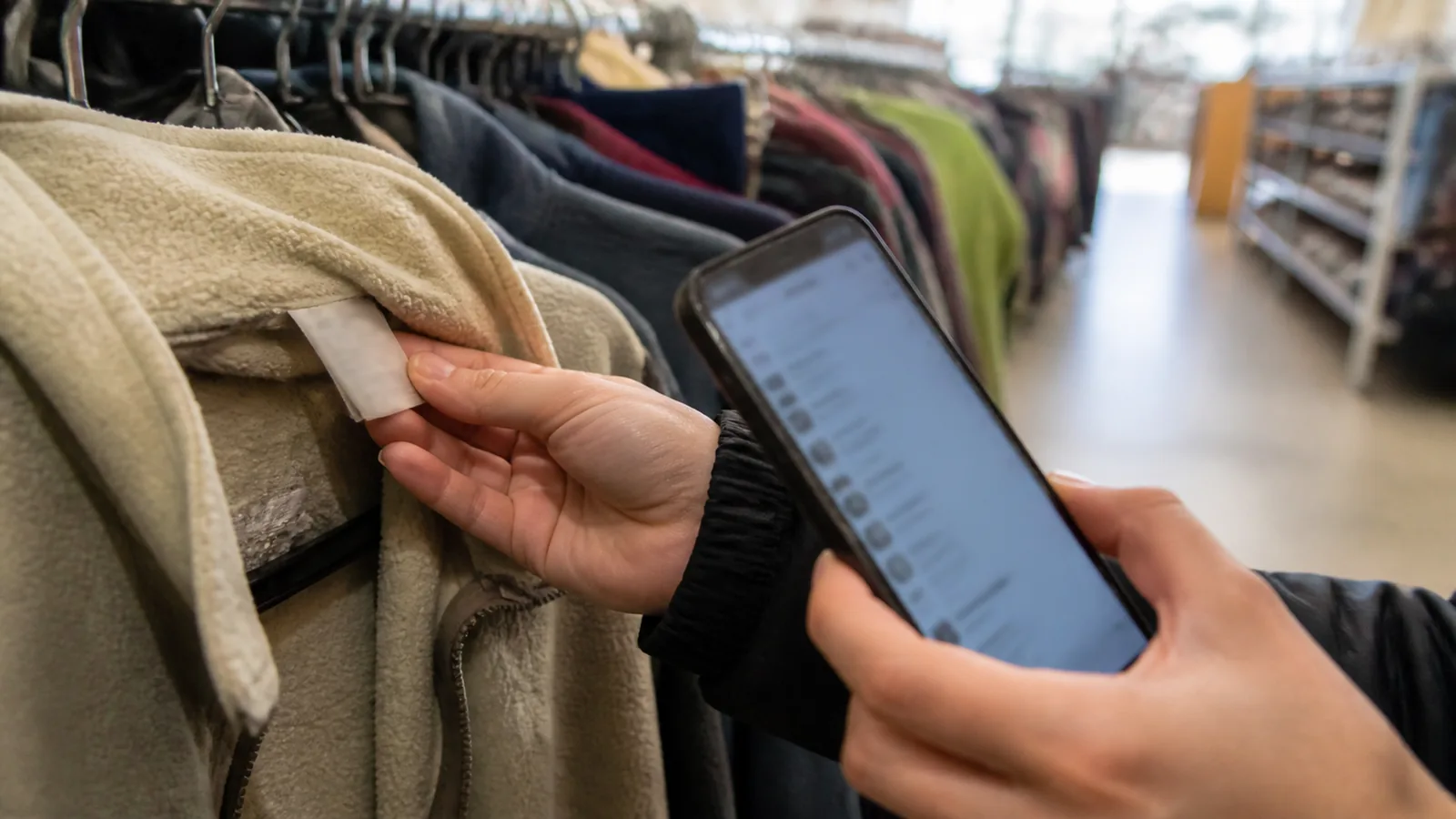
You spot a $6 fleece jacket from a brand you recognize. Is it a $40 sale, or another item that sits in your closet for six months? Thrift store flipping for beginners comes down to answering that question before you pay, not after.
The short answer: check what the item actually sold for recently, subtract marketplace fees, postage, and supplies, and only buy when the leftover profit is worth your time. Start with things you already own, learn one or two categories well, and record every purchase and sale.
This guide gives you a seven-step plan, a fee calculation you can reuse, a table of what to buy at thrift stores to resell, and the safety and tax checks that most “make thousands a month” articles skip. Every dollar figure below is a worked illustration, not a promise of income.
Table of Contents
What Thrift Store Flipping Is (and What It Isn’t)
Thrift store flipping means buying secondhand goods for less than buyers elsewhere will pay, then reselling them, usually online through marketplaces such as eBay, Poshmark, Mercari, or Facebook Marketplace. Your profit is the gap between what you paid and what you keep after the platform’s cut, shipping, and supplies.
It is not the same as a “thrift flip” video, where someone sews an old garment into something new. Upcycling can sell, but it is a crafting business with its own labor costs. This guide covers finding, checking, listing, and shipping items as they are.
It is also not passive income. You will spend time sourcing, cleaning, photographing, writing listings, answering buyer questions, and packing orders. If you want to compare it against lower-effort ideas first, our list of side hustles you can start with $100 puts reselling next to other budget options.
Thrift Store Flipping for Beginners: The 7-Step Plan
These steps keep early risk low, which is the main goal of thrift store flipping for beginners.
Step 1: Sell What You Already Own First
Before buying any stock, list five to ten things from your own home: a jacket you no longer wear, a kitchen gadget, a video game. You will learn account setup, photos, titles, buyer messages, and shipping without any sourcing risk.
eBay gives sellers up to 250 zero-insertion-fee listings each month, so practice listings usually cost nothing unless they sell, according to its official selling fees page. Newer accounts can also face selling limits, which is one more reason to start small.
Step 2: Learn Sold Prices Before You Shop
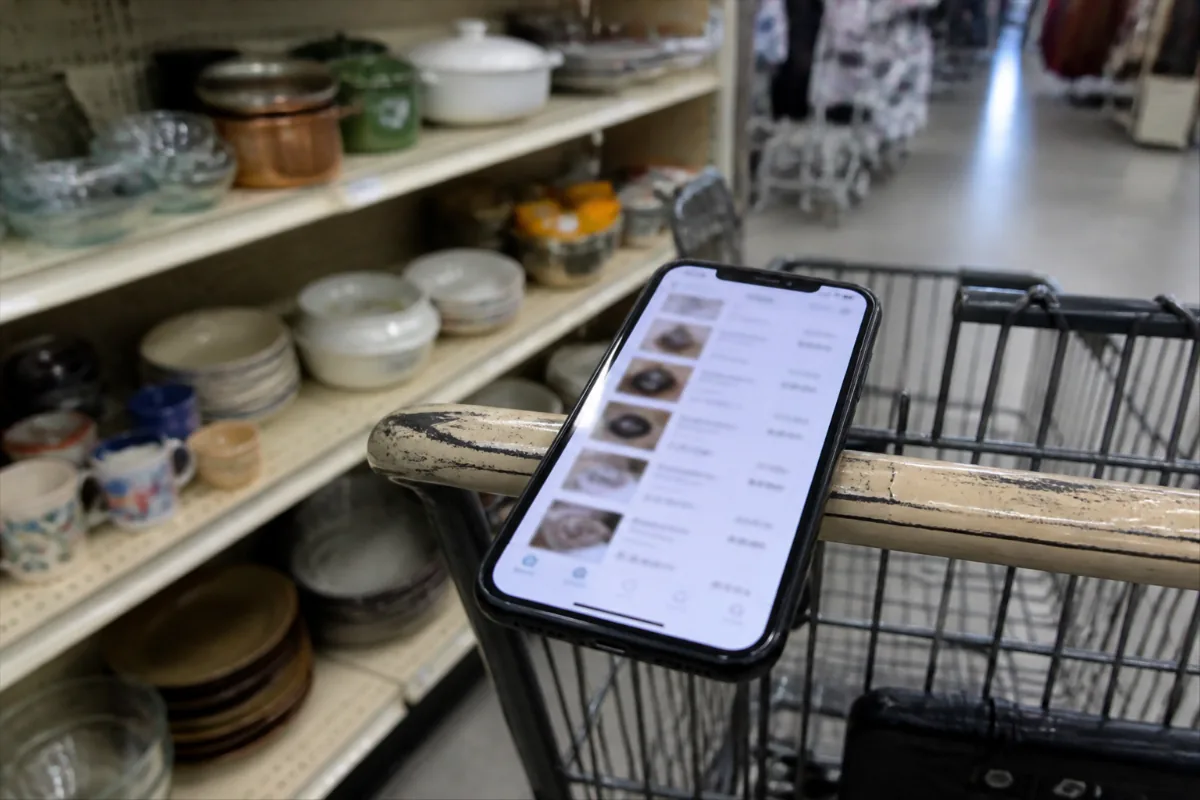
Asking prices show what sellers hope to get. Sold prices show what buyers actually paid. On eBay, search for the item and turn on the “Sold items” filter. Compare listings with the same brand, model, size, and condition, and focus on the most recent sales.
Next, compare how many sold against how many are still listed. Resellers call this the sell-through rate: sold listings divided by sold plus active listings. A higher rate usually means a faster sale. A low rate means you may wait months or need to cut your price. Treat it as a rough signal, because search counts are never perfectly clean.
For every comparable sale (“comp”), note:
- The exact item and its condition
- The sold price, plus what the buyer paid for shipping
- The sale date
- Whether it sold at auction or at a fixed price
Step 3: Use a Simple Buy Rule
Most beginner losses come from items that look valuable but leave little after costs. Before you pay, check three numbers: a realistic sold price, your estimated costs, and your minimum acceptable profit.
For most eBay categories, the final value fee is 13.6% of the total sale up to $7,500, plus $0.30 per order of $10 or less or $0.40 above that, as of October 2026. The “total sale” includes shipping charged to the buyer and sales tax. Some categories differ: books, movies, and music are 15.3%, women’s bags and most jewelry are 15%, and guitars and basses are 6.7%.
A practical shortcut is to assume roughly 16–17% of the item price goes to fees once shipping and tax are included, then subtract postage and supplies. Many resellers also want at least three times their purchase price back. Add a dollar floor, such as $15–20 profit per item, so cheap finds do not eat your evenings.
| Example find | Paid | Likely sold price | Est. fees + supplies | Est. profit | Decision |
|---|---|---|---|---|---|
| Brand-name fleece jacket | $6 | $38 | $6.58 | $25.42 | Buy |
| Sealed board game | $8 | $30 | $6.30 | $15.70 | Buy if it sells often |
| Hardcover novel | $2 | $14 | $3.38 | $8.62 | Skip unless very fast-selling |
| Generic T-shirt | $4 | $12 | $2.42 | $5.58 | Skip |
Hypothetical examples. They assume the buyer pays shipping that covers your postage, and estimate fees at 16% of the item price (about 17% for the book) plus $0.50–$1.50 for supplies. Your real numbers depend on category, shipping, and tax.
Step 4: Shop the Right Sections
Choose one or two categories you already understand. Someone who knows hiking gear spots quality outerwear faster than someone memorizing brand lists. Walk the store in the same order each visit, check newly stocked racks first, and politely ask staff when they usually put out new items.
Many thrift chains run discount days or member programs, which lower your cost basis. Set a hard budget for each trip, such as $25–50, and do not raise it until your first purchases have actually sold. Cash tied up in unsold inventory is the most common reason new flippers stall.
Step 5: Clean, Test, and Check for Recalls
If the store has an outlet, test anything with a plug before you buy it. Check zippers, seams, stains, odors, and missing parts. Then clean items carefully at home, because a fresh-smelling, lint-free item photographs better and earns fewer returns.
Safety matters more than most guides admit. The U.S. Consumer Product Safety Commission states that re-selling recalled products violates federal law, and its 1999 study found that 69% of thrift stores surveyed were selling at least one hazardous product. Check items against the CPSC resale and thrift store resources before listing them. Many beginners simply avoid cribs, car seats, bike helmets, and older children’s products, because the margin rarely justifies the risk.
Step 6: Photograph and List for Search
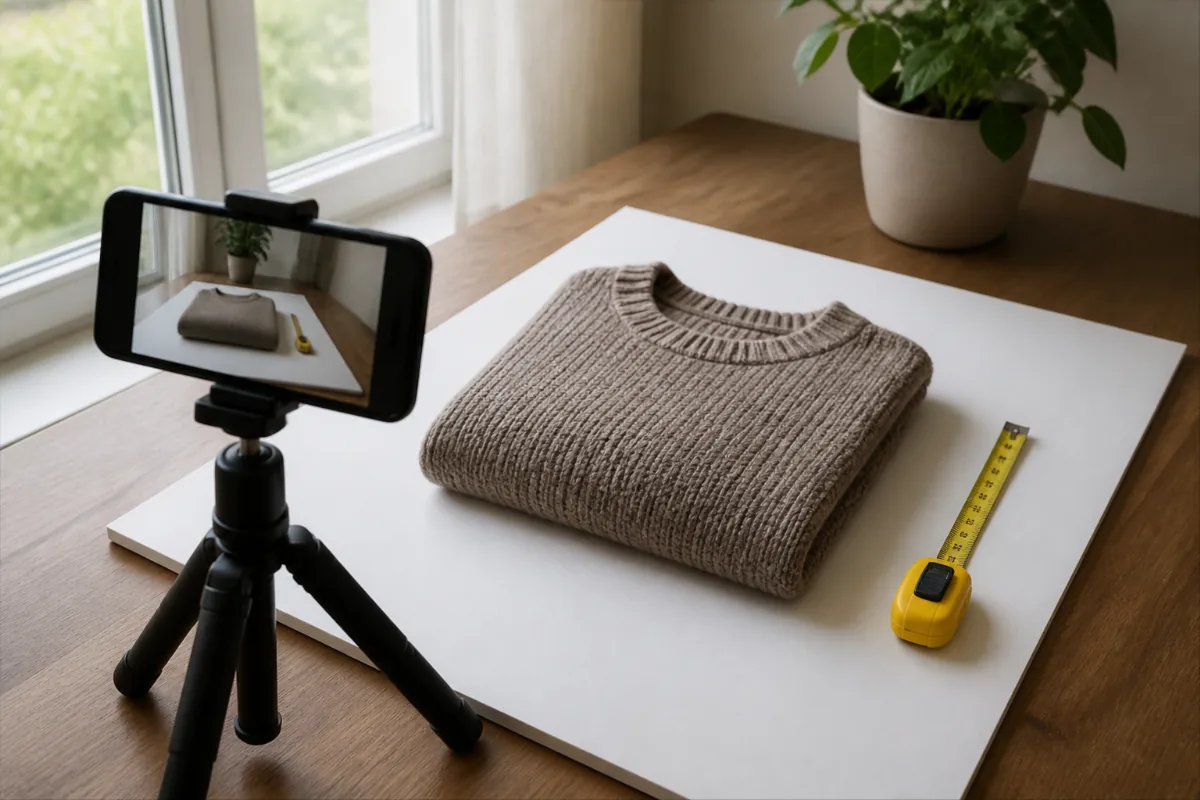
Buyers cannot touch the item, so your photos do that job. Use window light, a plain background, and shots of the front, back, labels, measurements, and every flaw. eBay lets you add up to 24 photos to a listing without an upgrade fee. If you want a repeatable setup, this phone-based product photo workflow applies directly to marketplace listings.
Write titles with the words buyers type: brand, item type, model or style, size, color, and one key feature. Disclose flaws plainly in both the photos and the description. Honest listings prevent “not as described” returns, which cost postage both ways.
Step 7: Ship Without Eating Your Margin
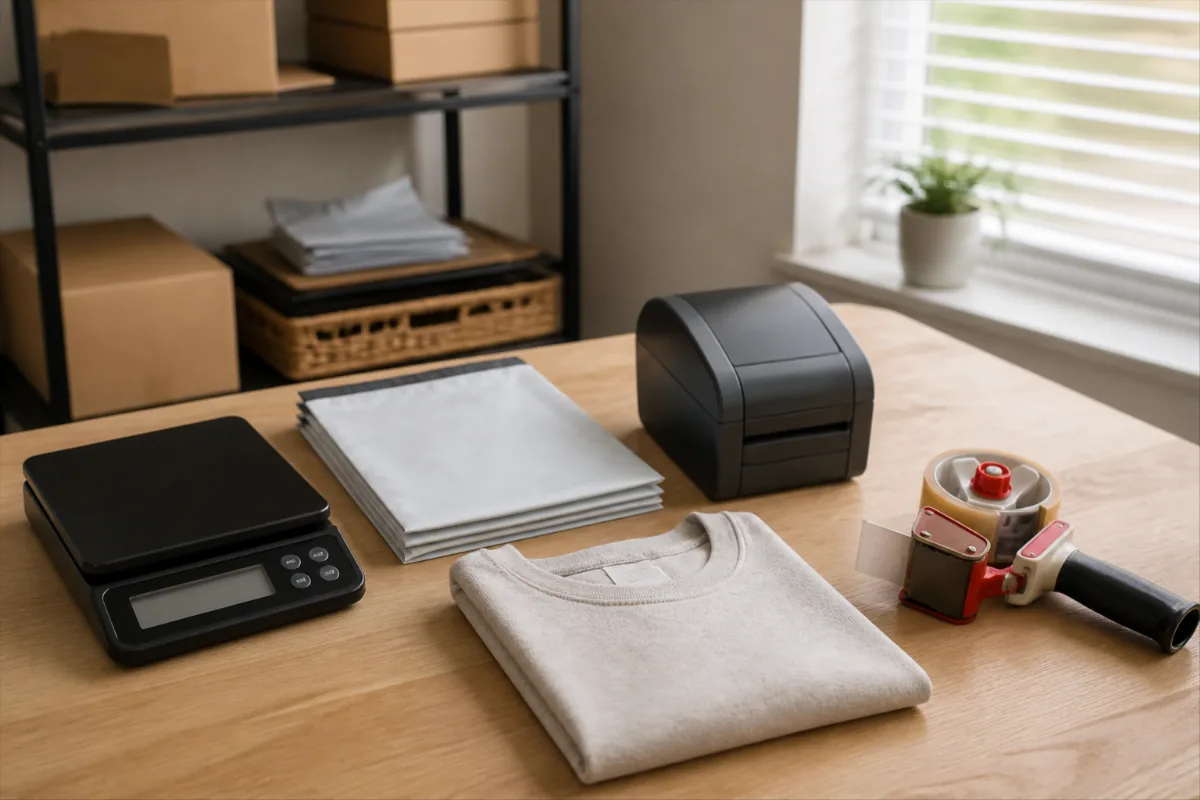
Weigh and measure each item after packing, not before. Postage depends on weight, size, and distance, and an extra ounce can push a parcel into a higher price tier. Buying labels through the marketplace keeps tracking attached to the order, which helps if a buyer opens a dispute.
Use poly mailers for soft goods and boxes with padding for anything breakable. When you are printing several labels a week, a small scale and a thermal label printer start saving real time; until then, a kitchen scale and your existing printer work fine.
What to Buy at Thrift Stores to Resell
No category is guaranteed, and prices move with trends. Use the table below as a list of starting points to research with sold comps, not as a shopping list.
| Category | Why it can work | What to check first |
|---|---|---|
| Brand-name outerwear and outdoor clothing | Buyers search by brand and size; durable fabrics | Zippers, pilling, stains, counterfeit labels |
| Jeans and workwear | Steady demand for specific cuts and brands | Measurements, crotch and hem wear |
| Video games, vinyl, and DVDs | Easy to identify by title or barcode | Scratches, inserts, and the higher 15.3% fee on music and movies |
| Vintage kitchenware and decor | Collectors search by maker and pattern | Chips, cracks, and breakage risk in shipping |
| Tools and small electronics | Practical buyers want working, complete units | Power-on test, missing parts, battery condition |
| New-with-tags or sealed items | Condition is easy to describe and trust | Expiration dates and recall status |
As a beginner, skip bulky furniture unless you plan to sell it for local pickup, because freight costs and damage risk wipe out thin margins.
The walkthrough below from reseller Justin Resells goes section by section through a thrift store and shows examples with sale prices and what he kept, which helps train your eye before your first trip.
The Real Math of Reselling Thrift Store Items
Here is a full worked example using eBay’s published fee structure for most categories. The sales tax rate and postage cost are assumptions for illustration only.
| Line item | Amount |
|---|---|
| Item price | $40.00 |
| Shipping charged to buyer | $8.00 |
| Sales tax collected (assumed 7%) | $3.36 |
| Total amount of sale (fee base) | $51.36 |
| Final value fee (13.6%) | −$6.98 |
| Per-order fee | −$0.40 |
| Your payout (item + shipping − fees) | $40.62 |
| Postage label (assumed) | −$7.50 |
| Mailer and tape | −$0.50 |
| Thrift store purchase price | −$5.00 |
| Profit before income tax and your time | $27.62 |
Notice that the percentage fee applies to shipping and sales tax, not just the item price. That is the blind spot that makes many beginners overestimate profit. Optional Promoted Listings ads add a separate fee on top, and eBay adds an extra 6% to final value fees for accounts rated Below Standard.
Now include time. If sourcing, cleaning, listing, and packing this item took 45 minutes, $27.62 works out to about $37 an hour. If it took two hours, the same flip pays under $14 an hour. Tracking minutes per item is how you learn which categories deserve your attention.
Tools Worth Buying Once You Are Selling
This article contains affiliate links. As an Amazon Associate I earn from qualifying purchases.
You do not need any of these for your first ten sales. Buy them when a specific task, such as weighing parcels or printing labels, starts slowing you down. These are researched options, not products tested for this article.
Amazon Basics Digital Postal Shipping Scale
Purpose: weighs packed parcels so the postage you buy matches the actual weight. The listing describes a 65 lb capacity and 0.1 oz readability. Who it suits: beginners shipping clothing, media, and small household items. Consider: it does not measure box dimensions, and its listed minimum load is 0.2 oz, so very light items need a tape measure and care. View on Amazon
Rollo USB Shipping Label Printer
Purpose: prints 4×6 direct thermal shipping labels without ink or toner. Who it suits: sellers printing labels several times a week who are tired of cutting and taping paper labels. Consider: this version connects by USB to a Windows or Mac computer, so it will not print straight from a phone, and you need to buy compatible thermal labels separately. View on Amazon
Fuxury 10×13-Inch Poly Mailers (100 Pack)
Purpose: self-sealing bags for shipping clothing and other soft goods. Who it suits: clothing flippers who want a light, cheap package that adds little weight. Consider: poly mailers have no padding, so use a box for anything breakable, and check that 10×13 inches fits your bulkiest items before ordering. View on Amazon
Taxes, Records, and Rules Beginners Overlook
Under the One, Big, Beautiful Bill, payment platforms and marketplaces are required to file Form 1099-K only when a seller’s payments exceed $20,000 and more than 200 transactions in a year. However, the IRS Form 1099-K FAQs make clear that the threshold does not change whether payments are taxable. Platforms may still send a form for smaller amounts, and some states set lower reporting thresholds.
Profit from items you bought to resell is generally taxable income, whether or not you receive a form. Keep a simple spreadsheet from day one with the purchase date, store, price paid, sale date, sale price, fees, postage, and supplies. Save receipts and download marketplace reports monthly. Check your state and city rules on business registration, and talk to a tax professional once sales become regular.
Common Beginner Mistakes to Avoid
- Buying on hope: purchasing without checking sold comps because something “looks valuable.”
- Forgetting the fee base: calculating fees on the item price only, when shipping and tax are included.
- Overbuying early: filling a closet before your first items prove they sell.
- Hiding flaws: skipping close-ups of stains or damage, which leads to costly returns.
- Shipping heavy, fragile, or bulky items first: learning on the hardest category to pack.
- Skipping records and recall checks: both are cheap now and expensive later.
If you enjoy the hunt but prefer selling locally, weekend estate and garage sale flipping works on the same buy-low principles; our guide to side hustles for retirees covers it alongside other flexible options for any age.
Frequently Asked Questions
How much money do I need to start thrift store flipping?
Very little. Start by selling items you already own, then set a sourcing budget of about $25–50 per trip. Do not raise it until your first purchases have sold and the profit covers the next trip.
What sells best from thrift stores?
Small, identifiable items with clear demand tend to sell best: brand-name outerwear, jeans and workwear, video games and media, vintage kitchenware, working tools, and new-with-tags items. Always confirm with recent sold listings, because demand changes by brand, size, and season.
What is the most profitable item to flip?
There is no single most profitable item. Profit depends on what you pay, the recent sold price, the category fee, and postage. An item bought for $5 that sells quickly for $40 often beats a $30 find that needs months to sell for $80.
How do I start thrift flipping with no experience?
List a few things from your own home to learn photos, listings, and shipping. Then choose one category you know, study recent sold comps, and make one small sourcing trip using a simple buy rule based on fees, postage, and a minimum profit.
Do I have to pay taxes on thrift store flipping?
Profit from items bought to resell is generally taxable income in the U.S., even if you never receive a Form 1099-K. Keep records of purchases, sales, fees, postage, and supplies, and ask a tax professional about your situation.
How much money can you make reselling thrift store items?
It varies widely with time, skill, and local stores. Track profit per item and minutes per item. In this guide’s worked example, a $5 find selling for $40 left about $27.62 before income tax, but results are not guaranteed.
Your First 30 Days: A Simple Next Step
Thrift store flipping for beginners rewards patience and careful math more than lucky finds. A realistic first month:
- Week 1: list five to ten items you already own and ship whatever sells.
- Week 2: pick one category and study 30 sold comps in it.
- Week 3: make one sourcing trip with a $25–50 budget and use the buy rule on every item.
- Week 4: list everything, then review profit per item and minutes per item in your spreadsheet.
After a month, your own numbers will tell you whether this side hustle fits your schedule. If it does, reinvest only the profit. If it doesn’t, our roundup of proven side hustles for beginners covers options that need no inventory at all.