Best Autonomous AI ‘Agentic’ SEO Workflows in 2026: What Actually Works
Autonomous AI ‘agentic’ SEO workflows are no longer a future concept — they are running right now, and a 70% cost reduction is achievable through autonomous workflow execution compared to manual processes. If you are trying to make money online with a real system instead of a collection of disconnected tasks, this is the shift you need to understand.

Table of Contents
Key Takeaways
| Question | Answer |
|---|---|
| What are autonomous AI agentic SEO workflows? | Multi-step AI systems where individual agents execute tasks like auditing, content creation, and optimization without manual input at each stage. |
| Are these workflows relevant for affiliate marketing? | Yes. Agentic workflows handle the repetitive parts of affiliate marketing — content gaps, internal linking, and traffic monitoring — at scale. |
| Do I need expensive tools to run agentic workflows? | No. You do not need 37 subscriptions. A lean stack of 2-3 well-chosen AI automation tools gets the job done for most independent operators. |
| How do these workflows support passive income? | By running audits, content chaining, and optimization loops on autopilot, agents compound your content assets without you logging in every day. |
| What is GEO and why does it matter in 2026? | Generative Engine Optimization (GEO) is the practice of structuring content so AI-driven discovery systems cite and surface it. It is now a core part of any serious agentic workflow. |
| Where do I start if I’m a beginner? | Start with the no-BS blueprint to pick your model first, then layer automation on top once you have a working base. |
| Is this just another hype trend? | No. Agentic AI is a structural shift in how online income systems operate. The cost and speed data is real and measurable in 2026. |
What Autonomous AI ‘Agentic’ SEO Workflows Actually Are
Let’s cut through the noise. Most people hear “agentic AI” and picture some sci-fi robot doing everything while you sleep on a beach. That’s the guru version.
The real version is more useful and more boring. An autonomous AI agentic SEO workflow is a chain of AI agents, each assigned a specific task, that hand off outputs to each other without a human sitting in the middle approving every step.
Think of it like a factory line, not a magic wand.
- Agent 1 crawls your site, flags technical issues, and prioritizes them by impact.
- Agent 2 takes the gap report and maps it against real search intent data.
- Agent 3 drafts content briefs and handles internal linking suggestions.
- Agent 4 monitors performance signals and triggers re-optimization when pages slip.
Each step has an input and an output. The “agentic” part just means the handoff is automated. That’s it. No fluff, no magic.
For anyone building online income systems around content marketing, blogs, or affiliate sites, this is a real competitive advantage. Not because it’s fancy, but because it removes the bottleneck of you doing tedious work manually every single day.
The 4 Core Components of a Real Autonomous AI ‘Agentic’ SEO Workflow
There are four components that actually matter. If a workflow doesn’t include most of these, it’s not really agentic — it’s just scheduled automation with extra steps.
1. Autonomous Auditing
Agents continuously crawl your site, identify technical issues, and prioritize fixes based on actual impact rather than vanity metrics. No more running a monthly audit and forgetting about it for six weeks.
Pair this with the structured audit checklist to know what your agents should be flagging in the first place.
2. Strategic Content Chaining
This is where the real compounding happens. One agent identifies content gaps, maps search intent, and clusters related topics. A second agent drafts content with built-in internal linking baked in from the start.
For blogging for profit, this is the difference between churning out posts and actually building a content asset library that earns over time. The compounding philosophy applies here directly — each piece of content feeds the next.
3. Self-Correcting Loops
Agents monitor performance in real time and trigger recovery workflows when a page starts losing visibility. No more “oh, that page dropped three months ago and I just noticed.”
This is where agentic systems beat every manual process. They don’t sleep. They don’t miss signals. They don’t wait for your quarterly review.
4. Zero-Click Optimization and GEO
This one is the 2026 addition. Generative Engine Optimization (GEO) is the process of structuring your content so that AI-driven discovery systems can easily cite and extract it. If your content isn’t structured for zero-click and GEO, you’re building for a version of the web that’s being replaced right now.
That stat should change how you think about content strategy. Traditional “write and wait for traffic” is not a complete system anymore. GEO-aware agentic workflows optimize for citation and extraction, not just clicks.
Best Autonomous AI ‘Agentic’ SEO Workflows for Affiliate Marketing
If you’re trying to start affiliate marketing or scale an existing affiliate site, agentic workflows solve one of the most common failure points: inconsistency.
Most people who try affiliate marketing for beginners fall off because they run out of steam. They write ten posts, get no results in month one, and quit. An agentic content chaining system fixes that by keeping the content pipeline running automatically based on real data signals, not guesswork.
Here’s how a practical agentic workflow looks for an affiliate site:
- Gap detection agent: Crawls competitor content and identifies topics you haven’t covered with commercial intent.
- Brief generation agent: Outputs a structured content brief including target intent, internal link anchors, and GEO-friendly formatting guidelines.
- Performance monitoring agent: Flags underperforming affiliate pages and queues them for re-optimization before you lose the traffic you built.
- Outreach signal agent: Identifies link-building opportunities by monitoring intent signals — not blasting cold emails with zero personalization.
For affiliate SEO, the compounding effect here is real. Each agent’s output becomes input for the next. The system gets more efficient over time, not less.
Check the SEO traffic strategies section for the foundational framework that these agentic workflows are built on top of.
Agentic Workflows for Blog Monetization and Passive Income
Here’s where the “automate smarter, not lazier” distinction matters most.
Lazy automation is scheduling the same generic post every Tuesday. Smart automation is a system that identifies what content is converting, what’s decaying, and what gaps are worth filling — then acts on all three simultaneously.
For make money blogging specifically, the agentic approach turns your site into a real asset rather than a collection of posts you vaguely remember writing. Each piece of content gets monitored, updated, and interlinked automatically. That’s the compound effect in action.
Blog monetization through agentic workflows also means faster iteration. Instead of manually checking which product pages are underperforming and writing new comparison sections by hand, an agent flags it and queues the update. You approve. Done.
Some practical passive income ideas that pair well with agentic workflows:
- Automated comparison pages that refresh affiliate offers when product details change.
- Self-updating “best of” roundup posts that pull in performance data and re-rank recommendations.
- Intent-mapped FAQ sections that agents keep aligned with what AI systems are actually asking about your topic.
- GEO-optimized evergreen guides that are structured for extraction, not just reading.
None of these are magic. They are just systems that run consistently without you being the bottleneck. Visit MakeMoneyQ to see how these types of systems get built from the ground up.
Best AI Automation Tools for Running Agentic SEO Workflows
You do not need 37 subscriptions and a dashboard addiction to run these workflows. That is not an exaggeration — that is a recurring mistake that kills ROI before it even gets started.
The tool stack for a practical autonomous AI agentic SEO workflow is lean. You need:
- An agent orchestration layer: This is what chains individual AI tasks together. Think n8n, Make (formerly Integromat), or dedicated AI agent platforms. Pick one and learn it properly instead of stacking five half-configured options.
- A content intelligence tool: Something that surfaces real gap data and intent signals. This feeds your content chaining agent with actual inputs instead of guesses.
- A performance monitoring integration: Connects to your analytics so the self-correcting loop agent has live data to act on.
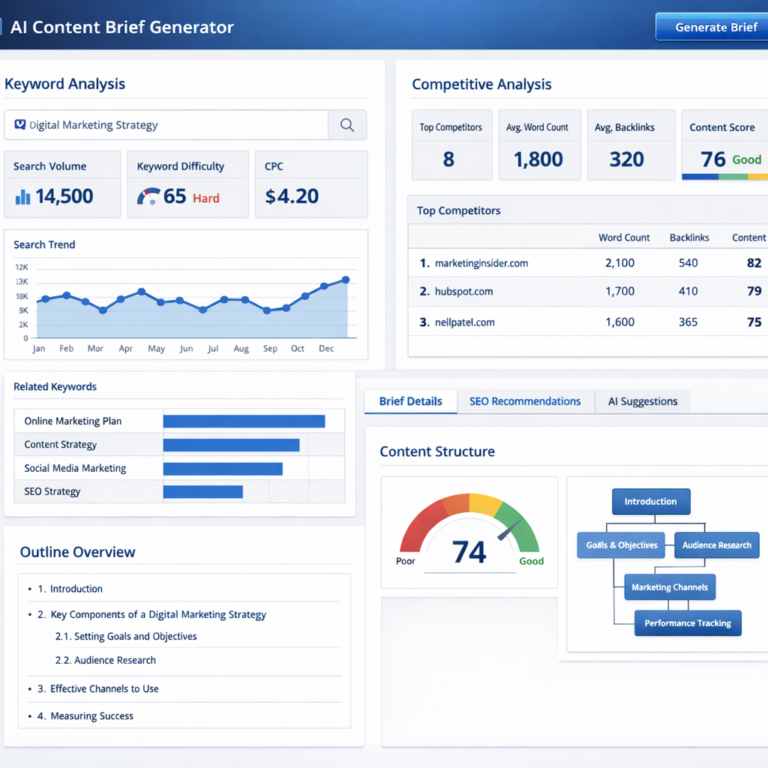
- A structured output formatter: Ensures your generated content meets GEO formatting standards before it ever gets published.
Browse the recommended tools list for a curated breakdown of what actually fits into a no-BS workflow stack in 2026.
AI automation tools are most effective when they are stacked with intent, not stacked for the sake of it. Every tool you add to the chain is another point of failure if it’s not doing a specific job.
Agentic SEO Workflows as Online Income Systems for Side Hustles
Not everyone reading this is running a full-time operation. A lot of people need side hustles for beginners that actually scale without requiring 60 hours a week to manage.
Agentic workflows are particularly well-suited for part-time operators because the whole point is reducing the manual time requirement. You set the system up, define the agents’ jobs, and the workflow runs between your check-ins.
For website monetization on a part-time basis, the agentic approach means:
- You are not writing content just to pad word count. Agents identify what actually needs to exist.
- You are not manually reviewing performance every day. Agents flag anomalies and queue actions.
- You are not running outdated affiliate pages that stopped converting six months ago. Agents catch the decay before it costs you money.
The AI automation workflows section breaks this down further with specific frameworks for independent operators who need systems that work around real schedules.
That 3.2x speed advantage compounds over time. Every update cycle that a manual operator takes two weeks to respond to, an agentic system handles in days or hours. For independent operators and side hustles for beginners, that gap is the difference between staying competitive and falling behind permanently.
How to Build Autonomous AI ‘Agentic’ SEO Workflows Without Overcomplicating It
Most “agentic AI” tutorials start with the most complex possible implementation and work backward. That’s backwards. Start with the smallest loop that delivers a real result and expand from there.
Here’s a practical starting framework:
- Audit first. Run a baseline crawl of your site and document what your autonomous auditing agent will be responsible for monitoring. Define the outputs clearly.
- Pick one content chain. Don’t try to automate everything at once. Choose one content type (comparison posts, tutorials, roundups) and build the chaining workflow for that first.
- Define the self-correction trigger. What signal tells the agent a page needs attention? Set that threshold before you launch anything.
- Add GEO formatting last. Once the basic chain works, add the structured output layer that makes your content extractable by AI discovery systems.
This is the “automate smarter, not lazier” approach applied practically. No fake guru fluff. No recycled hype. Just a process that builds on itself.
For content marketing specifically, the chain above also serves as the foundation for blogging for profit at scale. The content doesn’t stop being useful when you stop writing it manually — it compounds because the system keeps it current.
A concise, 5-step visual guide to autonomous AI SEO workflows. Shows how agentic AI can streamline optimization.
What Most People Get Wrong About Agentic SEO Workflows
Most ‘make money online’ advice is either too vague, too hyped, or too disconnected from reality. The same problem shows up in how people approach agentic workflows.
The two most common screwups:
Mistake 1: Automating Before the Foundation Exists
If your content strategy is broken, agentic automation just scales the broken parts faster. Fix the foundation first. Know your topic clusters. Know your intent mapping. Then automate the execution.
The start here page exists for exactly this reason — pick the lane before building the race car.
Mistake 2: Tool-Stacking Instead of System-Building
Buying five AI tools and plugging them together with no defined workflow is not an agentic system. It is a dashboard addiction with a higher monthly bill. Each tool needs a specific role in a defined chain. If you can’t describe what input goes in and what output comes out, you don’t have a workflow — you have expensive noise.
For affiliate marketing for beginners and anyone just getting into SEO traffic strategies, this distinction matters enormously. Start lean. Define the jobs. Then expand.
Autonomous AI ‘Agentic’ SEO Workflows and the Future of Content-Based Income
The bigger picture here is not just efficiency. It is about what type of online business actually survives and scales in 2026 and beyond.
Static content sites with no automation, no self-correction, and no GEO optimization are being outpaced. Not by big companies with unlimited budgets, but by smaller operators who understood earlier that the system matters more than the hustle.
For make money blogging to be a real long-term play, the blog has to be a living system, not a static archive. Agentic workflows are what makes that possible without hiring a team or working 80-hour weeks.
The operators winning with passive income ideas in 2026 are not the ones with the most content. They are the ones with the most optimized content pipelines. That is a system problem, and agentic AI is a systems solution.
Conclusion
Autonomous AI ‘agentic’ SEO workflows are the practical infrastructure behind the most effective online income systems running in 2026. Not magic. Not overnight results. Just systems that audit smarter, chain content with actual intent, self-correct before problems compound, and structure output for the way AI-driven discovery actually works now.
If you are building around affiliate marketing, blog monetization, or any content-driven model, agentic workflows are not optional extras. They are the difference between a business that scales and a collection of posts that slowly decay.
No writing content just to pad word count. No fake promises. Just practical systems that help turn content, clicks, and tools into long-term assets.
Start with the foundation at MakeMoneyQ, pick your lane, and build the agentic layer on top of something real.
Frequently Asked Questions
What exactly is an autonomous AI agentic SEO workflow in 2026?
An autonomous AI agentic SEO workflow is a multi-agent system where individual AI agents handle specific tasks — auditing, content gap analysis, drafting, and performance monitoring — and hand outputs to each other automatically. In 2026, these workflows include GEO (Generative Engine Optimization) components that structure content for AI-driven discovery, not just traditional traffic.
Are autonomous AI agentic SEO workflows worth it for small affiliate sites?
Yes, especially for solo operators or side hustlers who can’t manually manage every optimization task daily. Agentic workflows for affiliate SEO handle the repetitive parts of content chaining and performance monitoring at a fraction of the manual time cost, with documented cost reductions of up to 70% versus manual processes in 2026.
How do agentic SEO workflows help with passive income and blog monetization?
Agentic workflows keep your content assets current and optimized without daily manual input, which is core to any passive income system. For blog monetization specifically, self-correcting agents catch decaying pages and queue updates automatically, so your affiliate pages don’t go stale between your check-ins.
What AI automation tools do I actually need to run an agentic workflow?
You need a lean stack: an agent orchestration platform (like n8n or Make), a content intelligence tool, a performance monitoring integration, and a structured output formatter for GEO. You do not need 37 subscriptions — three to four focused tools with clear roles outperform bloated stacks every time.
Is agentic AI just another make money online trend or is it a real system?
It is a real structural shift, not a trend. The data in 2026 shows autonomous workflows reduce costs by up to 70% and increase response speed to algorithm changes by 3.2x compared to manual processes. For anyone building online income systems around content, this is a measurable operational advantage, not recycled hype.
How do I start building autonomous AI agentic SEO workflows as a beginner?
Start with the foundation before the automation. Define your content clusters, understand your audience intent, and run a baseline audit first. Then build one small content chaining workflow before expanding. Beginners who automate before fixing the strategy just scale the problems faster — build the system in the right order.
What is GEO and why does every agentic SEO workflow need it in 2026?
GEO (Generative Engine Optimization) is the process of structuring content so AI discovery systems can extract, cite, and surface it in AI-generated answers. In 2026, over 60% of searches end without a traditional click, meaning content that is only optimized for blue-link traffic is missing the majority of modern discovery. Agentic workflows now bake GEO formatting into the content output step as a standard component, not an optional add-on.