
Blog Niche Selection: 10 Powerful Tips That Work
Here’s a truth that stings a little: blog niche selection is the single decision that determines whether your blog becomes a real income stream or a graveyard of half-finished posts. I’ve watched hundreds of beginner bloggers spend months writing furiously — only to realize they picked a niche no one searches for, or one they couldn’t monetize if their rent depended on it. The problem isn’t their writing. It’s that they skipped the strategy entirely.
That’s what this guide fixes. I’m going to walk you through a clear, step-by-step workflow — not vague advice, not a recycled list of “follow your passion.” Real priorities, real examples, and the exact decision filters I use when I evaluate a niche for profitability and long-term SEO performance. By the end of this, you’ll know exactly which niche to pick, why it works, and how to hit the ground running.
Table of Contents
- What Blog Niche Selection Actually Means (And Why Most Beginners Get It Wrong)
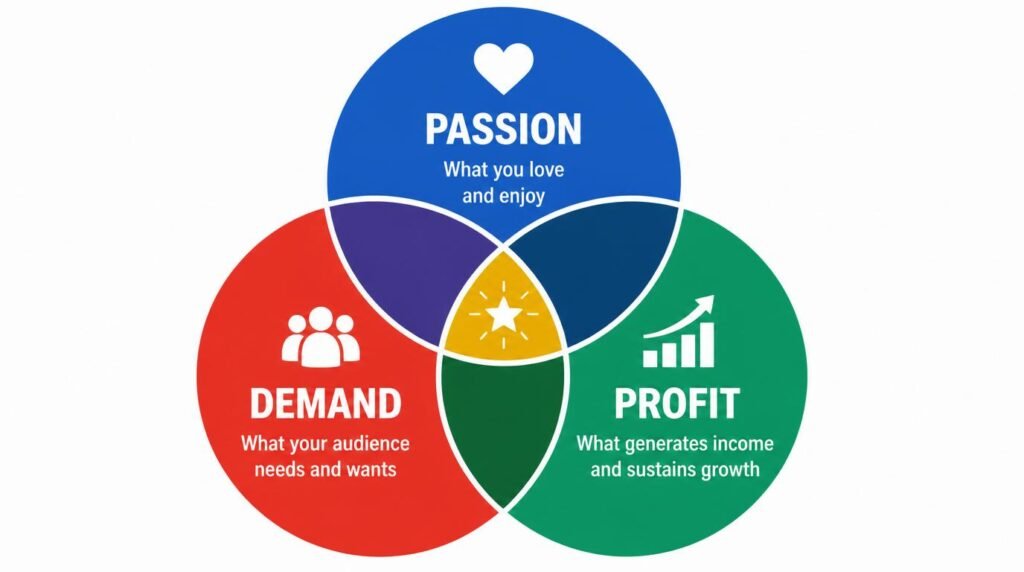
- The Three-Filter Framework: Passion, Demand, and Profit
- Tip 3–4: Validate Before You Commit a Single Word to the Page
- Tip 5: The Profitable Blog Niches Worth Your Time Right Now
- Tip 6: How to Read the Competition Without Getting Intimidated
- Tip 7: Carve Out Your Unique Angle — Or Get Buried
- Tip 8: Build Topical Authority from Day One
- Tip 9: Map Your Monetization Path Before You Write Post One
- Tip 10: Commit, Publish, and Stop Second-Guessing
- Frequently Asked Questions
- My Top Recommended Gear
What Blog Niche Selection Actually Means (And Why Most Beginners Get It Wrong)
Blog niche selection is the process of identifying a specific, focused topic area for your blog that sits at the intersection of your expertise, measurable audience demand, and clear monetization potential. The goal is not to find a “perfect” niche — it’s to find a viable one fast, then dominate it through consistent, strategically structured content.
Most beginners treat niche selection like a personality quiz. They ask, “What am I passionate about?” and stop right there. Passion is a factor — but it’s one input in a three-part equation. I’ve seen plenty of passionate bloggers write beautifully about topics that generate zero search traffic and have no affiliate programs, ad revenue potential, or product opportunities. Passion without demand is a journal. You want a business.
The other mistake? Going too broad. “Health” is not a niche. “Fitness for women over 40 managing autoimmune conditions” — now that’s a niche. Specificity isn’t a limitation; it’s your competitive weapon. Google’s algorithm rewards topical authority, and you can’t build authority on a topic that spans an entire industry. You build it by going deep on something specific, then expanding outward once you’ve earned the domain trust.
The Three-Filter Framework: Passion, Demand, and Profit
Filter 1: What do you actually know or obsessively want to learn?
I’m not going to tell you passion doesn’t matter — because it does, just not in the way motivational posters suggest. What matters is sustained output capacity. Niche blogging requires you to write 50, 100, maybe 200 posts on variations of the same core topic. If you’re faking interest, you’ll burn out by post 15. Pick something you’ve lived, studied, or would read about at midnight with no deadline pressure.
Make a list of 10–15 topics you could talk about without a script. Circle the ones where you have some real-world experience or a burning curiosity that’s lasted more than six months. Those are your raw candidates.
Filter 2: Is there measurable, consistent search demand?
This is where most niche decisions either get validated or get killed — and it should happen before you buy a domain. Pull up Google’s Keyword Planner or a tool like Ahrefs and search your candidate topics. You’re looking for monthly search volumes that tell you real people are actively looking for answers in this space. According to research from Moz’s Beginner’s Guide to SEO, keyword research is foundational to any content strategy — and it’s doubly true for niche selection.
You want to see a healthy mix: some high-volume head terms (10K+ searches/month) that signal the niche is real, and plenty of long-tail variations (500–5,000 searches/month) that you can actually rank for as a new blog. If your topic only surfaces three or four keywords total, the niche is too narrow to sustain a blog. If every keyword has a Keyword Difficulty score above 70, you’ll need a serious content war chest before you see page one.
This is also a good moment to explore your blog post ideas for beginners — because a strong niche will naturally generate dozens of post ideas the moment you validate it.
Filter 3: Can you make real money from this niche?
Here’s the insider truth most “how to start a blog” posts bury: not all niches monetize equally, and the gap is enormous. A finance blog can generate 10x the revenue of a craft blog at the same traffic level — because the affiliate programs pay more, the display ad RPMs are higher, and the audience has demonstrated buying intent. Before you commit to a niche, identify at least two clear monetization paths: affiliate marketing, display ads, digital products, coaching, or services.
Check whether there are affiliate programs in your space (Amazon Associates is the floor — look for programs paying 10–30% commissions on high-ticket items). Research the average CPM rates for your niche category. If you’re building in the finance, SaaS, or legal space, your ad revenue will be substantially higher than entertainment or general lifestyle content. For a deeper look at how this connects to your overall strategy, my guide on content blogging fundamentals lays out the full monetization architecture.
Tip 3–4: Validate Before You Commit a Single Word to the Page
Can you generate 10 strong post ideas right now without Googling?
This is my personal litmus test, and it’s brutally effective. Sit down with your shortlisted niche and try to write 10 post titles from memory — no research, no AI assist. If you struggle past five, that’s a signal. Either the niche is too narrow, or your genuine expertise in it is thinner than you thought. The right niche should feel almost embarrassingly easy to brainstorm around. Ideas should be falling out of your head.
If you clear the 10-idea threshold, take it one step further: map those ideas against keyword data. How many of your instinctive post ideas have actual search volume? If most of them do, you’ve found a niche where your natural knowledge aligns with real audience demand. That alignment is rare — and when you find it, move fast.
Does your target audience actually spend money?
This sounds obvious, but TBH, it’s the step most beginner bloggers skip entirely. Audience size and audience buying behavior are completely different metrics. Gaming, for example, has a massive, passionate audience — but a meaningful portion of that audience expects free content, resists ads, and doesn’t convert well on affiliate links. Contrast that with personal finance readers, who are actively seeking products, services, and tools to solve expensive problems. They spend money because their problem costs them money.
Research subreddits, Facebook groups, and forums in your candidate niche. Are people asking for product recommendations? Are they sharing affiliate-heavy content without complaint? Are there paid courses, memberships, or tools thriving in this space? Those are all green lights.
Tip 5: The Profitable Blog Niches Worth Your Time Right Now
What are the blog niche ideas that consistently generate income in 2025? Let me give you the honest breakdown — not a generic list, but one filtered through actual revenue data and SEO performance patterns.
Personal Finance and Investing: The undisputed king of blog monetization. High affiliate commissions from financial products, insurance, and credit cards. CPMs often exceed $30–40 in this space. Sub-niches like debt payoff, FIRE movement (Financial Independence, Retire Early), and investing for beginners are especially strong.
Health, Wellness, and Fitness: Massive evergreen demand with a passionate, buying audience. Supplement affiliates, fitness equipment, and online coaching make this highly monetizable. Note: this is a YMYL (Your Money or Your Life) niche per Google’s Search Quality Evaluator Guidelines — you’ll need to demonstrate E-E-A-T (Experience, Expertise, Authoritativeness, Trustworthiness) rigorously. The Google Search Quality Evaluator Guidelines (PDF) outline exactly what’s expected in sensitive niches like this.
Technology and AI Tools: Exploding right now. SaaS affiliate programs pay recurring commissions of 20–40%. If you can position yourself as a trusted reviewer and comparison resource for AI tools, productivity software, or tech gear, you’re sitting on a revenue engine.
Digital Marketing and SEO Blogging: Meta? Yes. Effective? Absolutely. Blogs teaching others how to blog, market, and build online businesses thrive because the audience is pre-sold on spending money to improve their skills. This is exactly the space you’re reading in right now. 🙂
Parenting, Home, and Lifestyle: Lower CPMs than finance, but massive audience scale and strong affiliate potential through Amazon and niche-specific programs. Sub-niches like homeschooling, minimalist living, or sustainable parenting have loyal, engaged audiences.
Tip 6: How to Read the Competition Without Getting Intimidated
Here’s a counterintuitive thing I tell every blogger I work with: competition is proof of demand, not a reason to retreat. A niche with zero competitors is a niche with no audience. The question isn’t whether others are writing in your space — it’s whether there are content gaps you can fill better than they do.
Pull up the top 5–10 blogs in your candidate niche. Read their most popular posts. Notice what they do well, then notice what they consistently skip. Are they surface-level when the audience clearly wants depth? Are they monetizing aggressively in ways that erode reader trust? Are they ignoring emerging sub-topics that search data suggests are growing? Every weakness in the competition is a content opportunity for you.
Also check their domain age and backlink profiles. If every top competitor has a 10-year-old domain and thousands of referring domains, you’ll need a longer runway and a smarter long-tail keyword strategy to break through. That’s not a dealbreaker — but it sets realistic expectations for your timeline.

Tip 7: Carve Out Your Unique Angle Or Get Buried
Why does your blog need to exist when 50 others already cover this topic?
That’s the question you need to answer before you write your first post — and the answer needs to be sharper than “I write better” or “my content is more helpful.” Those are table stakes, not differentiators. Your unique angle is a combination of your specific perspective, lived experience, audience focus, and content format preference.
Examples: A personal finance blog specifically for healthcare workers navigating student loan forgiveness programs. A fitness blog written by a former powerlifter now coaching people with chronic back pain. A tech blog that reviews AI tools exclusively from the perspective of solo entrepreneurs managing everything themselves. Each of these is instantly differentiated. Each speaks to a specific person. And that specificity makes both SEO and audience-building dramatically easier.
Write your positioning statement before anything else: “My blog helps [specific audience] achieve [specific outcome] through [specific approach or angle].” If you can’t complete that sentence clearly, you’re not ready to launch. IMO, this single sentence does more strategic work than any amount of keyword research on its own.
Tip 8: Build Topical Authority from Day One
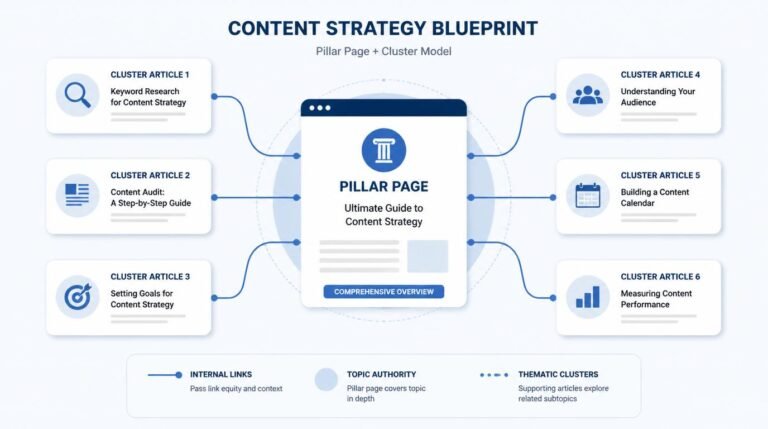
Google doesn’t rank individual posts in isolation — it evaluates the topical depth of your entire domain. This is why niche blogging outperforms general blogging in SEO performance every single time. When you publish 30 deeply interconnected posts on personal finance for freelancers, Google’s algorithm starts treating your domain as an authoritative source on that topic cluster. That authority lifts all your pages — even newer ones that haven’t accumulated backlinks yet.
Building topical authority starts with your content architecture. Before you publish anything, map out your pillar topics and supporting cluster posts. A pillar post covers a broad topic comprehensively (think: “The Complete Guide to Freelance Tax Strategy”). Cluster posts go deep on specific subtopics (think: “How to Deduct Home Office Expenses as a Freelancer”). Each cluster post links back to the pillar, and the pillar links out to the clusters. This structure signals semantic depth to Google and creates a logical navigation experience for readers.
For a full breakdown of how to architect this system, my pillar content strategy guide walks through every layer of the framework. And once you’ve got your architecture mapped, your content calendar planning becomes the operational engine that keeps you publishing consistently.
Research from academic studies on information retrieval and semantic search consistently show that contextually clustered content outperforms isolated, unrelated articles in ranking signals — which is exactly what Google’s Helpful Content systems reward.
Expert Commentary: This video from Income School’s Jim Harmer cuts through the noise on niche selection with actual data from blogs they’ve built and sold — specifically, they show how niche specificity directly impacted organic traffic timelines. Watch the 8-minute mark where they break down their “3-click rule” for niche depth. It’s the most practical framework I’ve seen for deciding how narrow to go.
Tip 9: Map Your Monetization Path Before You Write Post One
Waiting until you have traffic to figure out how you’ll make money is one of the most expensive mistakes in blogging. Your monetization strategy should directly influence the type of content you create, the keywords you target, and even the tone of your writing. If you plan to monetize through high-ticket affiliate programs, for example, you need comparison posts, review content, and “best of” roundups built into your content plan from day one.
The three most reliable monetization models for niche blogs are:
- (1) Affiliate marketing — promoting products relevant to your niche and earning commissions on sales;
- (2) Display advertising — using ad networks like Mediavine or AdThrive (which pay significantly more than Google AdSense for established blogs); and
- (3) Digital products and services — selling your own ebooks, courses, templates, or consulting services to your audience.
Map at least two of these models against your niche before you launch. If you’re in the fitness niche, maybe you run affiliate links to supplement brands and fitness equipment, while building toward a coaching program. If you’re in the tech space, SaaS affiliate programs can generate substantial recurring revenue once you have consistent traffic. The niche that monetizes best isn’t always the most glamorous — it’s the one where the audience’s problems cost them money and they’re actively looking for solutions.
Tip 10: Commit, Publish, and Stop Second-Guessing
At some point, analysis becomes procrastination wearing a strategic disguise. You’ve run your three filters. You’ve validated search demand. You’ve mapped your monetization path and carved out your unique angle. Now the only thing standing between you and a real blog is execution.
Here’s the final piece of insider knowledge I’ll leave you with: your niche will evolve. Every successful blogger I know has refined their niche at least once after launch. You might start in “productivity for remote workers” and discover your most engaged audience is actually founders and solopreneurs. You pivot slightly, double down, and grow faster. That’s not failure — that’s data-driven iteration. The blogs that never succeed are the ones that never start.
Commit to 90 days of consistent publishing in your chosen niche before you even consider a pivot. Ninety days of strategic, SEO-optimized content gives Google enough material to index, evaluate, and begin ranking your work. Ninety days also gives you enough real audience data — comments, email signups, which posts actually get shared — to make smart strategic decisions. Ngl, most blogs don’t fail because the niche was wrong. They fail because the blogger quit before the data came in.

Frequently Asked Questions About Blog Niche Selection
How do I choose the right blog niche as a beginner?
Start by mapping the intersection of three filters: what you genuinely know, what audiences actively search for, and what can generate revenue. Use keyword research tools like Ahrefs or Google Keyword Planner to validate demand before committing to any niche. Specificity beats breadth every time — start narrow, earn authority, then expand.
What are the most profitable blog niches right now?
The most profitable blog niches consistently include personal finance, health and wellness, technology, digital marketing, and lifestyle (travel, food, parenting). Sub-niches within these categories — like frugal living, keto dieting, or AI tools — often outperform broad categories in both traffic conversion and affiliate revenue.
Can you make money blogging in a competitive niche?
Yes, but your angle matters more than the niche itself. A well-positioned blog with a distinct voice, a tight content strategy, and a clear monetization path can outperform older, generic blogs in competitive spaces — especially when you target long-tail keywords and build topical authority systematically.
How narrow should my blog niche be?
Start narrow, expand strategically. A niche like “personal finance for freelance creatives” is far more actionable than “personal finance.” Once you dominate a micro-niche, you build the authority to expand into adjacent topics without losing your core audience or confusing search engines about your topical focus.
Does blog niche selection affect SEO performance?
Absolutely. Google rewards topical authority, which means a blog laser-focused on one niche will rank faster and deeper than a general blog covering everything. Niche specificity also improves your internal linking structure, content depth, and semantic relevance — all core signals in Google’s Helpful Content evaluation system.
What is the best niche for a beginner blogger to start with?
The best niche for a beginner is one where you have genuine experience or deep curiosity, there is measurable search demand, and at least two monetization paths exist. Niches like budgeting, fitness, productivity, or a specific hobby with a buying audience are consistently strong starting points for new bloggers.
My Top Recommended Gear for Serious Bloggers
- Ahrefs — SEO and Keyword Research Platform: The single most powerful tool I use for niche validation and keyword strategy. If you’re serious about SEO blogging, Ahrefs pays for itself within the first month of data-driven content decisions.
Explore Ahrefs SEO resources on Amazon → - Laptop Stand + Ergonomic Setup Kit: Blogging is a long game, and your physical setup determines how long you can sustain deep work sessions. A solid ergonomic desk arrangement is the unglamorous productivity multiplier no one talks about.
Find ergonomic laptop stands on Amazon → - Blue Microphone Yeti — USB Condenser Microphone: Once your blog gains traction, audio content and video walkthroughs dramatically expand your reach. The Yeti delivers studio-quality recording from a home desk — I’ve used it for podcast interviews, YouTube narration, and course recordings.
Shop Blue Yeti microphones on Amazon →
Disclaimer: This post contains affiliate links. As an Amazon Associate, I may earn a commission from qualifying purchases at no additional cost to you. I only recommend products I’ve personally tested or rigorously researched.

Written by
Danilo G.
Danilo G. is the creator of MakeMoneyQ, where he helps beginners build practical online income systems using affiliate marketing, blogging, SEO, AI tools, and simple traffic strategies without guru hype or fake success stories.