Blog Post Ideas for Beginners: 10 Powerful Wins You Can Execute Right Now
Table of Contents
- Why Most Beginners Pick the Wrong Topics
- What Makes a Blog Post Idea Actually Work
- 10 Blog Post Ideas That Drive Real Traffic
- 1. The How-To Tutorial
- 2. The Listicle That Earns Its Keep
- 3. The Personal Story With a Lesson
- 4. The Myth-Buster
- 5. The Honest Product Review
- 6. The Mini Case Study
- 7. The Resource Roundup
- 8. The Comparison Post
- 9. The “Mistakes I Made” Post
- 10. The Ultimate Checklist
- Building a Blog Content Strategy That Compounds
- SEO Blogging Basics You Must Nail First
- Frequently Asked Questions
- My Top Recommended Gear
Why Most Beginners Pick the Wrong Topics (And Burn Out in 90 Days)
The best blog post ideas for beginners combine a specific audience problem, a low-competition keyword, and your genuine personal experience. Winning ideas solve one clear problem per post, target long-tail search queries, and build topical authority over time rather than chasing random viral trends.
Here’s a stat that should stop you cold: over 90% of blogs get zero traffic from Google, according to an Ahrefs study analyzing over a billion web pages. Not low traffic. Zero. And I’ll tell you from running blogs for over a decade — the failure almost always starts with the very first decision: picking the wrong blog post ideas for beginners.
The problem isn’t that you lack creativity. It’s that nobody told you creativity without strategy is just an expensive journal. You sit down, full of enthusiasm, and write about “My Thoughts on Life” or “Why I Love Coffee.” Perfectly fine entries for a personal diary. Perfectly terrible foundations for a blog that anyone will actually find.
And here’s where it stings: after writing fifteen posts that nobody reads, you assume you’re not good enough. You quit. But the truth? You just never had a system for picking ideas that match what real people actually search for. That’s the gap I’m closing for you today — with ten specific, battle-tested blogging ideas that I’ve seen work for brand-new bloggers again and again.
What Makes a Blog Post Idea Actually Work?
Before I hand you the list, you need to understand the filter I run every single idea through. Because a “good idea” without this filter is just a guess wearing a nice outfit.
Every winning content idea passes three tests simultaneously:
- Search demand: Someone is actively typing this question or topic into Google. You can verify this with free tools like Google Keyword Planner, Ubersuggest, or even Google’s autocomplete suggestions.
- Low enough competition: The first page of results isn’t dominated exclusively by massive authority sites. If you see Reddit threads, Quora answers, or small blogs ranking — that’s your green light.
- Your genuine angle: You have something real to say. An experience, an opinion backed by evidence, a perspective that isn’t just rehashing the top three results.
When all three align, you’ve got a blog post idea that can actually drive meaningful blog traffic even from a brand-new domain. When you ignore any one of these, you’re essentially writing into a void.

10 Blog Post Ideas That Drive Real Traffic (Even From Day One)
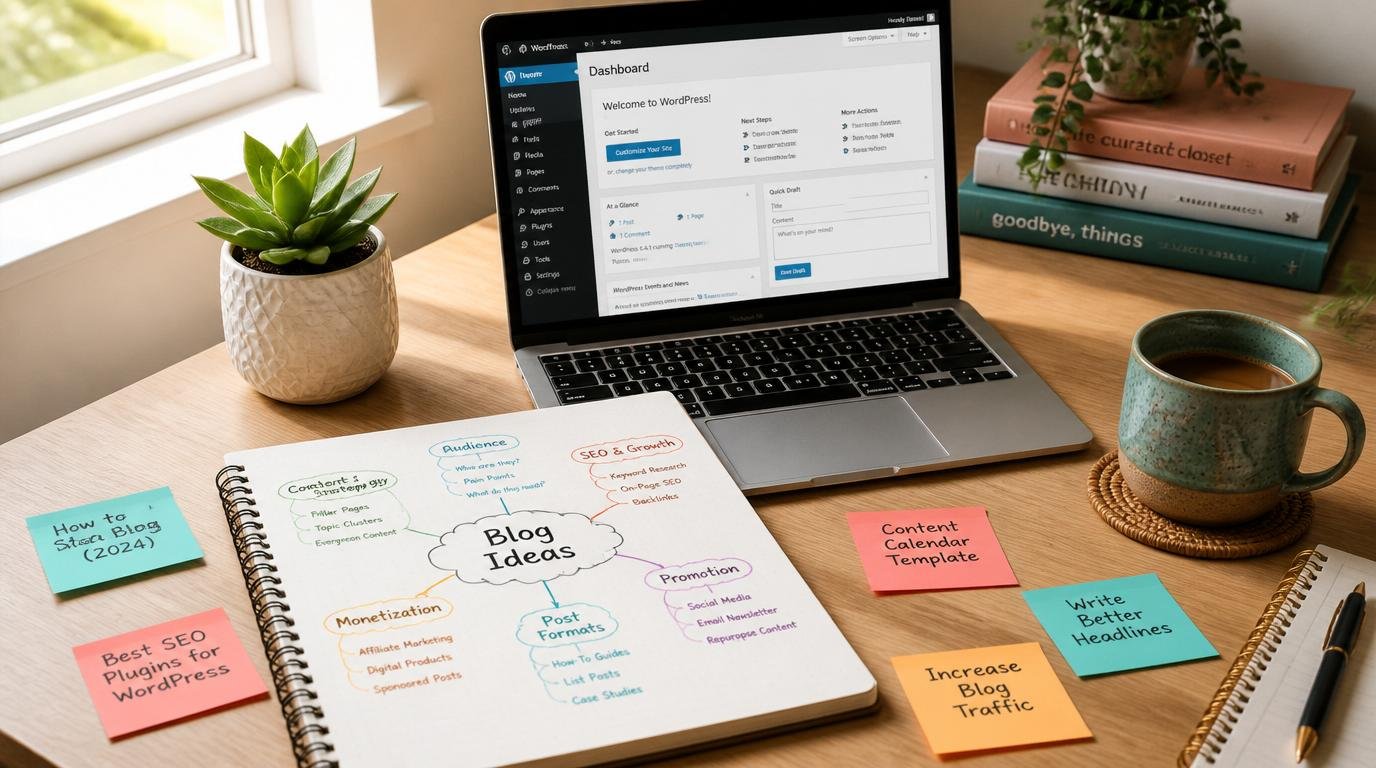
I’ve organized these from easiest to execute to most strategically powerful. If you’re staring at a blank WordPress dashboard right now, start with number one and work your way down. Each idea gets progressively more ambitious — and more rewarding.
1. The How-To Tutorial — Your Bread and Butter
What’s the single most common way people use Google? They need to know how to do something. “How to start a budget.” “How to fix a leaking faucet.” “How to write a cover letter.” Every one of those searches is a blog post waiting for you.
The genius of how-to posts for new bloggers is that they practically write themselves. You already know how to do things. Maybe it’s setting up a Shopify store, making sourdough bread, or configuring a home network. The key: pick a task where you can provide more specific, step-by-step detail than what currently ranks on page one.
I wrote my first how-to post in 2014. It was clumsy, overly long, and the screenshots were blurry. It still brought in 200 visitors a month for three years because it answered a question nobody else had answered clearly. That’s the bar — not perfection, but clarity that currently doesn’t exist.
2. The Listicle That Earns Its Keep
Yes, listicles still work. No, I’m not talking about “17 Cute Things Puppies Do.” I’m talking about strategically structured list posts that serve as resource hubs for a specific topic.
“7 Free Email Marketing Tools for Solopreneurs.” “12 Meal Prep Recipes Under $5.” These posts work because they’re scannable, they satisfy informational intent fast, and they naturally target multiple long-tail keywords within a single URL. For a deeper look at structuring your early content blogging strategy, I break down the framework I use for every pillar post.
3. The Personal Story With a Lesson
Ever notice how the most shared posts on Medium aren’t the most polished — they’re the most honest? Personal narrative posts let you flex the one advantage no competitor can replicate: your life.
But here’s the critical nuance most beginner blogging tips miss: a personal story without a transferable lesson is just a Facebook status update. The formula is simple: Here’s what happened to me → Here’s the specific insight I extracted → Here’s how you can apply it. That three-beat structure turns a diary entry into a genuinely useful piece of content.
4. The Myth-Buster
Want to know what gets shared more than anything else? Content that makes someone say, “Wait, I’ve been wrong this whole time?”
Every niche has myths that experienced practitioners roll their eyes at but beginners still believe. “You need to post every day to grow a blog.” “SEO is dead.” “You need thousands of followers before you can monetize.” Pick one widely-held belief in your niche, dismantle it with evidence, and watch your comment section light up.
According to research from the American Psychological Association, people experience a measurable cognitive shift when confronted with well-sourced myth corrections — and they remember the source. That’s brand equity you can’t buy with ads.
5. The Honest Product Review
Have you ever searched for “[product name] review” before buying something? Of course you have. So has everyone else. Product reviews are one of the most monetizable content ideas available to new bloggers, especially when paired with affiliate marketing strategies that generate passive income.
The catch: you must actually use or rigorously research the product. Google’s helpful content guidelines now explicitly reward first-hand experience and penalize surface-level regurgitation. Share what you liked, what frustrated you, who this product is not right for, and what alternative you’d suggest. TBH, the willingness to say “this product isn’t for everyone” is exactly what builds the trust that converts readers into buyers.
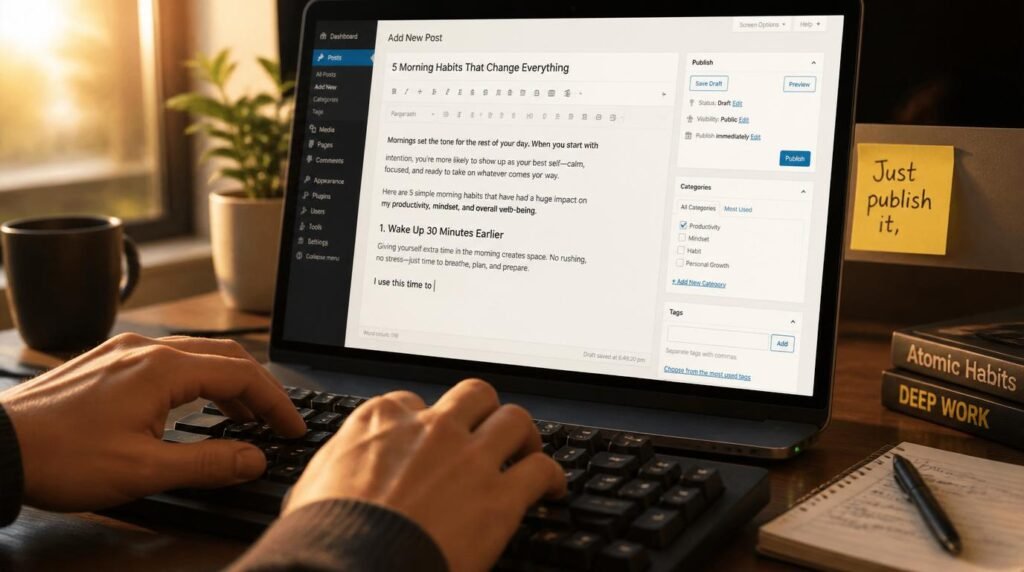
6. The Mini Case Study
Nothing builds authority faster than showing your receipts. Did you grow your Instagram from 0 to 500 followers in 30 days? Did you save $2,000 using a specific budgeting method? Did you increase your blog traffic by 40% after changing one thing?
Write it up. Include the numbers. Show screenshots. Explain exactly what you did, what worked, and what didn’t. Case studies perform exceptionally well for SEO blogging because they naturally contain specific data, unique insights, and the kind of E-E-A-T signals that Google’s quality raters actively look for.
7. The Resource Roundup
Resource roundups — “Best Free Tools for X” or “My Favorite Podcasts About Y” — require minimal original research but provide massive value. You’re essentially curating the internet for your reader and saving them hours of scattered searching.
Pro move: email the creators of the tools or podcasts you feature and let them know you included them. A surprising percentage will share your post with their audience. I’ve gotten backlinks from sites with domain authorities above 60 using this exact tactic. Free traffic, free authority, zero ad spend.
8. The Comparison Post
Comparison posts (“Mailchimp vs. ConvertKit” or “Squarespace vs. WordPress for Beginners”) sit at a beautiful intersection: high purchase intent and often low competition. People searching for comparisons are already deep in their decision-making process. They don’t need convincing that they need a solution — they need help choosing which solution.
Structure these with a clear comparison table, followed by detailed breakdowns of each option, and close with your honest recommendation based on specific use cases. This format also aligns perfectly with a smart new blogger guide approach to monetization.
9. The “Mistakes I Made” Post
Here’s something counterintuitive: admitting your failures builds more trust than showcasing your wins. Why? Because everyone has made mistakes, but very few people have the confidence to dissect theirs publicly.
“5 Mistakes I Made in My First Year of Blogging” isn’t just a catchy title — it’s a magnet for beginners who are terrified of making those same mistakes. And the implicit message is powerful: I’ve been where you are, I survived, and here’s the map I drew on the way out. IMO, every beginner blogger should write at least one mistakes post in their first month.
10. The Ultimate Checklist
Checklists are the Swiss Army knife of blog content strategy. “Pre-Launch Blog Checklist.” “SEO Audit Checklist for New Posts.” “Moving Day Checklist.” They’re bookmarkable, printable, shareable, and they satisfy a very specific user intent: “Give me every single thing I need to remember, in order, so I don’t mess this up.”
The secret weapon here: offer a downloadable PDF version as an email opt-in. You get the blog traffic and you start building an email list from day one. That’s two growth engines from a single post.
Expert Commentary: This walkthrough covers the exact process of brainstorming and validating blog topics using free tools — pay close attention to the keyword difficulty filtering method around the 4-minute mark, because that single step eliminates 80% of wasted effort for new bloggers.
Building a Blog Content Strategy That Compounds Over Time
Here’s where most new blogger guides leave you stranded. They give you a list of post ideas and wave goodbye. But isolated posts don’t build a blog. A content strategy does.
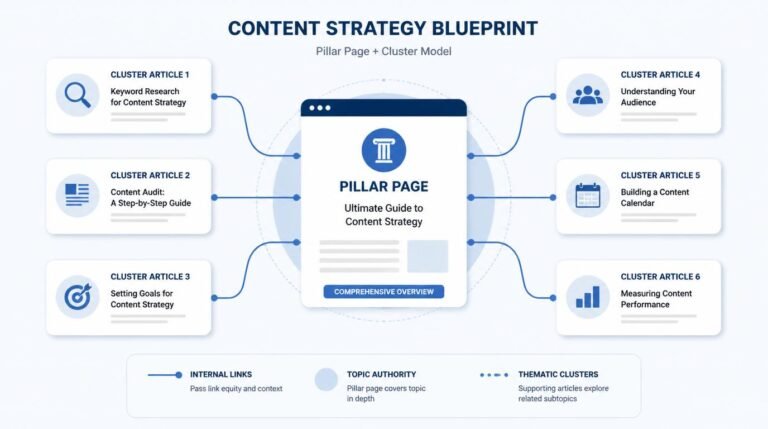
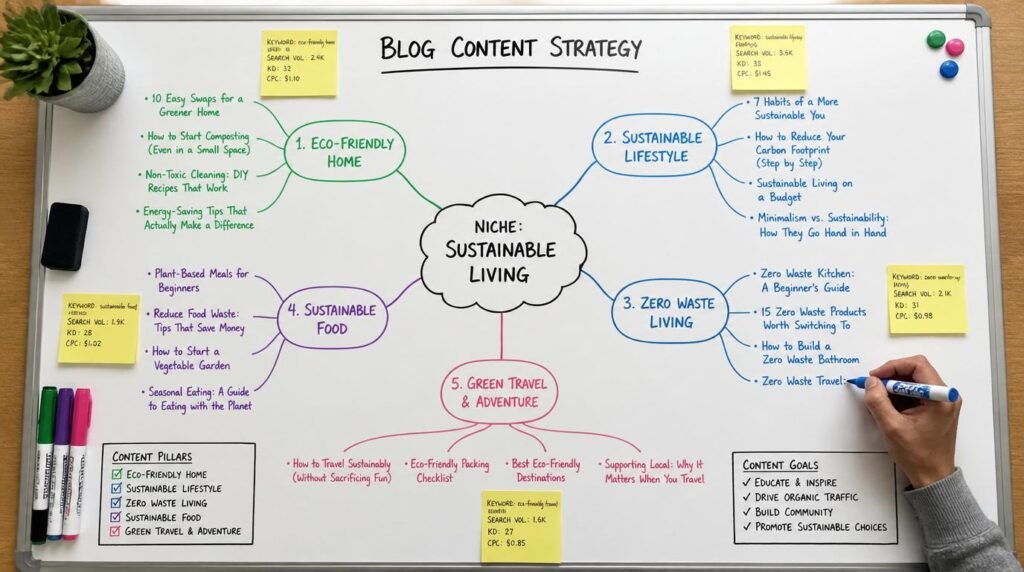
Think of your blog as a tree. Your main niche is the trunk. Your content categories are the primary branches. And each individual blog post is a leaf. The tree grows stronger when the leaves connect back to the branches, and the branches connect back to the trunk. In SEO terms, this is called topical authority — and it’s the single most important ranking factor for new sites in 2024.
Here’s my framework: pick three to five core content categories within your niche. For each category, plan one “pillar post” (a comprehensive, 2,000+ word guide) and five to eight supporting posts that link back to it. This internal linking structure tells Google exactly what your site is about and which pages matter most.
A study from Moz’s research on topical authority found that sites demonstrating deep coverage of a specific subject area consistently outranked sites with higher domain authority but shallower content. Translation: you don’t need a big site to rank. You need a focused one.
SEO Blogging Basics You Must Nail Before Writing a Single Word
Can you actually rank on Google as a complete beginner? Yes — but only if you stop treating SEO as an afterthought and start treating it as the foundation your content sits on.
Here are the non-negotiable basics every new blogger needs to internalize:
- Keyword research first, writing second. Never write a post and then try to “add SEO” to it. Identify your target keyword before you write your outline. Every heading, subheading, and paragraph should orbit that keyword’s search intent.
- Search intent is king. If someone searches “best running shoes,” they want a list with recommendations — not a 3,000-word history of athletic footwear. Match the format and depth of what currently ranks, then exceed it.
- On-page fundamentals matter enormously. Include your keyword in the title tag, the first 100 words, at least one H2, the meta description, and the image alt text. These aren’t tricks — they’re signals that help Google understand what your page is about.
- Internal linking is your secret weapon. Every new post should link to at least two or three existing posts on your site. This distributes authority and keeps readers moving deeper into your content ecosystem.
I’ve watched bloggers who follow these four principles outrank established sites within six months. The Google Search Central SEO Starter Guide covers these foundations in detail, and I’d recommend bookmarking it as your reference bible. 🙂
And look — I know SEO can feel overwhelming when you’re just trying to write your first post. But here’s the reframe that changed everything for me: SEO isn’t a separate skill from writing. It’s writing with empathy for how people actually search. When you understand what someone is really looking for and deliver it clearly, you’re doing both great writing and great SEO at the same time.
Frequently Asked Questions
What are the easiest blog post ideas for beginners?
The easiest blog post ideas for beginners include personal experience stories, listicles, how-to tutorials, product reviews, and myth-busting posts. These formats require minimal research overhead and naturally encourage authentic, first-person writing that search engines and readers both reward.
How do I choose a blog topic that gets traffic?
Choose a blog topic by starting with keyword research tools like Google Keyword Planner or Ubersuggest. Target long-tail keywords with low competition and clear search intent. Validate your idea by checking if the first page of Google results comes from small blogs — if so, you can compete.
How many blog posts should a beginner write per week?
A beginner should aim for one to two well-researched, high-quality blog posts per week. Consistency matters more than volume. Publishing one thorough 1,500-word post weekly outperforms five thin 300-word posts in both SEO performance and audience trust.
Can I start a blog with no writing experience?
Yes, you can absolutely start a blog with no formal writing experience. Many successful bloggers began as complete novices. Focus on writing conversationally, solving a specific problem for your reader, and improving with each post. Your unique perspective matters more than polished prose.
What blog niches are best for beginners in 2024?
The best blog niches for beginners in 2024 include personal finance tips, health and wellness, productivity and self-improvement, technology tutorials, and food or recipe blogs. Choose a niche where your genuine interest intersects with proven search demand to sustain motivation long-term.
How long does it take for a new blog post to rank on Google?
A new blog post typically takes three to six months to rank on Google, though low-competition keywords can rank in as few as four to eight weeks. Factors including domain authority, content quality, backlinks, and technical SEO all influence how quickly Google indexes and ranks your content.
My Top Recommended Gear
These are tools I’ve used personally and recommend to every new blogger who asks me where to start:
- Logitech K380 Multi-Device Bluetooth Keyboard — Comfortable enough for long writing sessions, portable enough to blog from anywhere, and the multi-device switching means I jump between my laptop and tablet without missing a beat. Check price on Amazon
- “Everybody Writes” by Ann Handley — The single best book on writing for the web. I re-read it every year, and every time I pick up something new. If you only buy one writing resource, make it this one. Check price on Amazon
- Blue Yeti USB Microphone — If you plan to add video or podcast content alongside your blog (and you should), this microphone delivers studio-quality audio at a beginner-friendly price point. I used mine for two years before upgrading. Check price on Amazon
Disclaimer: This post contains affiliate links. As an Amazon Associate, I may earn a commission from qualifying purchases at no additional cost to you. I only recommend products I’ve personally tested or rigorously researched.