Strategic Keyword Research for Low-Authority Sites
Let me guess: you launched your site with big dreams, published some solid content, and then… crickets. I’ve watched this exact scenario play out hundreds of times. The brutal truth about keyword research for low-authority sites is that most beginners tackle it backwards. They chase keywords that established sites already dominate, then wonder why Google treats their content like it doesn’t exist. Your domain authority is sitting somewhere between 0-20, and you’re trying to outrank sites that have been building links since 2012. That’s not a strategy—that’s self-sabotage.
Here’s what makes this frustrating: you actually CAN rank and drive meaningful organic traffic within months, not years. But you need a fundamentally different approach to finding and targeting keywords. I’ve spent the last decade helping new sites break through the noise, and I’m going to show you exactly how to identify opportunities that established sites ignore.
Table of Contents
- Why Traditional Keyword Research Fails for New Sites
- The Low-Authority Reality Check
- The Strategic Framework for Finding Winnable Keywords
- Search Intent Strategy for Low Competition Keywords
- Tools and Techniques That Actually Work
- On-Page SEO Tactics for Maximum Impact
- Content Velocity vs. Perfect Content
- Frequently Asked Questions
- My Top Recommended Gear
Why Traditional Keyword Research Fails for New Sites
Most low-authority SEO advice starts with “use Ahrefs or SEMrush to find high-volume keywords.” That’s like telling someone who just got their learner’s permit to enter the Indy 500. Traditional keyword research prioritizes search volume and assumes you have the authority to compete. You don’t—not yet.
When you target a keyword with 5,000 monthly searches and a difficulty score of 45, you’re competing against sites with hundreds of backlinks, established topical authority, and years of content history. Google’s algorithm doesn’t care about your hustle or how well-written your article is. It cares about trust signals, and your three-month-old site has approximately zero of those.
The Low-Authority Reality Check
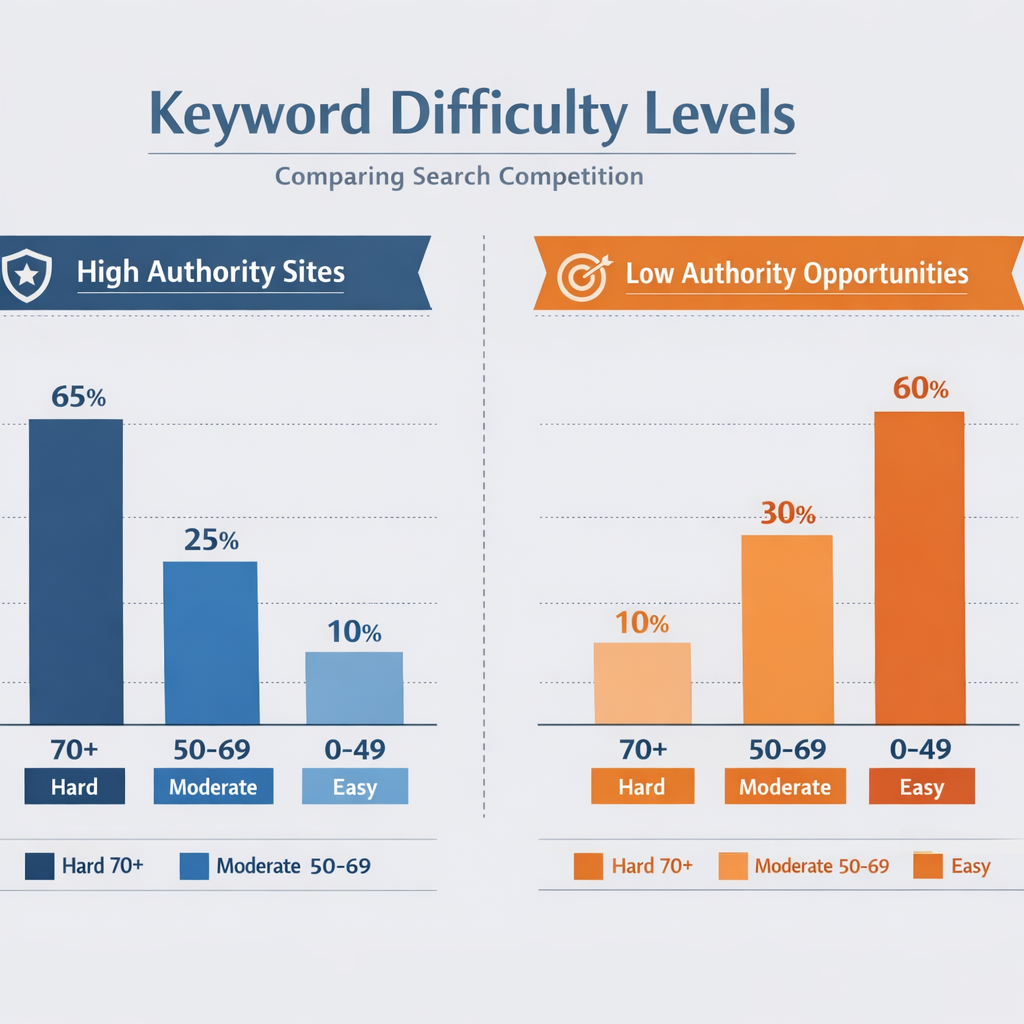
Your domain authority (whether measured by Moz, Ahrefs, or any other tool) directly impacts which keywords you can realistically rank for. Sites with DA under 20 need to think like guerrilla fighters, not conventional armies. You win through precision strikes on overlooked opportunities, not head-on assaults against entrenched competitors.
Here’s what I tell every new site owner: forget vanity metrics for the first six months. A keyword with 100 monthly searches that you can rank #1 for will drive more qualified traffic than a 10,000-volume keyword where you’re buried on page four. The fundamentals of building sustainable online income start with getting ANY organic traffic flowing, then scaling from there.
I’ve watched sites go from zero to 5,000+ monthly visitors in eight months by exclusively targeting “easy” keywords. They built topical clusters, established expertise, earned natural backlinks, and THEN went after the competitive terms. That’s the sequence that works.
The Strategic Framework for Finding Winnable Keywords
Keyword research tips for low-authority sites boil down to one principle: target keywords where content quality and relevance can overcome authority deficits. Here’s my exact framework:
The Long-Tail Advantage
Target keywords with 4+ words. “Keyword research” has a difficulty of 70+. “Keyword research for low-authority sites” has a difficulty under 20. Longer queries face less competition because they’re hyper-specific. Most content mills and big sites ignore them because the individual search volume looks unappealing. But 50 of these keywords? That’s meaningful traffic.
I use what I call the “specificity ladder.” Start with your broad topic, then add modifiers: location, year, skill level, use case, budget, or problem type. “Best running shoes” versus “best running shoes for flat feet under $100 2025.” Which one do you think a new site can rank for?
The Keyword Golden Ratio (KGR)
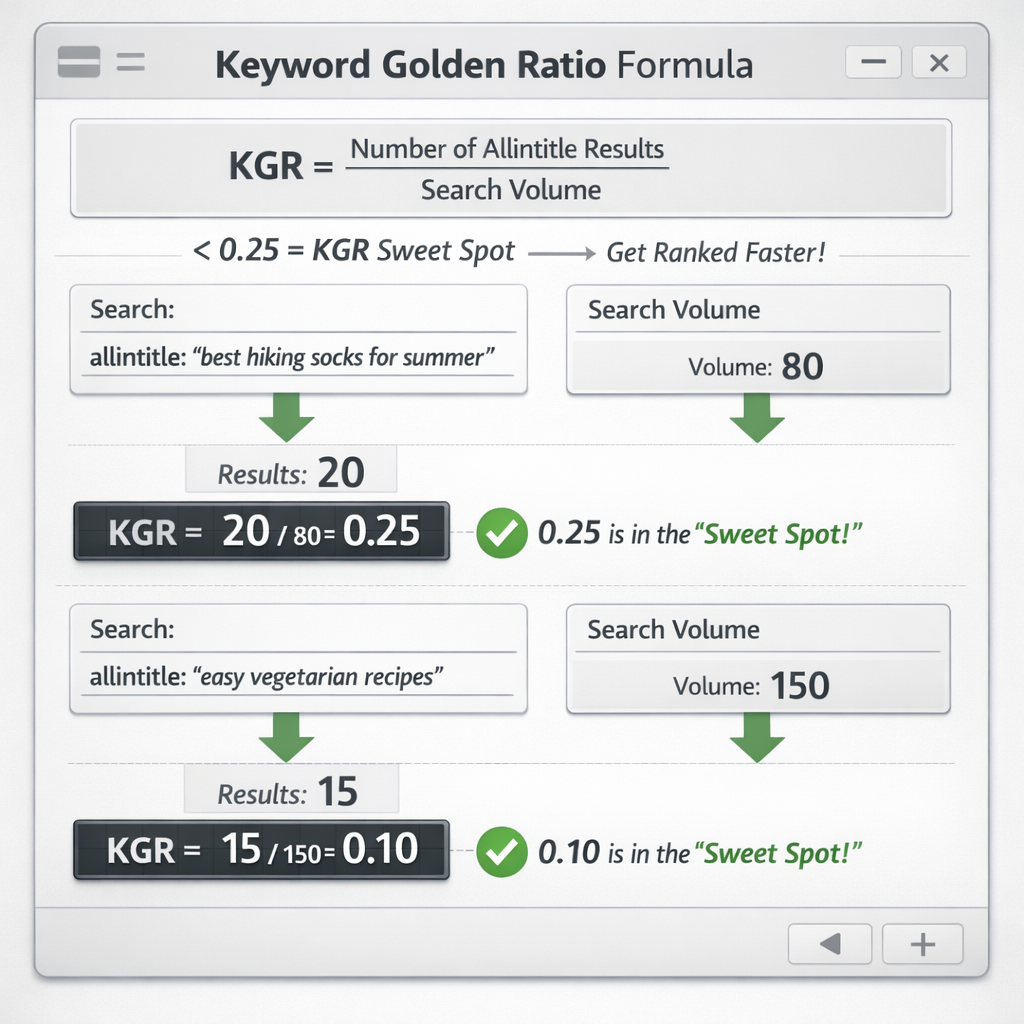
This technique, popularized by Doug Cunnington, is pure gold for SEO for new websites. The formula: (Number of Google results with the exact keyword in the title) / (Monthly search volume). If the ratio is under 0.25, you’ve found a winner. Under 1.0 is still excellent.
I use the “allintitle:” operator in Google. Search for allintitle:”your exact keyword phrase”. If you see fewer than 25 results for a keyword with 100 monthly searches, that’s a KGR of 0.25—exactly where you want to be. These keywords often rank within days or weeks, not months.
Question-Based Keywords
People ask Google questions. Sites that answer those specific questions rank. Use AnswerThePublic, AlsoAsked, or just Google’s “People Also Ask” feature. These question-based queries typically have lower competition because they require actual expertise to answer well—something content farms struggle with.
I prioritize questions that start with “how,” “why,” “what,” and “when.” These indicate informational intent, which aligns perfectly with blog content. “How to do keyword research for a new blog” is infinitely more valuable than “keyword research tool” for a low-authority site.
Search Intent Strategy for Low Competition Keywords
Understanding search intent strategy is where most beginners completely miss the boat. Google doesn’t just match keywords anymore—it matches intent. You can have the exact keyword 47 times in your content, but if your content format doesn’t match what users expect, you won’t rank.
I categorize intent into four buckets: informational (learning), navigational (finding a specific site), transactional (ready to buy), and commercial investigation (comparing options before buying). Low-authority sites dominate informational and commercial investigation queries because these require expertise, not just authority.
Here’s a pro move: analyze the current top 10 results for your target keyword. Are they listicles? In-depth guides? Product reviews? Videos? If eight out of ten results are 3,000-word comprehensive guides, don’t write a 500-word fluff piece and expect to rank. Match or exceed the depth and format that Google is already rewarding.
The intersection of SEO and affiliate marketing lives in commercial investigation keywords. These “best,” “vs,” “review,” and “alternative” queries convert like crazy and often have lower competition than pure product keywords.
Expert Commentary: This video breaks down practical keyword research methods specifically for new sites with zero authority—worth watching for the competitor analysis techniques alone.
Tools and Techniques That Actually Work
I’ll be honest: you don’t need $200/month tools when you’re starting out. Here are the weapons in my arsenal for finding low competition keywords:
Free and Low-Cost Tools
- Google Search Console: Your existing site data is the best keyword source. Check the “Performance” report for queries where you rank positions 8-20. These are low-hanging fruit—you’re already relevant, you just need optimization.
- Ubersuggest: Neil Patel’s tool offers limited free searches with solid difficulty scores. The Chrome extension shows you data directly in search results.
- AnswerThePublic: Free visualizations of question-based searches. Perfect for content ideation around low-comp queries.
- Google Trends: Validates whether a keyword trend is rising or falling. No point optimizing for dying search terms.
- Keywords Everywhere: Browser extension that shows volume and CPC data for under $10. The “related keywords” feature is underrated.
The Wikipedia Mining Technique
This technique is absurdly effective. Find a Wikipedia article in your niche. Scroll to the “See Also” and “References” sections. Each linked article represents a subtopic with associated keywords. Run those through your keyword tool. Wikipedia’s internal linking structure maps out entire topical universes that most competitors ignore.
I’ve found dozens of KGR-qualifying keywords this way. Wikipedia ranks for everything, which proves search demand exists, but the specific subtopic angles often have minimal competition in the SERP.
Reddit and Forum Scraping
People ask questions on Reddit using natural language—exactly how they’d search Google. Browse subreddits in your niche and copy the exact phrasing of questions. These often become perfect long-tail keywords because they reflect genuine user problems, not keyword-stuffed garbage.
I use a simple Chrome extension to export Reddit threads, then run the text through a word frequency analyzer. Questions that appear repeatedly across multiple threads = validated search demand with lower competition than mainstream keywords.

On-Page SEO Tactics for Maximum Impact
Finding winnable keywords is half the battle. Your on-page SEO execution determines whether you actually rank. I’ve seen perfect keyword targets completely waste because of sloppy optimization.
Title Tag Precision
Include your exact target keyword in the first 60 characters of your title tag. Google bolds matching terms in search results, which increases click-through rate. Format: [Target Keyword] – [Benefit/Hook] | Brand. Example: “Keyword Research for Low-Authority Sites – Rank in 60 Days | MakeMoneyQ”.
URL Structure
Keep URLs short and include the primary keyword. “yoursite.com/keyword-research-low-authority-sites” beats “yoursite.com/blog/2025/01/15/how-to-do-keyword-research-when-youre-a-new-website-with-no-authority”. Clean URLs rank better and get more clicks. Period.
Header Hierarchy
Use one H1 (your title), then structure content with H2s for main sections and H3s for subsections. Include semantic variations of your keyword in headers. “Low-Authority SEO” and “SEO for New Websites” are variations Google connects to your primary term. Don’t keyword-stuff—use natural synonyms.
Content Depth and Media
According to a Backlinko study of 11.8 million search results, the average first-page result contains 1,447 words. For competitive informational queries, I target 1,500-2,500 words. But word count alone is meaningless—every paragraph must deliver value.
Include images, break up text with lists, use bold for key concepts. The average user skims. Make your content scannable while maintaining depth for those who read thoroughly. I use the “inverted pyramid” style from journalism: most important info first, supporting details after.
Internal Linking Strategy
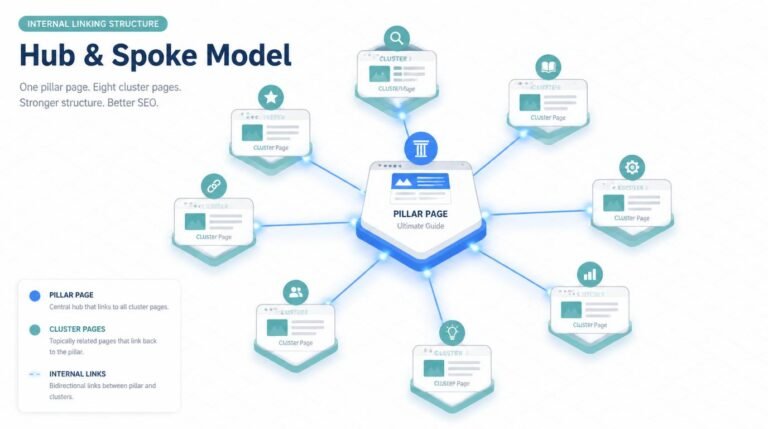
Link to 2-4 other relevant pages on your site using descriptive anchor text. This distributes authority, helps Google understand your site structure, and increases pageviews. Every piece of content should link out and receive links from other content. Build a web, not isolated islands.
Content Velocity vs. Perfect Content
Here’s where I’ll probably piss some people off: for organic traffic growth on low-authority sites, publishing velocity often matters more than per-article perfection. Google rewards sites that consistently publish quality content. A site with 50 good articles will outperform a site with 5 perfect articles.
I’m not advocating for trash content. I’m saying that waiting three weeks to perfect a single article while your competitor publishes three good ones in the same timeframe puts you behind. Aim for “very good and published” over “perfect and stuck in drafts.”
My benchmark: 1,500+ words, properly optimized, genuinely helpful. If it meets those criteria, ship it. You can update and improve later (in fact, Google loves content updates). The Google Helpful Content guidelines emphasize expertise and user value, not perfection.
IMO, new sites should publish 2-4 comprehensive articles per week minimum for the first three months. That builds a content foundation that Google can index and evaluate. One article per month won’t generate enough signals for the algorithm to understand your topical authority.
Frequently Asked Questions
What are low competition keywords?
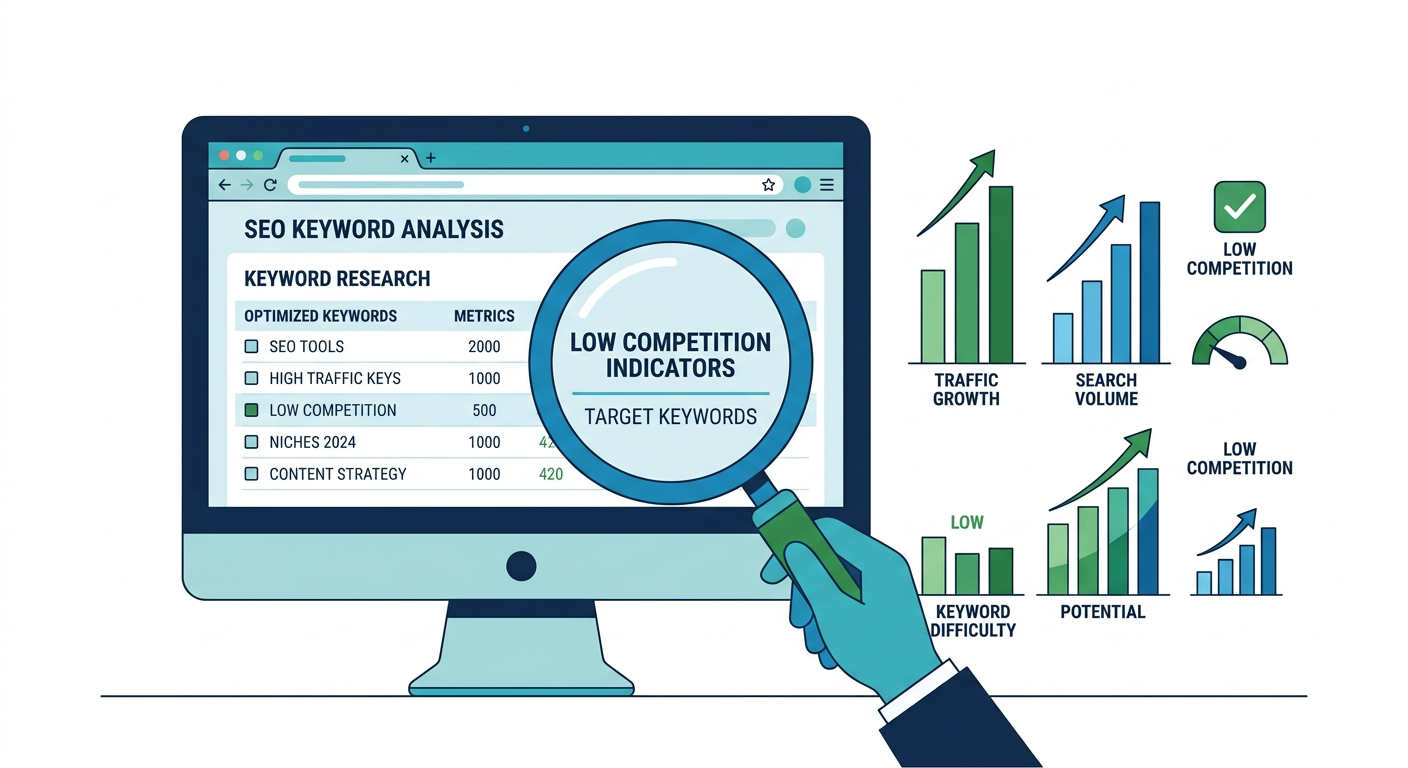
Low competition keywords are search terms with lower difficulty scores (typically under 30 on most SEO tools) that have fewer established sites competing for rankings. These keywords offer new or low-authority sites a realistic chance to rank on page one of Google.
How long does it take for a low-authority site to rank?
With strategic keyword targeting, low-authority sites can see initial rankings within 2-4 months for long-tail, low competition keywords. Building significant organic traffic typically takes 6-12 months of consistent content creation and on-page optimization.
Should I target zero-volume keywords?
Yes, zero-volume keywords can be goldmines for low-authority sites. Many keyword tools underreport actual search volume for long-tail queries. Target these when they align perfectly with search intent and your content expertise. I’ve ranked for dozens of “zero volume” keywords that drive 20-50 visits monthly—the tools simply lack complete data.
How many keywords should I target per article?
Focus on one primary keyword and 2-4 closely related secondary keywords per article. Trying to rank one piece of content for 20 different keywords dilutes your topical focus. Build separate articles for distinct topics and link them together for topical authority.
Do I need backlinks to rank low competition keywords?
Not necessarily. For true low-competition keywords (KGR under 0.25), I’ve ranked dozens of articles with zero backlinks purely through on-page optimization and content quality. As competition increases slightly, you’ll need some links, but internal links and a few natural mentions can suffice initially.
My Top Recommended Gear
After testing hundreds of tools over the years, these are the resources I actually use for keyword research on low-authority projects:
- SEO Keyword Research Guide Books – Physical reference books provide frameworks that don’t change with algorithm updates, unlike many online courses that become outdated.
- Dual Monitor Setup – Having keyword tools on one screen and Google search results on another dramatically speeds up competitive analysis and research workflows.
- Ergonomic Office Chair – You’ll spend hours doing keyword research. Investing in your physical comfort prevents burnout and maintains productivity during long research sessions.
Disclaimer: This post contains affiliate links. As an Amazon Associate, I may earn a commission from qualifying purchases at no additional cost to you.