
Let’s be honest: the ecommerce meaning confuses people because it sounds like you need a boardroom, a blazer, and a 40-slide deck to understand it. You don’t. If you’ve ever bought something online while telling yourself “this is definitely the last purchase,” you already understand ecommerce at a gut level.
Table of Contents
Ecommerce Definition (In Plain English)
Here’s the simplest ecommerce definition I’ve found that actually helps: ecommerce is selling (or buying) something online, with the internet handling the transaction and the delivery system doing the rest.
That’s the whole story. People make it sound complicated because complexity sells courses. But the ecommerce meaning comes down to a few moving parts: a storefront, a payment method, a way to fulfill the order, and a reason for someone to trust you.
If you’re planning to monetize content around ecommerce, you’ll also want to understand how niche selection impacts everything from your product margins to how hard your SEO climb will be. If you haven’t mapped that out yet, this guide on high-profit ecommerce niches will save you a ton of guessing.
Why Ecommerce Exists (Friction Is the Enemy)
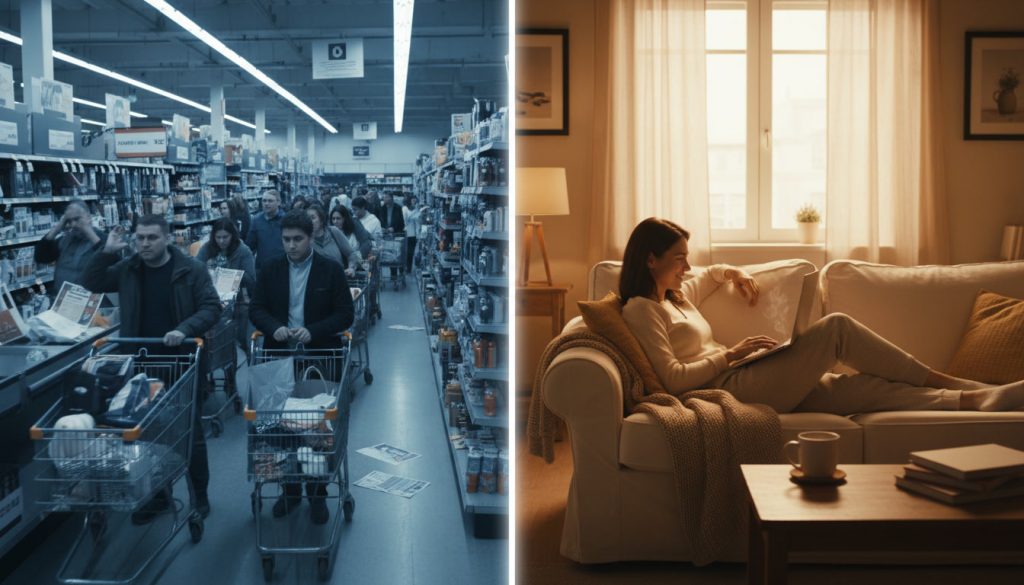
Why does ecommerce keep growing? Because people hate friction. They don’t want to drive, park, wander around, and then stand in a line behind someone arguing about coupons. Ecommerce removes that mess.
In my experience, ecommerce wins when it does three things better than real-life shopping: speed, choice, and convenience. That’s it. Everything else is decoration.
- Speed: customers buy in minutes (or seconds if you do it right).
- Choice: you can stock infinite “shelf space” online.
- Convenience: people shop on their couch, half-awake, living their best impulsive life.
Types of Ecommerce (B2C, B2B, C2C, DTC)
When people say “ecommerce,” they usually mean one of a few models. Knowing which one you’re looking at helps you understand the customer psychology and how the money actually moves.
B2C: Business to Consumer
This is the classic online store setup: a business sells directly to a customer. B2C ecommerce lives and dies by trust—clean design, solid reviews, and a checkout that doesn’t feel like a trap.
B2B: Business to Business
B2B ecommerce isn’t flashy, but it’s powerful. Businesses buy from other businesses, often in larger quantities. B2B usually means repeat orders and bigger cart sizes, but longer sales cycles.
C2C: Consumer to Consumer
This is people selling to other people through a platform. The platform handles trust signals (ratings, dispute systems, buyer protection). C2C runs on reputation. No reputation? No sales.
DTC: Direct to Consumer
DTC means a brand sells directly without middlemen. In my experience, DTC is awesome because it gives you higher margins and direct customer data. But yeah, you also own the support inbox. Enjoy. 🙂
How Ecommerce Works (The Real Flow)
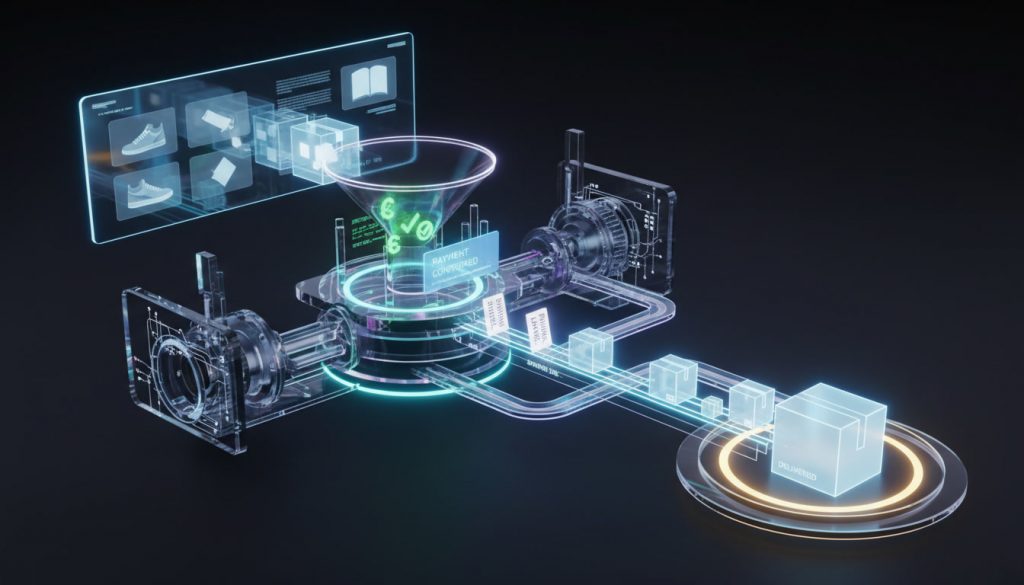
People ask for “ecommerce explained” like it’s a hidden machine. It’s not. It’s a simple flow with a few critical checkpoints.
- Traffic arrives: someone lands on your product page (from Google, social, ads, email, etc.).
- Decision happens: they decide if they trust you and want the product.
- Checkout completes: payment goes through without drama.
- Fulfillment delivers: the product arrives (physical) or gets accessed (digital).
Here’s the part beginners miss: your conversion rate depends on reducing doubt. Every extra step, confusing policy, or slow-loading page adds doubt. Doubt kills carts.
Helpful gear (educational, not hype)
If you sell physical products, you’ll eventually appreciate boring-but-important shipping tools. A thermal label printer (faster shipping labels, less ink drama) can save real time once orders pick up.
And if you ship small items, poly mailers (cheap, lightweight packaging) help keep shipping costs predictable.
Platforms and Payments (Where Trust Is Won)
Your storefront platform matters, but not because it’s “cool.” It matters because it controls speed, mobile experience, and checkout reliability. And yes, customers judge you fast. Like, unfairly fast.
I’ve found that a solid ecommerce setup always nails the same basics: fast pages, clear product info, simple navigation, and frictionless payment. If your site feels confusing, people bounce. They don’t “think about it.” They vanish.
- Product page clarity: price, delivery, returns, and what’s included should be obvious.
- Checkout trust: recognizable payment options and no surprise fees.
- Mobile-first design: most shoppers browse on phones, even if they purchase later on desktop.
If your ecommerce goal includes affiliate monetization or content-driven traffic, it helps to understand how money “decouples” from your hours once systems start doing repeatable work. This breakdown of passive income explained connects the dots in a way most people skip.
Ecommerce vs Traditional Retail (Same Goal, Different Rules)
Traditional retail sells through location and experience. Ecommerce sells through convenience and reach. They both want the same outcome: a purchase. They just play different games.
Here’s the big difference: ecommerce lets you scale without renting more space. You scale through traffic, conversion improvements, and fulfillment systems. Physical retail scales through real estate, staffing, and inventory planning that can get expensive fast.
Quick comparison
- Ecommerce: global reach, lower overhead, data on everything.
- Retail: immediate gratification, tactile experience, foot traffic dependency.
Pros and Cons of Ecommerce (The Honest Version)

If you only hear the upside, you’ll assume ecommerce is a cheat code. It’s not. It’s a business model with leverage, not magic.
Pros: Why People Love Ecommerce
- Scalability: you can sell more without opening more locations.
- Automation: checkout, email, fulfillment workflows can run in the background.
- Measurable marketing: you see what works (and what’s burning money).
Cons: What People Underestimate
- Competition: the internet is crowded, and customers comparison-shop like it’s a sport.
- Traffic isn’t guaranteed: “build it and they come” is a bedtime story.
- Operations matter: shipping mistakes, refunds, and support can eat margins.
Another practical tool people ignore
If you handle inventory or do any kind of product photo setup, barcode/label rolls (clean organization, fewer packing errors) are the kind of boring upgrade that quietly prevents chaos.
Ecommerce Marketing: Traffic Is Oxygen
Want the most useful “ecommerce explained” truth? This: you don’t have an ecommerce business without traffic. You have a website that your mom visits to be supportive. (No shade—moms are MVPs.)
In my experience, ecommerce marketing works best when you stack channels. Not because you love complexity, but because channels get weird. Algorithms change. Ads get expensive. Platforms decide they “don’t like” your account for reasons they’ll never explain.
- SEO: consistent traffic if you publish helpful content and target real intent.
- Email: the highest-leverage channel for repeat purchases.
- Retargeting: reminds “almost buyers” to finish what they started.

Common Ecommerce Myths (That Waste Your Time)
Most ecommerce frustration comes from believing stuff that sounds good in theory but collapses in reality. Let’s clear the air.
Myth #1: Ecommerce is passive income.
Reality: You can build leverage, but you still manage systems, customers, and marketing.
Myth #2: You need a massive budget to start.
Reality: You need a clear offer and a plan to get traffic. Money helps, but clarity helps more.
Myth #3: The market is “too saturated.”
Reality: Bad positioning is saturated. Good positioning still wins.
Conclusion: The Ecommerce Meaning in One Line (Plus a Real Next Step)
So here’s the ecommerce meaning in one clean sentence: ecommerce is selling online through a system that makes buying easy and fulfillment reliable. That’s the core, and it doesn’t change.
If you want a useful next step, don’t just memorize an ecommerce definition. Pick a niche, validate demand, and build one simple offer. Then improve it based on what people actually do, not what you hope they’ll do.
Because honestly? The best “ecommerce explained” guide is the first store you launch. Everything else is just procrastination with better typography.
As an Amazon Associate, I earn from qualifying purchases.


0 Comments