
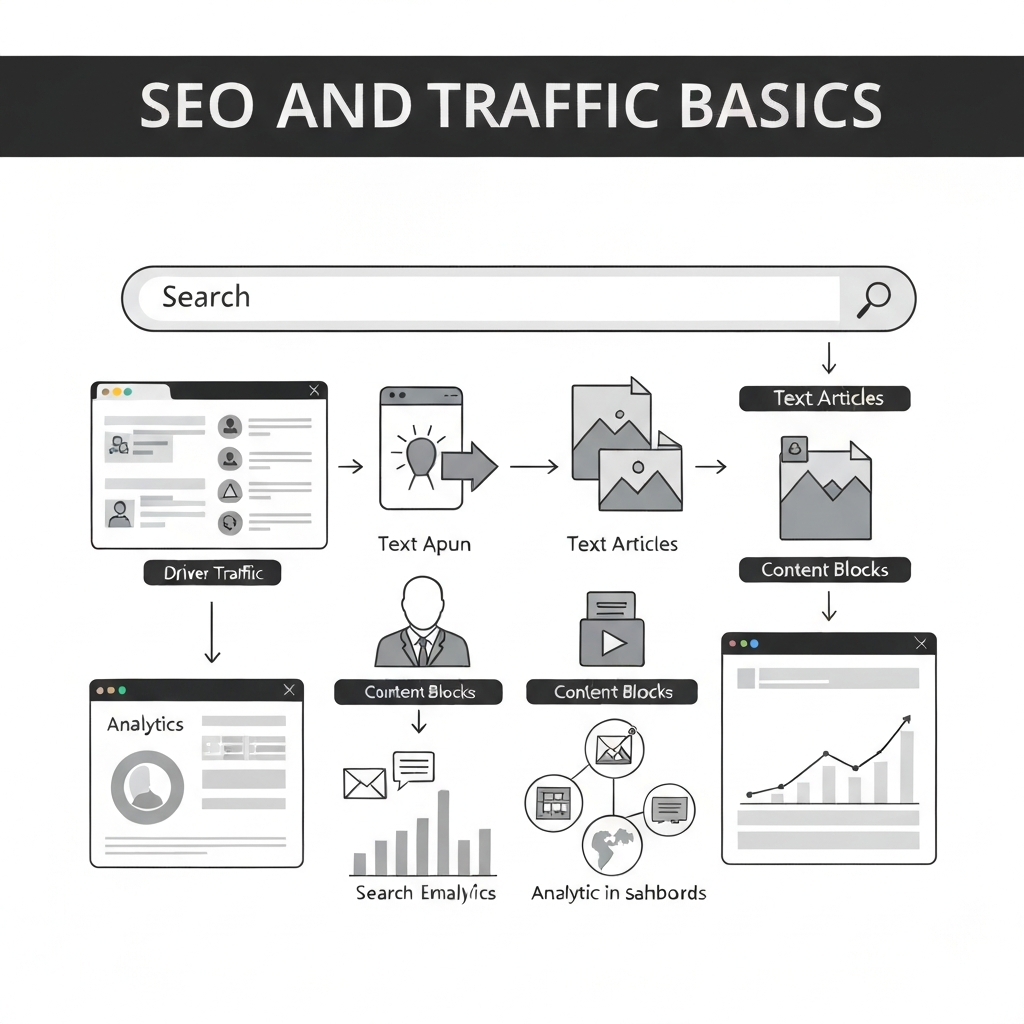
Traffic & SEO for Beginners: Fast Wins in 30 Minutes
If you’ve ever published a post and heard… nothing—no clicks, no sign-ups, no sales—welcome to the part nobody glamorizes. The internet isn’t “build it and they will come.” It’s “build it, then prove you deserve attention.”
This guide gives you the beginner-friendly basics of Traffic & SEO without the fluffy guru talk. You’ll learn what matters, what doesn’t, and what to do first so you stop guessing and start building momentum.
Table of Contents
- The Real Problem: Why No One Finds You
- What Traffic & SEO Actually Mean
- How Search Works (In Plain English)
- The Basics That Move the Needle
- Common Misconceptions That Waste Months
- A Simple 30-Minute Daily Starter Plan
- Recommended Resources
- Your Next Step
Attention: The Real Problem (And It’s Not Your Effort)
Most beginners work hard. They post consistently. They tweak colors. They share on social. And still… the traffic graph looks like a flatline.
Here’s what’s happening: your content isn’t “bad.” It’s invisible. Search engines don’t rank effort. They rank relevance, clarity, and proof.
Traffic & SEO are basically your distribution system. Without it, you’re building a store in the desert and hoping someone randomly walks by.
If you want a straight-shooting roadmap, use this internal guide as your foundation: 30-day traffic plan that builds real momentum. It’s the kind of structure that keeps you from bouncing between random tactics.

Interest: What Traffic & SEO Actually Mean
Let’s strip it down.
Traffic = attention that lands on your pages
Traffic can come from search, social, email, referrals, or ads. For beginners, search traffic is usually the best long-term bet because it compounds. You publish once, and it can pay you back for months (even years) if you hit the right query.
SEO = making your pages easy to understand and easy to trust
SEO (Search Engine Optimization) is the process of helping search engines understand:
- What your page is about (topic clarity)
- Who it’s for (search intent)
- Why it’s credible (quality signals)
- Why it deserves visibility (helpfulness + usefulness)
For a high-authority starting point, Google’s own documentation is the simplest “no drama” reference: Google Search Central SEO Starter Guide.
Interest: How Search Works (In Plain English)
Search engines do three big jobs:
1) Crawl
They discover pages by following links. No links pointing to you? Slower discovery. Bad internal linking? Search engines miss important pages.
2) Index
They store and organize pages they understand. If your content is thin, confusing, or blocked, it might not index properly.
3) Rank
They choose which pages best answer the query. Ranking isn’t a prize for having a website. It’s a competition to be the most helpful answer.
Want the “official” view on what quality content looks like? Read Google’s guidance on creating helpful content: Creating Helpful, Reliable, People-First Content.

Desire: The Basics That Actually Move the Needle
You don’t need 57 tools. You need a few fundamentals done well. This is where beginners start winning.
1) Pick keywords that match real intent
A beginner mistake: targeting broad keywords like “SEO” or “traffic.” You’ll get crushed. Instead, start with specific, high-intent searches that scream a clear problem.
- Good: “how to increase blog traffic fast”
- Better: “how to get SEO traffic to a new blog”
- Best: “why my blog isn’t getting traffic from Google”
Don’t overthink keyword research at first. You’re hunting for clear questions, specific pain, and reachable competition.
2) Write for one person with one problem
Search engines reward clarity. So does your reader. Every post should answer:
- What problem is this page solving?
- What does the reader want to do next?
- What would make them trust this advice?
If you want a practical list of tactics that work without spammy nonsense, plug this in as your playbook: 7 proven tactics for explosive traffic growth.
3) Nail your on-page basics (the “boring” stuff that prints money)
- Title: Make it clear + click-worthy without lying.
- Intro: Confirm the reader’s pain fast. Then promise a solution.
- Headers (H2/H3): Break content into scannable chunks.
- Internal links: Point readers to the next logical step.
- Images: Add clarity, not decoration. Use descriptive alt text.
4) Build internal links like you’re guiding a human (because you are)
Internal links do two things: they help readers navigate, and they help search engines map your site. The trick is making links feel natural—like a helpful suggestion, not a forced SEO move.
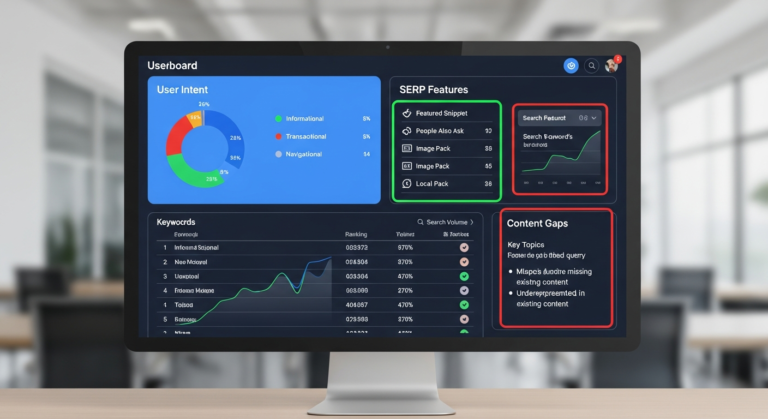
One of the smartest ways to build faster rankings is to upgrade pages that are already close to page one. If you haven’t done that before, this is your shortcut: SERP analysis worksheet for the “page 2 fix” system.
5) Don’t ignore site experience
If your pages load slowly, jump around, or feel messy on mobile, users bounce. Search engines notice that behavior. You don’t need perfection, but you do need “pleasant.”
If you want a reputable, technical reference for performance basics, Lighthouse is a good place to start: Chrome Lighthouse Overview.

Desire: Common Misconceptions That Waste Months
Misconception #1: “SEO is just keywords.”
Keywords matter, but they’re not magic. If your page doesn’t satisfy the search intent, you won’t stick—no matter how “optimized” it looks.
Misconception #2: “More posts = more traffic.”
More posts can help, but only if they’re targeted and internally connected. A messy pile of random articles usually becomes a graveyard.
Misconception #3: “Backlinks are the only thing that matters.”
Backlinks help, but beginners often chase them too early. Start by building content that deserves links first: unique examples, useful templates, clean explanations, real value.
Action: A Simple 30-Minute Daily Starter Plan
If you’re starting from zero, consistency beats intensity. Here’s a beginner plan that works even if you’re busy.
Daily (30 minutes)
- 10 min: Research 3 search queries your audience would type.
- 10 min: Improve one existing post (add clarity, headers, examples).
- 10 min: Add 1 internal link where it genuinely helps the reader.
Weekly (1–2 hours)
- Publish one focused article that answers one specific question.
- Update one “almost ranking” article with better examples and tighter structure.
- Create one simple supporting asset (checklist, template, mini FAQ section).
Do this for 30 days and you’ll feel the difference—less guessing, more direction, and a site that starts acting like a system.
Recommended Resources
Amazon picks (beginner-friendly SEO & traffic)
- The Art of SEO (Book) Solid foundation if you want to understand how SEO works beyond surface-level tips.
- SEO For Dummies (Book) Beginner-friendly, practical, and easy to reference when you get stuck.
- Content Chemistry (Book) Great for turning “random content” into an actual traffic engine that supports business goals.
High-authority references
Your Next Step
Here’s your move: pick one page on your site and improve it today using the basics above—clear intent, better structure, one helpful internal link, and a stronger “next step” for the reader.
If you want, tell me your niche + the page you want to rank, and I’ll map:
- a primary keyword + 5 supporting keywords,
- a tighter H2/H3 outline built for search intent,
- and 3 internal link placements that actually make sense.
As an Amazon Associate, I earn from qualifying purchases.



One Comment
Comments are closed.