
ONLINE BUSINESS MODELS
Online Business Models That Make Sense in the Real World
Most people do not need more ideas. They need a better filter. This page breaks down practical online business models so you can stop chasing every shiny opportunity and choose a path that actually fits your skills, budget, patience, and long-term goals.
Clearer choices • Less distraction • Better business fit
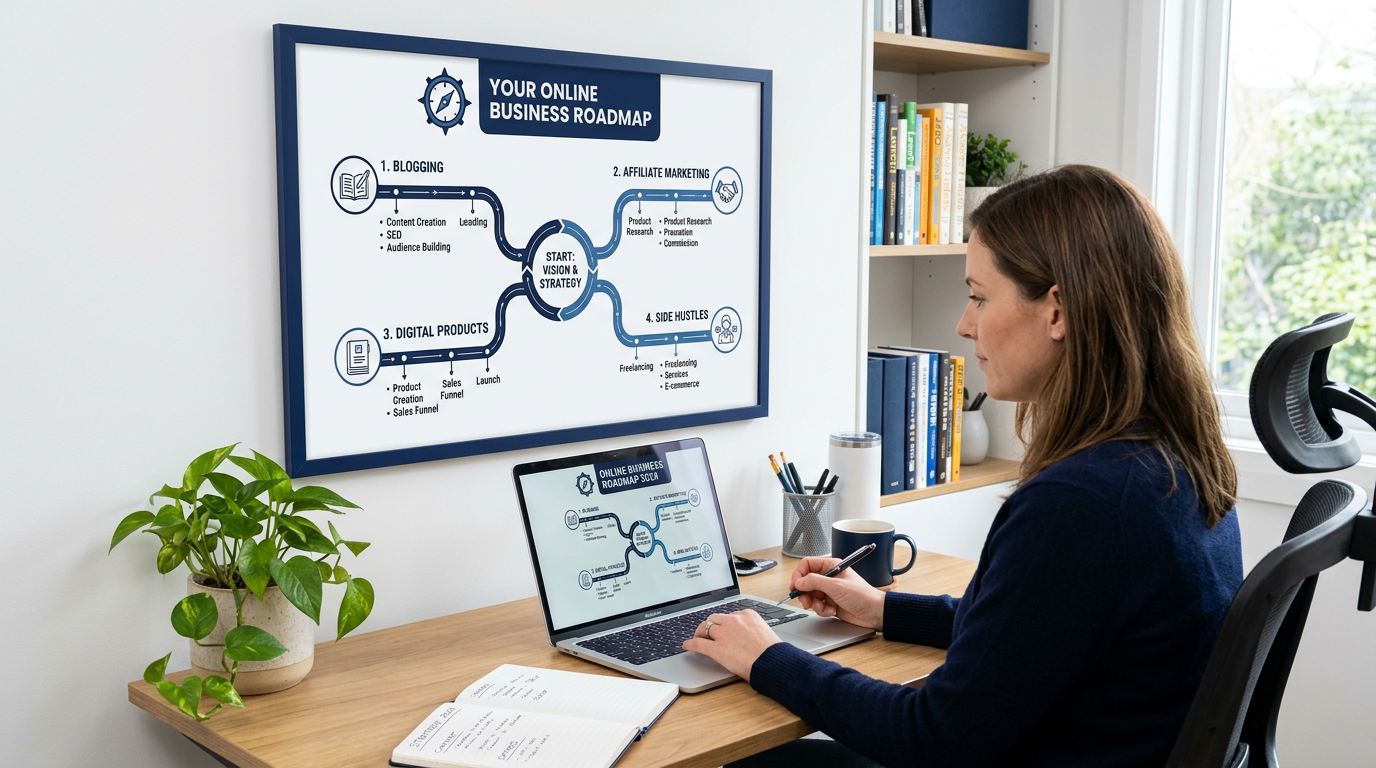
Why Choosing the Right Model Matters
A lot of people stay stuck because they never commit to one path long enough to make it work. They jump from affiliate marketing to dropshipping to freelancing to digital products to whatever trend showed up in their feed that morning. That is not strategy. That is business ADHD.
The model you choose shapes almost everything else: how you get customers, how fast you can start, how much money you need, how content fits in, how traffic matters, how scalable the business can become, and how much patience the whole thing requires.
That is why the first smart move is not asking which model sounds coolest. It is asking which one actually fits the way you want to work and what you are realistically willing to build.
What Makes an Online Business Model Worth Pursuing
A good model is not just one that can make money. Plenty of models can make money. The better question is whether the model matches your strengths and whether the effort compounds over time instead of resetting to zero every week.
Some models are better for people who like writing and content. Some fit people who prefer client work. Some work better with paid traffic. Some are slower but stronger in the long run. The right move is not copying somebody else’s setup blindly. It is choosing something you can actually stick with and improve.
A Strong Model Usually Has These Traits
- Fits your skills, interests, and working style
- Has a clear way to reach the right audience
- Can be monetized without sounding desperate
- Lets effort build on top of previous effort
- Does not require pretending to be somebody you are not
Where People Go Wrong
Most people do not choose a bad model because they are unlucky. They choose badly because they use bad criteria.
Chasing Trends
A model looks amazing when somebody is showing only the upside and none of the tradeoffs. Trend-chasing usually ends with wasted time and no foundation.
Ignoring Fit
A model can be profitable and still be wrong for you. If it fights your strengths, you will probably quit before the upside shows up.
Expecting Instant Results
Some models move faster than others, but almost all legitimate businesses take longer than hype videos suggest.
Trying to Do All of Them
Combining everything at once sounds ambitious until you realize you built six half-businesses and one actual headache.
Popular Online Business Models
These are some of the most practical paths people look at. None of them are magic. Each has strengths, weaknesses, and a different fit.
Affiliate Marketing
Best for people who like content, recommendations, SEO, reviews, tutorials, and building traffic over time.
Strong upside when paired with content and trust. Weak if you hate publishing or want instant money.
Blogging / Content Sites
Best for people who want to build topical authority, organic traffic, email lists, and monetization through multiple channels.
Slower start, stronger compounding potential when built well.
Freelancing / Services
Best for people who want to monetize a skill quickly through clients, retainers, consulting, or project work.
Fastest path to revenue for many people, but less scalable unless you productize or build a team.
Digital Products
Best for people who can package knowledge, templates, systems, or creative assets into something sellable.
Great margins. Usually works better once you already have trust, traffic, or an audience.
Print on Demand / Ecommerce Lite
Best for people who want product-based business without handling inventory directly.
Can work, but branding, offer quality, and traffic still matter a lot. It is not free money with a T-shirt slapped on it.
Creator / Audience Business
Best for people comfortable building a public brand through content, email, video, or social media.
High upside if you can build trust and consistency. Harder if you hate being visible.
How to Pick Your Path
Use something better than vibes. Pick a model based on the kind of work you can sustain and the kind of business you actually want to build.
STEP 1
Audit Your Strengths
Are you better at writing, selling, design, systems, client work, or teaching? Pick a model that leans into that instead of fighting it.
STEP 2
Check Your Time Horizon
Do you need cash faster, or can you build slower for a bigger long-term asset? That answer changes the best starting point.
STEP 3
Match the Model to the Traffic
Some models lean on SEO, some on outreach, some on paid traffic, some on audience building. Know what game you are signing up for.
STEP 4
Commit Long Enough to Learn
Do not quit just because you did not become a case study in three weeks. Pick, build, measure, improve.
Best Guides to Read Next
These pages should help readers move from “what should I do?” into an actual next step.
Affiliate Marketing for Beginners
A strong next read for people leaning toward content, recommendations, and search traffic.
Read the Guide →How to Start a Blog That Makes Money
The best next step for people who want an asset-driven content business with long-term upside.
Read the Guide →Best Side Hustles From Home
A useful page for people who are still comparing paths and want a broader decision filter.
Read the Guide →Best Tools for Building an Online Business
A smarter next step for readers who want the lean tool stack that supports whichever model they choose.
See the Tools →Online Business Models FAQ
What is the best online business model for beginners?
There is no universal best. For some people it is freelancing because revenue can come faster. For others it is blogging or affiliate marketing because they want a longer-term asset that compounds.
Which online business model scales best?
Asset-based models like content sites, affiliate businesses, digital products, and audience businesses often scale better than pure client work, but they usually take longer to mature.
How do I know which business model fits me?
Look at your strengths, patience level, budget, and whether you prefer client delivery, content publishing, product creation, or audience building. Fit matters more than hype.
Should I combine multiple online business models?
Eventually, maybe. At the start, usually no. A focused model with strong execution usually beats a scattered setup trying to do everything badly.
Pick a Model You Can Actually Build
The smartest move is not chasing whatever looks hottest right now. It is choosing a path that fits, committing to it long enough to learn, and building something that gets stronger over time.