
SEO & Blogging Strategy
On-Page SEO for Bloggers
A lot of bloggers think on-page SEO is some complicated technical game. It is not. Most of it comes down to making your page easier for search engines to understand and easier for humans to read, trust, and act on.
If your content is decent but your posts still are not pulling enough traffic, weak on-page SEO is usually one of the culprits. This guide breaks down the fixes that actually matter without turning the process into a spreadsheet addiction.
What On-Page SEO Really Means
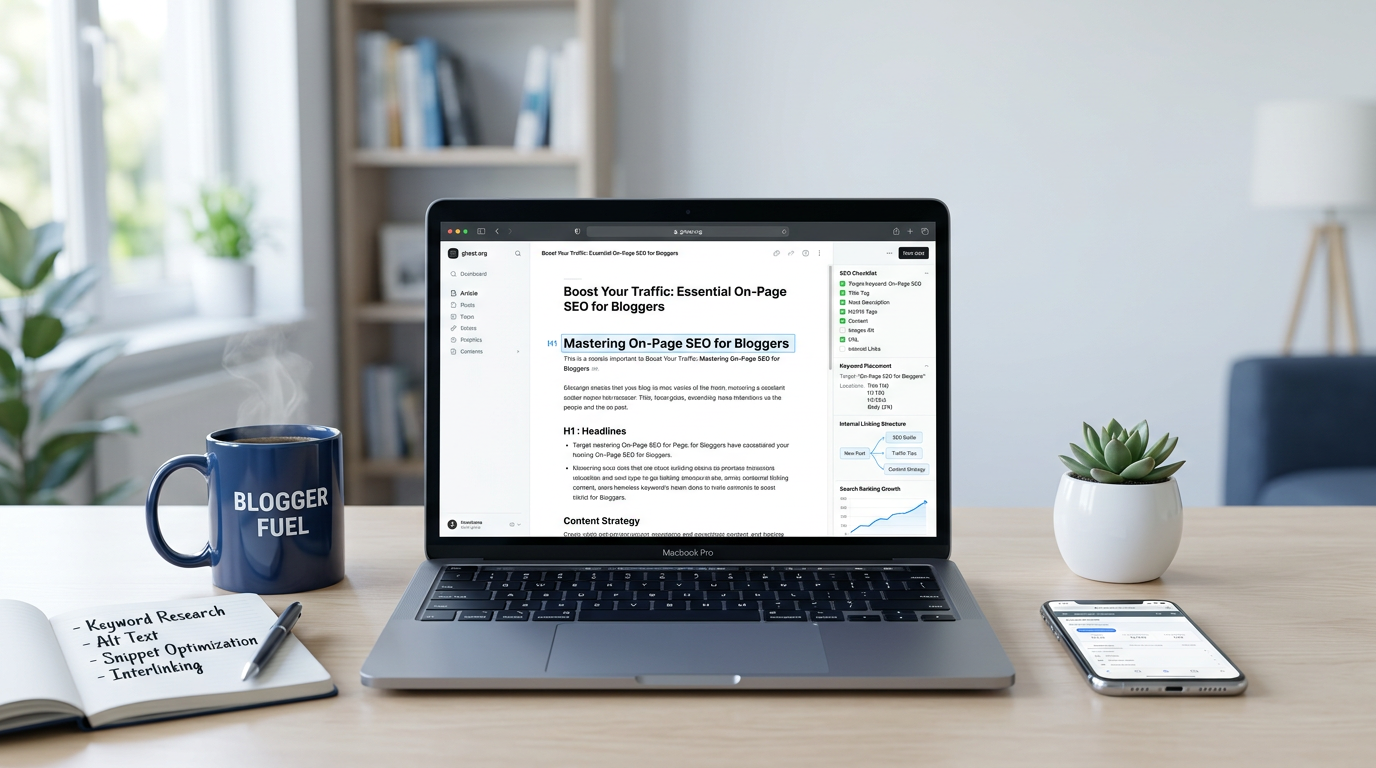
On-page SEO is the stuff you can directly control on the page itself. That includes your title, headings, URL, internal links, image alt text, keyword placement, content structure, and overall readability. Good on-page SEO helps search engines understand your content and helps readers decide whether your page is worth their time.
This is not about stuffing keywords like it is 2009. It is about clarity, relevance, and usefulness. A well-optimized page gives search engines better signals and gives readers a smoother experience. If you are still building the foundation, start with the free blueprint so your content and site structure are working together instead of fighting each other.
That is why on-page SEO matters so much for bloggers. You may not control Google, but you do control how well your content is packaged.
The Most Important On-Page SEO Elements
1. Title Tags That Earn Clicks
Your title tag does two jobs. It tells search engines what the page is about, and it convinces people to click. If your title is vague, boring, or bloated, your post can lose traffic even when it ranks.
Put the main keyword in the title naturally, keep it clear, and make it worth the click. No circus tricks needed.
2. Clean Headings and Page Structure
Headings help readers scan the page and help search engines understand the content hierarchy. Your H1, H2s, and H3s should not be random decoration. They should organize the content in a way that makes the page easier to understand.
Use one clear H1, break sections into logical H2s, and keep subpoints under H3s when needed. If your post looks chaotic, it probably reads chaotic too.
3. Keyword Placement Without the Weird Stuff
Yes, keywords still matter. No, you should not jam the same phrase into every paragraph. Put the target keyword in the title, intro, a heading where it makes sense, and naturally throughout the content. Then use related phrases that support the topic.
Search engines are much better at understanding context now. Write like a competent human, not a malfunctioning robot.
4. Internal Links That Actually Help
Internal links are one of the easiest wins bloggers ignore. They help search engines discover more pages, pass relevance signals, and keep readers moving through your site. They also help you build topical authority instead of leaving every post stranded on its own island.
Link to relevant posts, guides, tools pages, and category hubs. Do not force it. Make the next click useful. For example, a post like this should naturally connect readers to your content and blogging section so they can keep building topical depth instead of bouncing off the page.
5. Content That Matches Search Intent
This is the part too many bloggers skip. If someone searches for a beginner guide and lands on a fluffy opinion piece, that is a mismatch. If they want a quick checklist and you dump 4,000 words of filler on them, same problem.
Good on-page SEO is not just formatting. It is giving the searcher the kind of answer they expected to find.
6. Readability and User Experience
If your paragraphs are huge, your font is annoying, or your layout is cluttered, people leave faster. That hurts user experience and usually hurts performance too.
Shorter paragraphs, clear spacing, strong subheads, and useful visuals make content easier to consume. Easier to consume usually means easier to win with.
7. Image Optimization
Images should support the content, not slow it down. Compress them, use descriptive filenames, and write alt text that describes what is actually in the image. This helps accessibility and gives search engines another layer of context.
Also, stop uploading giant images when a properly sized one will do the job. Your load time will thank you.
8. URLs, Meta Descriptions, and Other Easy Wins
Your URL should be short and readable. Your meta description should summarize the page clearly and encourage clicks. Neither one needs to be clever for the sake of it. Clean beats cute.
These are not the biggest ranking factors on their own, but they are easy wins that improve the overall page package.
Common Blogger Mistakes
Most on-page SEO mistakes are not advanced. They are basic execution problems. Stuff like weak titles, zero internal links, no clear heading structure, missing keyword focus, messy intros, and articles padded with filler instead of value.
The balance bloggers need is simple: optimize for both search engines and readers. If you only write for robots, the content feels dead. If you only write for yourself, the content may never get found.
The fix is not more complexity. The fix is better page discipline.
How to Improve On-Page SEO Fast
Start with your existing posts. That is usually the fastest ROI. Find posts that already get some impressions or traffic, then tighten the title, improve the intro, add better headings, insert internal links, and expand weak sections.
- Rewrite weak titles so they are clearer and more clickable
- Add internal links to related posts and money pages
- Break giant text walls into scannable sections
- Improve intros so readers know they are in the right place
- Update old posts with better structure and fresher relevance
That is the kind of work that compounds. Small page-level improvements can stack up into real traffic gains. Once you tighten your pages, keep the momentum going by building out stronger supporting content in your content and blogging hub.
Final Word
On-page SEO for bloggers is not about gaming the algorithm. It is about making your content easier to understand, easier to trust, and easier to navigate. That helps both search engines and real readers, which is exactly where you want to be.
Get the basics right first. Strong titles. Clean structure. Better internal links. Useful content. Good user experience. That is the stack that moves the needle. Then use the free blueprint to turn those improvements into a cleaner growth system.
Bottom line
If your page is easier to understand, easier to read, and easier to navigate, your on-page SEO is probably getting stronger. If it is cluttered, confusing, and bloated, fix that first.
Keep Going
Turn Better SEO Into Better Blog Growth
Use the free blueprint to tighten your setup, or jump into the content and blogging section to keep building pages that rank, help readers, and make money.