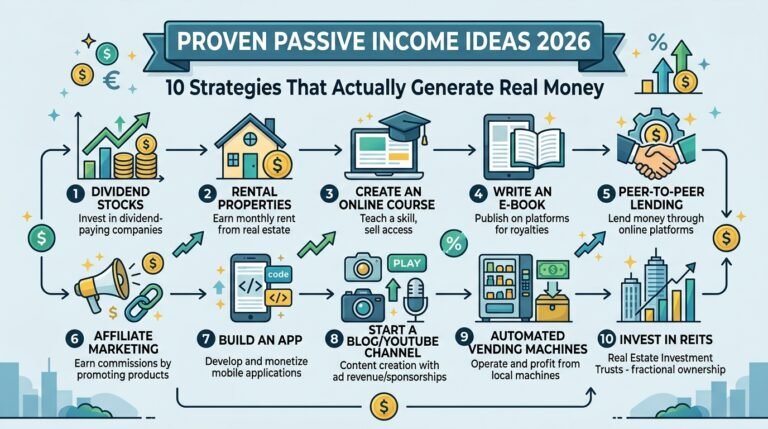
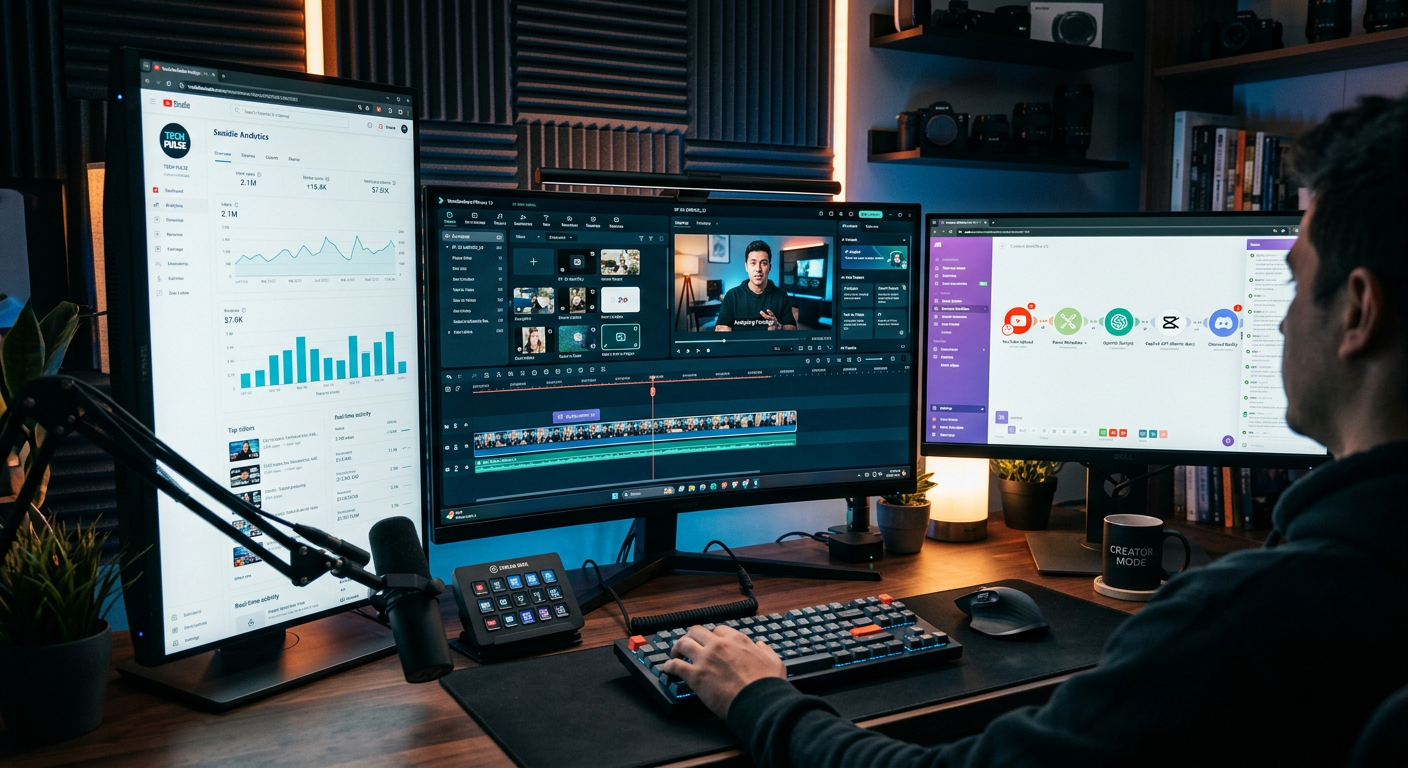
Faceless YouTube Automation for Beginners Step by Step
Let me guess: you’re intrigued by faceless YouTube automation for beginners but overwhelmed by the contradictory advice floating around. I’ve spent the last seven years building and consulting on YouTube channels, and I can tell you this—most of the “gurus” selling courses have never actually scaled a faceless channel themselves. Here’s the problem: everyone wants passive income from YouTube, but the learning curve feels brutal. You’re competing against millions of creators, algorithm changes happen weekly, and most automation tutorials are either outdated or flat-out wrong. The solution? A step-by-step system that focuses on what actually works in 2025, minus the nonsense.
Table of Contents
- What Is Faceless YouTube Automation?
- Why I Recommend Faceless Channels for Beginners
- Step 1: Choosing Your Profitable Niche
- Step 2: Building Your Content Strategy
- Step 3: The AI Tools That Actually Work
- Step 4: My Streamlined Production Workflow
- Step 5: YouTube SEO and Optimization
- Step 6: Monetization Beyond AdSense
- Common Mistakes I See Beginners Make
- FAQ
- My Top Recommended Gear
What Is Faceless YouTube Automation?
Faceless YouTube automation is the process of creating, uploading, and monetizing YouTube videos without ever appearing on camera, using AI tools, stock footage, voiceovers, and systematic workflows to maintain consistent content output. You’re essentially building a media company instead of a personal brand.
Unlike traditional YouTube channels where your face is your brand, faceless automation relies on niche authority, production quality, and algorithmic understanding. Think channels like “Kurzgesagt,” “The Infographics Show,” or “Chillhop Music”—they generate millions in revenue without a single host appearing on screen.
The beauty of this model is scalability. Once you nail your workflow, you can produce 10-20 videos monthly (or outsource production entirely) while maintaining quality. I’ve seen solo creators hit $5K/month within their first year using this exact approach, which I also discuss in my getting started guide.
Why I Recommend Faceless Channels for Beginners
Privacy concerns aside, faceless channels solve three massive beginner problems:
- Camera Anxiety: About 70% of aspiring creators never upload their first video because they hate being on camera. Faceless formats eliminate this barrier entirely.
- Scalability: You can’t clone yourself, but you can replicate a production system. Faceless content is infinitely easier to delegate or automate.
- Niche Flexibility: Want to test five different niches? You can do that without creating five different “personas” or confusing your existing audience.
According to a Pew Research study, 81% of Americans use YouTube, making it the second-most visited website globally. The opportunity is massive, but you need a repeatable system to capitalize on it.
Step 1: Choosing Your Profitable Niche
This is where 90% of beginners screw up. They pick niches based on passion instead of profit potential. I’m not saying you should hate your topic, but “profitable passion” beats “pure passion” every time.
Here’s my three-filter system for youtube niche ideas:
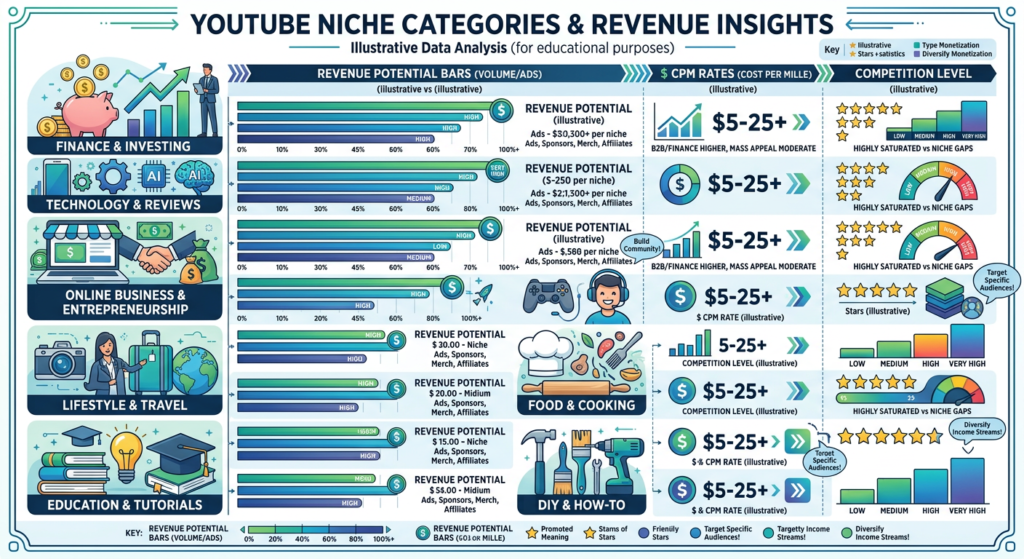
- High CPM Potential: Finance, tech, B2B software, and real estate niches command $8-$25 CPMs. Gaming and entertainment? You’re looking at $2-$4. Do the math.
- Evergreen Content: Avoid trend-dependent niches. “How to invest in index funds” will be relevant in 2035. “Fortnite Season 3 tips” won’t.
- Low Production Complexity: Meditation channels, finance explainers, and AI news breakdowns require minimal editing. 3D animation tutorials? You’ll burn out in three months.
My top-performing niches right now are personal finance automation, AI tool reviews, and “cozy productivity” content. These hit all three filters and align perfectly with affiliate marketing opportunities.
The “CPM vs. Volume” Calculation
A finance channel getting 50K views monthly at $15 CPM earns $750. A gaming channel needs 300K views at $3 CPM to match that. Which sounds easier to achieve?
Step 2: Building Your Content Strategy
Content strategy isn’t about what you want to create—it’s about reverse-engineering what your audience actively searches for. I use a three-pronged approach:
- Search Intent Mapping: I mine YouTube’s autocomplete, TubeBuddy’s keyword explorer, and Google Trends to find queries with high search volume and low competition.
- Competitor Gap Analysis: Find top-performing channels in your niche, filter their videos by “most popular,” then identify topics they covered 2-3 years ago that need updating.
- Content Pillars: Establish 3-5 core themes. For a finance channel, that might be “investing basics,” “side hustles,” “credit optimization,” “tax strategies,” and “retirement planning.”
I batch-plan 30 days of content in a single afternoon using this system. The YouTube Creator Academy offers free courses on audience retention and analytics that complement this approach beautifully.
Step 3: The AI Tools That Actually Work
Let’s cut through the hype. I’ve tested 40+ AI video tools, and most are garbage. Here’s what I actually use in my beginner youtube automation stack:
- Script Generation: ChatGPT (GPT-4) with custom prompts. I feed it my keyword research and competitor scripts, then refine the output. Cost: $20/month.
- Voiceover: ElevenLabs for ultra-realistic AI voices. Their “Adam” and “Bella” voices pass the human test 95% of the time. Cost: $5-$22/month.
- Video Assembly: Pictory.ai or InVideo AI. Both convert scripts to video in under 10 minutes with stock footage and automatic B-roll matching. Cost: $19-$47/month.
- Thumbnail Creation: Canva Pro for templates, then Midjourney for custom eye-catching graphics. Combined cost: $20/month.
Total monthly investment: $64-$109. Compare that to hiring freelancers at $50-$150 per video. IMO, AI tools pay for themselves after your third upload.
The “AI Authenticity” Problem
Here’s what nobody tells you: raw AI output is detectable and boring. I spend 30% of my production time humanizing scripts—adding personal anecdotes, rhetorical questions, and contrarian takes. That’s the difference between 40% retention and 70% retention.
Step 4: My Streamlined Production Workflow
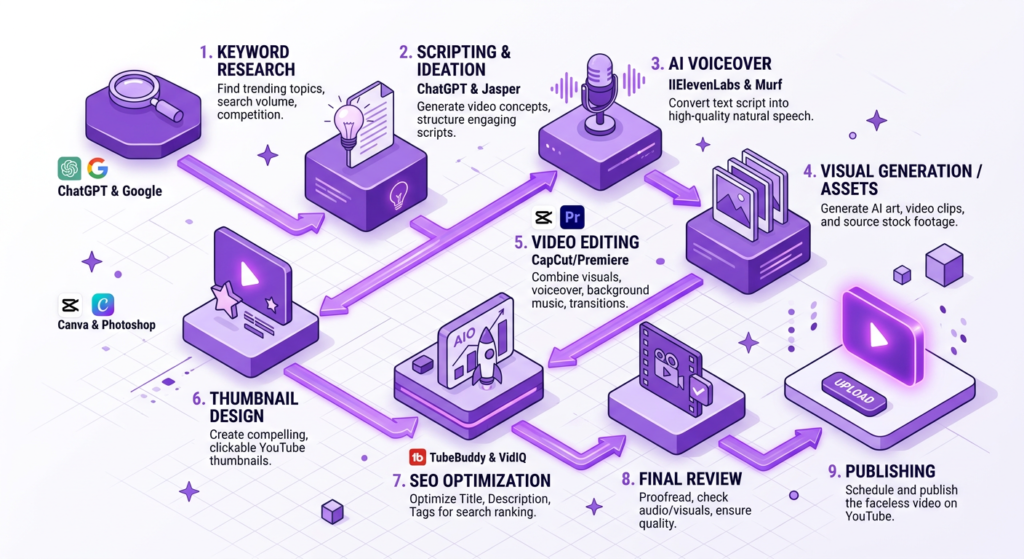
Efficiency is everything in youtube automation tips. My workflow takes 90 minutes per video, start to finish:
- Research (15 min): Identify target keyword, analyze top 3 competing videos, extract key talking points.
- Scripting (25 min): Generate AI draft, edit for personality and accuracy, optimize for retention hooks every 30 seconds.
- Voiceover (5 min): Paste script into ElevenLabs, select voice, generate and download MP3.
- Video Assembly (30 min): Upload script and voiceover to Pictory, select style template, auto-generate video, manual B-roll adjustments.
- Thumbnail (10 min): Canva template customization with high-contrast text and emotional face (even if channel is faceless, thumbnails can use stock emotion photos).
- Upload & SEO (5 min): Upload to YouTube, optimize title/description/tags using VidIQ data, schedule for optimal posting time.
This systematic approach aligns perfectly with the principles I cover in my digital products monetization guide.
Step 5: YouTube SEO and Optimization
Creating great content means nothing if nobody finds it. My faceless youtube channel SEO checklist:
- Title Formula: [Number/Power Word] + [Keyword] + [Benefit/Curiosity Gap]. Example: “7 AI YouTube Videos Mistakes Killing Your Growth (Fix #3 Today)”
- Description Structure: First 150 characters must include primary keyword and compelling hook. Follow with timestamped chapters, secondary keywords, and 2-3 relevant links.
- Tags Strategy: 3 exact-match keywords, 4 broad-match variations, 3 competitor channel names. Total: 10 tags max.
- Engagement Triggers: Ask a specific question in the first 10 seconds that you answer at the 8-minute mark. Pin a controversial comment. Use community posts to drive traffic to new uploads.
According to YouTube’s official data, 500 hours of video are uploaded every minute. SEO isn’t optional—it’s survival.
This video breaks down advanced YouTube automation strategies that complement the foundation I’ve outlined—worth watching for the monetization timeline discussion around minute 7.
Step 6: Monetization Beyond AdSense
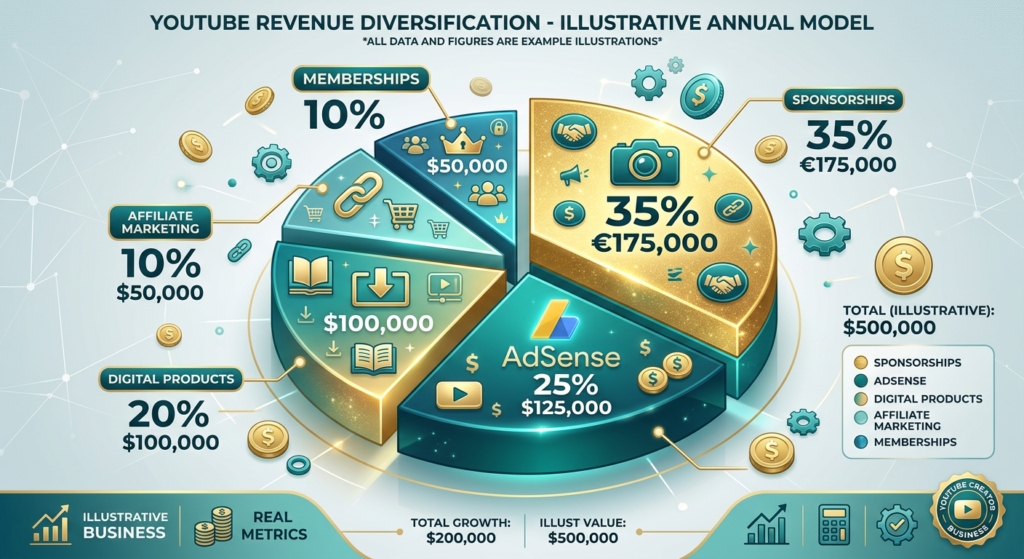
AdSense is the beginning, not the end. Here’s my revenue diversification strategy:
- Affiliate Marketing: Promote tools you actually use. My finance channel earns $2,400/month from affiliate commissions—triple my AdSense revenue. Check out my proven passive income strategies for deeper integration techniques.
- Digital Products: Create a $27 PDF guide or Notion template related to your niche. Even 30 sales monthly adds $810.
- Sponsorships: Once you hit 10K subscribers, platforms like FameBit and Grapevine connect you with brands paying $200-$2,000 per integration.
- Channel Memberships: Offer exclusive content for $4.99/month. 100 members = $499 monthly recurring revenue.
The Federal Trade Commission requires clear disclosure of affiliate relationships—always include disclaimers in descriptions and verbal mentions.
Common Mistakes I See Beginners Make
After reviewing hundreds of struggling channels, these patterns emerge constantly:
- Inconsistent Upload Schedules: YouTube’s algorithm rewards consistency. Two videos weekly beats 8 videos one month and nothing the next.
- Ignoring Analytics: If your average view duration is below 40%, your content isn’t engaging enough. Period. Adjust your scripting and pacing.
- Generic Thumbnails: Your thumbnail competes against 20 others in search results. If it doesn’t trigger curiosity in 0.5 seconds, you’ve lost.
- Premature Outsourcing: Don’t hire editors until you’ve made $1,000 from the channel. Learn the process first so you can evaluate quality later.
- Niche Hopping: Give your channel 50 videos (6 months) before declaring failure. Most successful channels didn’t pop until video 30-40.
FAQ
How much does it cost to start a faceless YouTube automation channel?
You can start with as little as $0 using free tools like Canva, CapCut, and royalty-free stock footage. However, investing $50-$200 monthly in premium AI tools like InVideo AI or Pictory can dramatically accelerate your production quality and speed.
Can I really make money with a faceless YouTube channel?
Absolutely. Channels in niches like finance, true crime, and meditation regularly generate $3,000-$10,000+ monthly through AdSense, sponsorships, and affiliate marketing once they reach monetization thresholds.
How long does it take to monetize a faceless YouTube channel?
Most creators reach YouTube’s monetization requirements (1,000 subscribers and 4,000 watch hours) within 6-12 months with consistent uploads and proper SEO optimization. My fastest channel hit it in 4 months with aggressive keyword targeting.
What are the best niches for faceless YouTube automation?
High-performing niches include personal finance, motivational content, tech reviews, meditation/sleep sounds, AI news, true crime, and history deep-dives. Choose niches with high CPM rates and evergreen content potential.
Do I need to show my face at all?
Nope. Successful faceless channels use stock footage, screen recordings, animations, or text-on-screen formats exclusively. Your voice (or AI voice) and content quality are your brand.
What’s the best AI tool for creating YouTube videos?
In 2025, I recommend Pictory.ai for beginners due to its intuitive interface and template library. Advanced users should explore InVideo AI for more customization options. Both offer free trials.
My Top Recommended Gear
While faceless automation minimizes equipment needs, these tools enhance production quality significantly:
- Blue Yeti USB Microphone: If you’re recording your own voiceovers instead of using AI voices, this $100 mic delivers professional audio quality without complex setups.
- Logitech MX Master 3 Mouse: Editing efficiency matters. The customizable buttons and precision tracking cut my editing time by 20%.
- External SSD 1TB: Video files are massive. A fast external SSD prevents crashes and speeds up render times dramatically.
Disclaimer: This post contains affiliate links. As an Amazon Associate, I may earn a commission from qualifying purchases at no additional cost to you.