
Content & Blogging Strategy
Content Planning for Bloggers
Most bloggers do not have a writing problem. They have a planning problem. They publish whatever feels interesting that day, then wonder why traffic is random, internal linking is weak, and the site never starts compounding.
A smart content plan fixes that. It helps you choose better topics, publish with more consistency, connect articles more strategically, and build a blog that grows like a system instead of lurching forward one post at a time.
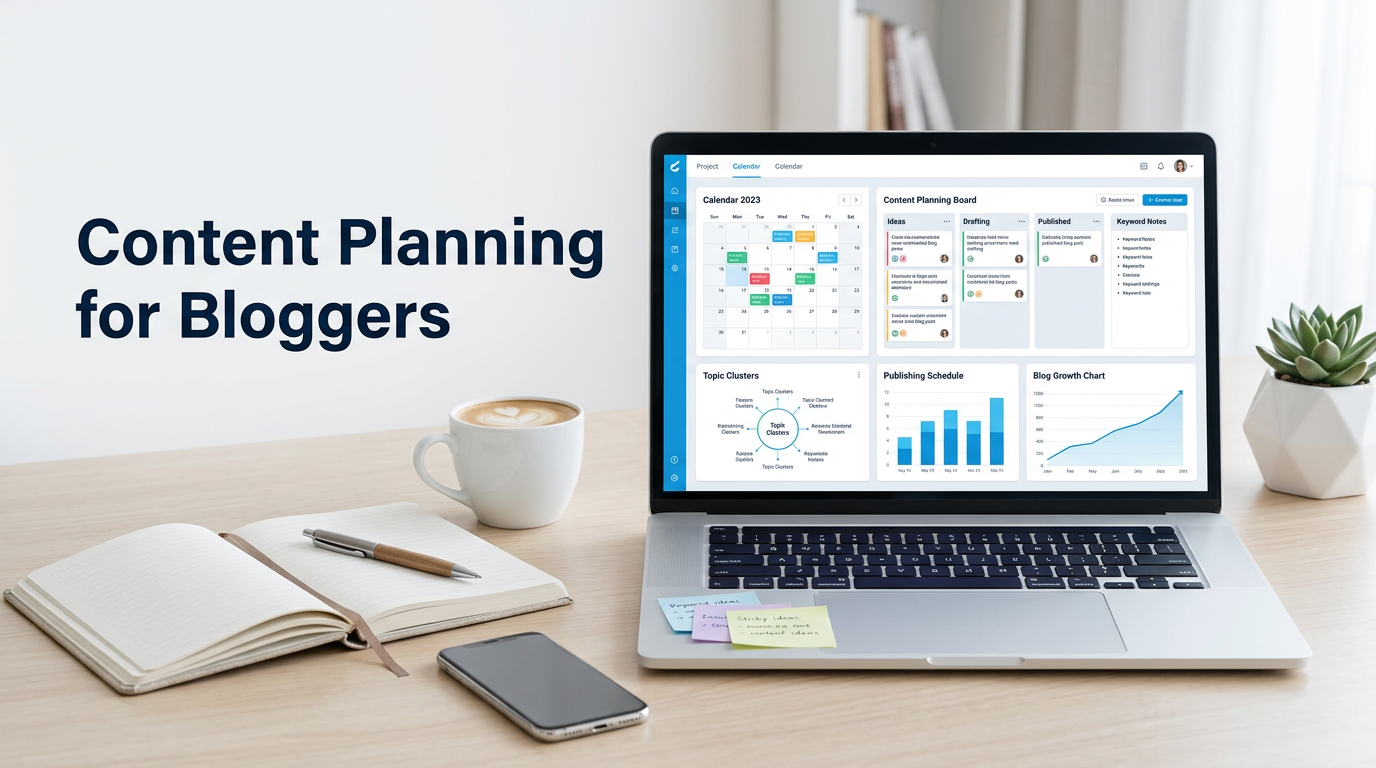
Why Content Planning Matters
Google’s helpful content guidance is brutally clear: create content to benefit people, not just to manipulate rankings. That sounds obvious, but it has real planning implications. If your topic choices are random, your site structure is messy, and your posts do not support each other, the content is harder to make useful at scale. :contentReference[oaicite:1]{index=1}
Yoast recommends using an editorial calendar, deciding on a realistic frequency, and mixing evergreen topics with seasonal or current-event content. That is not just workflow advice. It is how you make publishing more reliable and strategic. :contentReference[oaicite:2]{index=2}
If you are still piecing the system together, start with the free blueprint so your planning process connects to a real site structure instead of a pile of random draft ideas.
The Core Content Planning System
1. Plan Around Topics, Not Just Titles
A weak plan is just a list of blog post titles. A strong plan is built around topic clusters, reader problems, and search intent. That means choosing a main topic area, then mapping supporting posts that can link together logically and build authority over time.
This is how you stop publishing isolated articles that never support each other.
2. Start With Keyword and Audience Research
Yoast recommends using keyword research as the basis for planning, and that is the right move. Your plan should reflect what people actually search for, what they struggle with, and where your site has a real chance to help. :contentReference[oaicite:3]{index=3}
Without that, you are basically making editorial decisions in a vacuum.
3. Build an Editorial Calendar You Can Actually Follow
Yoast explicitly recommends an editorial calendar and a publishing frequency you can stick to. That is the important part. A content calendar is useful only if it is realistic. If you plan five posts a week and deliver one, your system is broken before it starts. :contentReference[oaicite:4]{index=4}
Consistency beats ambition when ambition is fake.
4. Mix Evergreen, Seasonal, and Timely Content
A healthy blog plan is not all evergreen and it is not all trend-chasing either. Yoast suggests mixing current-events or seasonal content with the rest of your schedule, and that is smart because it keeps the blog useful over time while still letting you capitalize on timely opportunities. :contentReference[oaicite:5]{index=5}
Evergreen content builds the base. Timely content adds momentum.
5. Assign a Purpose to Every Post
Every article should have a job. Maybe it is meant to rank for a long-tail keyword. Maybe it is there to support a pillar page. Maybe it is built to push readers into a tools page, affiliate page, or email opt-in. If you cannot explain what the post is supposed to do, the plan is sloppy.
Planning gets much easier when every post has a clear role.
6. Make Internal Linking Part of the Plan
Content planning is not only about what to publish. It is also about how the pieces connect. Search Essentials says to make links crawlable, and that matters because a connected site is easier for search engines and users to move through. :contentReference[oaicite:6]{index=6}
This is where your content and blogging hub becomes useful. It gives the plan a structure instead of a spreadsheet graveyard.
7. Plan Workflow, Not Just Ideas
Ahrefs frames content planning as aligning creation with strategy, and Yoast also talks about streamlining content workflow. That matters because a plan is not just topics and dates. It also needs checkpoints for outlining, drafting, editing, publishing, linking, and updating. :contentReference[oaicite:7]{index=7}
If the workflow is messy, the calendar will not save you.
8. Review and Adjust Based on Performance
A content plan is not a sacred document. If a topic cluster is underperforming, if a format keeps falling flat, or if search intent shifts, the plan should change. Google’s people-first guidance and Ahrefs’ strategy guidance both support the bigger point: you should create what is useful and adjust based on what actually works. :contentReference[oaicite:8]{index=8}
Rigid plans break. Useful plans adapt.
Common Content Planning Mistakes
The biggest mistake is planning content around whatever sounds interesting instead of what fits your strategy. The second biggest is creating an unrealistic calendar that collapses in a week. Another common problem is separating content planning from SEO, internal linking, and monetization, which turns the blog into disconnected tasks instead of one operating system.
Another trap is overplanning. Some bloggers spend so much time making colored content boards that they barely publish anything. That is not strategy. That is procrastination wearing business clothes.
Your plan should make publishing easier, not become its own hobby.
How to Build a Better Plan Fast
You do not need a huge system to start. Use a simple weekly or monthly structure and keep it practical:
- Pick one main topic cluster to build around first
- List 8 to 12 related post ideas based on keyword and audience research
- Choose a realistic publishing frequency
- Assign each post a goal like ranking, supporting, converting, or linking
- Add internal link targets before the post is even written
- Review performance and update the plan monthly
That is enough to create momentum. Once the system is moving, tighten it with the free blueprint and keep expanding around your content and blogging hub.
Final Word
Content planning for bloggers is not about making prettier spreadsheets. It is about choosing the right topics, publishing consistently, and building a site where each post supports the others instead of drifting alone.
Start simple. Build one cluster. Keep the schedule realistic. Review what works. That is how a blog turns from scattered effort into a compounding asset.
Bottom line
A smart content plan reduces chaos, improves consistency, and gives your blog a better shot at building traffic that compounds.
Keep Going
Turn Better Planning Into Better Blog Growth
Use the free blueprint to tighten your setup, or jump into the content and blogging section to keep building a publishing system that ranks, helps readers, and makes money.