
Best Online Side Hustles for Phone Only That Work
Looking for the best online side hustles for phone only? Here’s the truth: most “make money from your phone” lists are recycled garbage written by people who’ve never earned a dime on mobile. I’ve spent over a decade testing mobile side hustle apps, and yeah, your laptop is gathering dust for good reason. But here’s what nobody tells you: phone-only hustles trade convenience for efficiency. You’ll work harder per dollar earned, but the barrier to entry is basically zero. No desk, no commute, no excuses.
The problem is separating legitimate work from phone online opportunities from the survey app hellscape that pays $0.43 per hour. After testing 40+ platforms, I’m breaking down eight side hustles on your phone that actually move the needle on your bank account.
Table of Contents
- Why Phone-Only Side Hustles Make Sense (And When They Don’t)
- 1. User Testing Apps (UserTesting, Testbirds)
- 2. Freelance Gig Platforms (Fiverr, Upwork Mobile)
- 3. Task-Based Apps (TaskRabbit, Gigwalk)
- 4. Stock Photo Selling (Foap, EyeEm)
- 5. Social Media Management (Buffer, Later)
- 6. Transcription Services (Rev Mobile)
- 7. Cashback and Receipt Apps (Fetch, Ibotta)
- 8. Online Tutoring (Cambly, Palfish)
- Frequently Asked Questions
Why Phone-Only Side Hustles Make Sense (And When They Don’t)
The best phone-only hustles share three traits: micro-tasks you can knock out in 5-15 minutes, platforms with robust mobile apps (not janky mobile web versions), and payment structures that don’t punish you for working on a smaller screen. According to the Pew Research Center, 15% of Americans are smartphone-only internet users—making mobile-first income streams more relevant than ever.
But let’s be real: if you’re doing heavy writing, complex design, or anything requiring multiple browser tabs, you’re handicapping yourself. Phone hustles excel at filling dead time—waiting rooms, commutes, lunch breaks. They suck at replacing full-time income.
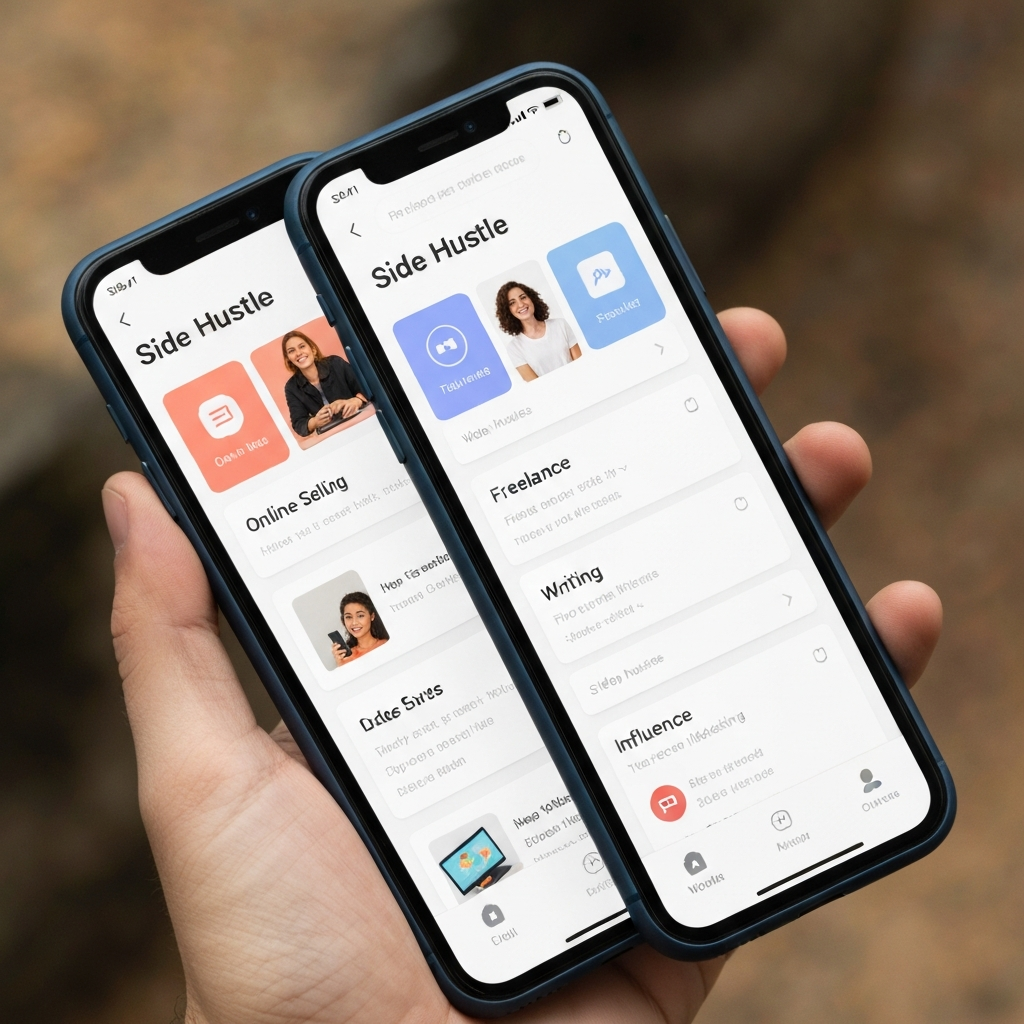
The 8 Best Online Side Hustles for Phone Only
Here are the mobile side hustle apps that survived my BS filter. Each includes realistic income expectations, platform-specific gotchas, and whether it’s worth your thumb-cramping time.
1. User Testing Apps (UserTesting, Testbirds)
The Good: This is the heavyweight champion of phone hustles. UserTesting pays $10 for a 20-minute test where you navigate a website or app while narrating your thoughts. That’s $30/hour—better than most entry-level jobs. Testbirds and Userlytics offer similar gigs. The mobile app is solid, tests are genuinely interesting (you’re basically getting paid to complain about bad UX), and payments hit PayPal within 7 days.
The Bad: Qualifying for tests is inconsistent. You’ll get screened out frequently, sometimes after answering 5-6 questions. Peak competition happens during work hours when everyone’s procrastinating. Your approval rate matters—screw up a few tests with bad audio or rushed feedback, and you’ll see fewer opportunities. According to FTC guidelines, legitimate testing platforms never charge fees, so dodge any that do.
The Verdict: If you can land 4-6 tests weekly, you’re looking at $200-$300/month. Realistic for most people? 2-3 tests weekly ($80-$120/month). Still beats the hell out of surveys. The learning curve is minimal—if you can talk while using apps, you’re qualified.Check Price on Amazon
2. Freelance Gig Platforms (Fiverr, Upwork Mobile)
The Good: Fiverr’s mobile app is shockingly functional. You can manage gigs, respond to clients, and deliver certain services (social media captions, quick logo tweaks, voiceovers) entirely on your phone. I’ve watched freelancers pull $500-$2,000 monthly offering services like Instagram caption bundles or TikTok video ideas. Upwork’s app is decent for messaging clients and tracking hours, though creating proposals feels clunky.
The Bad: Building a profile and landing your first client takes weeks, not hours. You’re competing globally, often against people charging $3/hour. The mobile interface limits the complexity of work you can deliver—forget detailed graphic design or long-form content. Fiverr takes a 20% cut of your earnings, which stings. For beginners looking to build freelance skills more broadly, check out these beginner-friendly options.
The Verdict: Phone-only freelancing works for creative, communication-based services. Voiceovers, social media consulting, quick writing gigs, virtual assistance. Expect a 3-4 week ramp-up before consistent income. Once rolling, $300-$1,000/month is achievable with 10-15 hours weekly.
3. Task-Based Apps (TaskRabbit, Gigwalk)
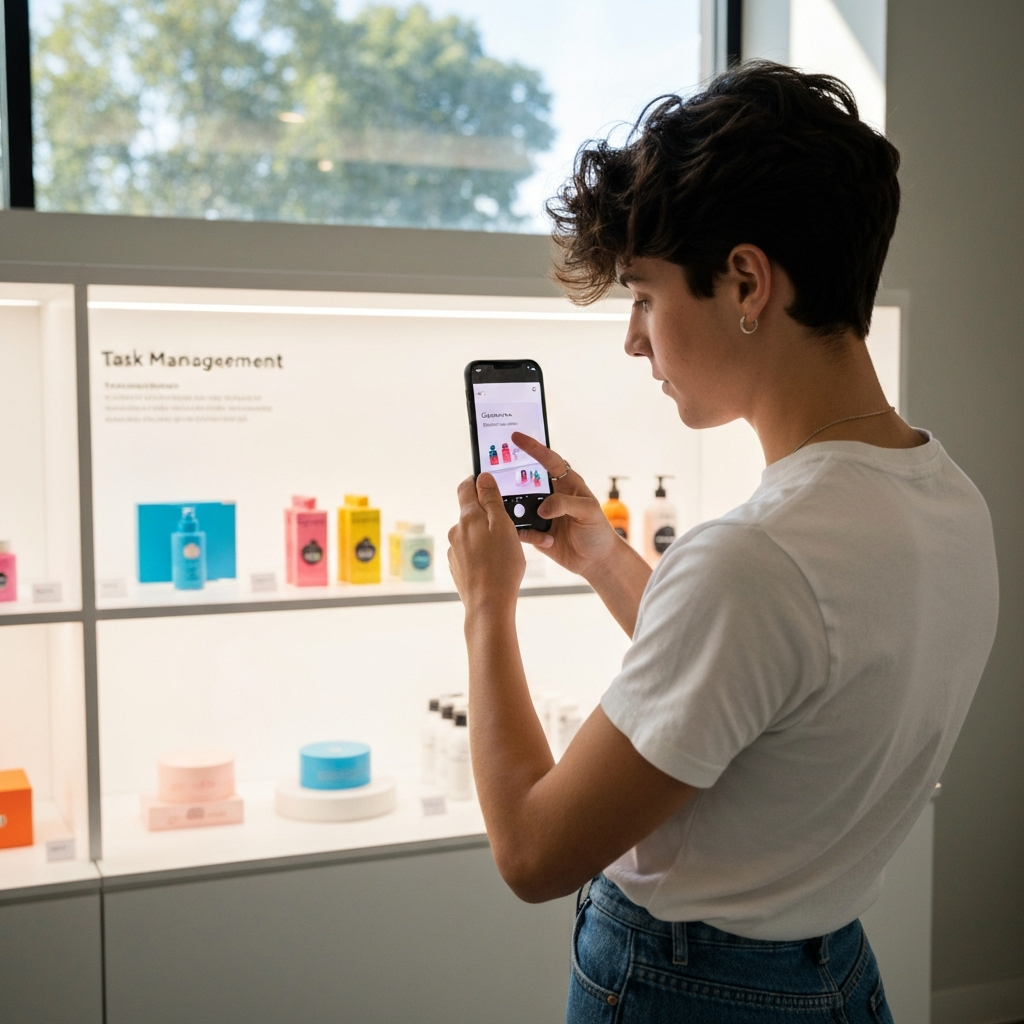
The Good: TaskRabbit isn’t purely phone-based (you’ll do physical tasks), but the entire booking and payment system runs through mobile. Gigwalk and Field Agent pay you to verify store displays, photograph products, or check prices—pure phone work. Payments are fast (24-48 hours) and tasks are location-based, so less competition if you’re not in a major metro.
The Bad: Gigwalk tasks pay $3-$12 each but can take 20-40 minutes once you factor in drive time. That math gets ugly fast. TaskRabbit requires background checks and in-person work (furniture assembly, moving help). Field Agent tasks dry up quickly in smaller markets. You’re burning gas and time for what often amounts to minimum wage.
The Verdict: These work as “while I’m already out” income supplements. Running errands? Grab a $6 Gigwalk task nearby. Full-time hustle? Nope. Expect $100-$250/month if you cherry-pick high-value tasks ruthlessly.
4. Stock Photo Selling (Foap, EyeEm)
The Good: Got a decent phone camera? Foap and EyeEm let you upload photos that brands purchase for marketing. Foap pays $5 per photo sale (you get $2.50 after their cut). EyeEm operates on a marketplace model with variable pricing. The barrier to entry is literally “take your phone outside.” Popular subjects: authentic lifestyle shots, food, workspaces, diverse people doing everyday things. No studio lighting or $3,000 DSLR required.
The Bad: Competition is brutal. Thousands upload daily, and most photos never sell. You need volume (100+ quality photos) before seeing consistent sales. Seasonal trends matter—pumpkin spice content in March won’t sell. Payment thresholds can take months to hit if you’re not uploading weekly. According to research from the U.S. Bureau of Labor Statistics, photographers increasingly compete with stock imagery, which has commoditized certain photo categories.
The Verdict: This is passive income with a brutal startup curve. Upload 50-100 photos, then let them sit. You might earn $20-$80 monthly once you hit critical mass. Phone photographers with strong composition skills and access to diverse subjects (urban scenes, nature, various demographics) fare best. For more low-barrier entry hustles, explore these no-experience options.Check Price on Amazon
5. Social Media Management (Buffer, Later)
The Good: Small businesses desperately need social media help but can’t afford agencies. Tools like Buffer, Later, and Planoly have robust mobile apps for scheduling posts, analyzing metrics, and engaging with audiences. You can manage 3-5 client accounts entirely from your phone, charging $200-$500 per client monthly. The work is genuinely flexible—batch content on Sundays, monitor throughout the week.
The Bad: Landing clients requires existing credibility (your own decent social following or portfolio). Creating graphics on mobile sucks—you’ll lean heavily on Canva’s app or pre-made templates. Client communication happens across multiple apps (email, Slack, DMs), which fragments your workflow. Scope creep is real when clients think “social media” includes graphic design, copywriting, ad management, and responding to every comment.
The Verdict: If you’ve got social media chops and 2-3 clients, this prints $400-$1,500 monthly. Finding those clients is the hard part. Start by managing accounts for local businesses or reaching out to entrepreneurs in communities you’re part of. Time investment: 10-20 hours weekly once established.
6. Transcription Services (Rev Mobile)
The Good: Rev’s mobile app lets you claim transcription jobs and type them out on your phone. Pay is per audio minute, typically $0.30-$1.10 depending on audio quality and speaker accents. Work is abundant—podcasts, interviews, legal proceedings. You control your schedule completely. Weekly payouts via PayPal once you hit $5.
The Bad: Typing long-form content on a phone screen is absolute torture. A 30-minute audio file takes 2-3 hours to transcribe accurately on mobile (versus 90 minutes on a desktop). That crushes your effective hourly rate to $5-$10. Audio quality varies wildly—heavy accents, background noise, and multiple speakers tank your speed. Rev’s style guide is strict; mistakes lower your metrics and access to better-paying jobs.
The Verdict: Transcription works on mobile, but it’s masochistic. You’ll earn $150-$400 monthly if you’re dedicated and fast. Most people burn out after a week. Better suited as a “prove I can earn online” starter hustle before graduating to better options. Consider pairing this with other beginner-friendly hustles to diversify income.Check Price on Amazon
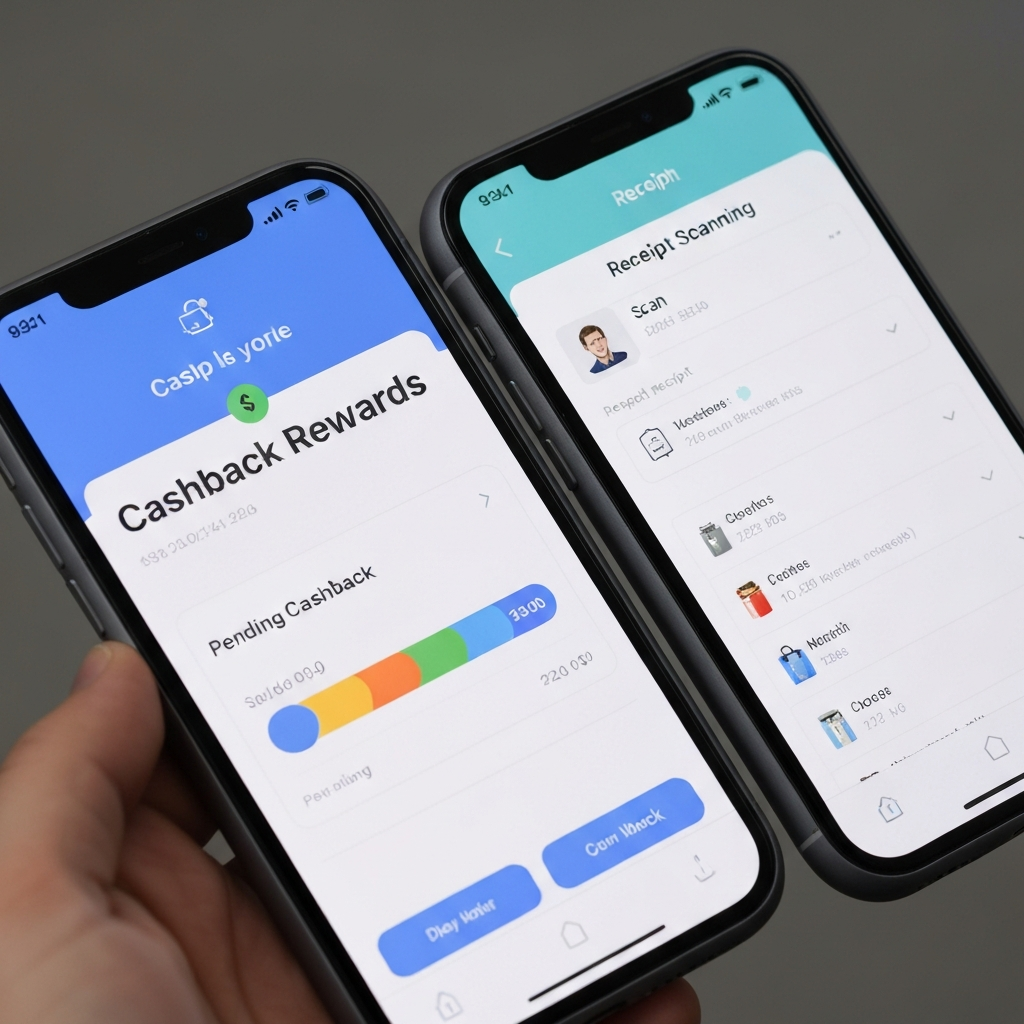
7. Cashback and Receipt Apps (Fetch Rewards, Ibotta)
The Good: These are the laziest money you’ll make. Fetch Rewards gives points for scanning any grocery receipt. Ibotta offers cashback on specific purchases. Rakuten provides online shopping rebates. Setup takes 5 minutes, and the apps run passively after that. You’re getting paid for shopping you’d do anyway.
The Bad: Income is microscopic. Fetch nets maybe $5-$10 monthly in gift cards. Ibotta requires buying specific brands (often more expensive than generics), so you’re not actually saving money. Rakuten’s 1-10% cashback is legit, but you’ll earn $30-$80 annually unless you’re dropping serious cash online. These aren’t hustles—they’re rounding errors.
The Verdict: Install them, forget about them, collect a free coffee monthly. Don’t expect real income. Combined total across all cashback apps: $50-$150 yearly for most users. Worth the 10 minutes of setup? Sure. Worth calling a “side hustle”? Absolutely not.
8. Online Tutoring (Cambly, Palfish)
The Good: Cambly pays $10.20/hour (or $0.17/minute) to chat with English learners via video on your phone. No teaching certification required, no lesson planning—just conversation. Palfish operates similarly but focuses on teaching Chinese kids. The apps are built for mobile-first interaction. According to National Center for Education Statistics data, online education continues expanding, creating sustained demand.
The Bad: $10.20/hour is below minimum wage in many states, and you’re an independent contractor (no benefits). Peak hours are typically 5-9 AM or 10 PM-1 AM (matching Asian time zones), which sucks if you value sleep. Students can be demanding, and poor reviews limit your booking rate. Competition from tutors in lower-cost countries keeps wages suppressed.
The Verdict: If you’re an early riser or night owl, this provides reliable $200-$500 monthly. It’s legitimately flexible and somewhat enjoyable if you like cross-cultural conversation. The hourly rate ceiling is brutal, though—you’ll never scale beyond $10-$12/hour without switching platforms.
Bottom Line: Can You Actually Build Income Phone-Only?
Fast forward to the reality check: yes, you can earn $300-$1,200 monthly combining 2-3 of these side hustles on your phone. User testing + freelancing or social media management will get you there fastest. Cashback apps and transcription are filler at best.
The ceiling exists because phones limit productivity. You’re not building scalable businesses on a 6-inch screen. But for flexibility, low barrier to entry, and monetizing time you’d otherwise scroll Instagram? Phone hustles absolutely deliver.
Your move: pick two hustles from this list. Commit two weeks to each. Track actual earnings, not potential. Kill anything earning under $10/hour unless it’s genuinely passive. Repeat until you’ve got a reliable $400-$800 monthly stack.
That’s how you work from phone online without the motivational poster BS.
Frequently Asked Questions
Can I really make decent money with side hustles on my phone?
Yes, but manage your expectations. User testing and freelance gigs can net $200-$1,000+ monthly with consistent effort. Cashback apps and surveys? Maybe $50-$150. The phone-only limitation means you’ll work harder for each dollar compared to desktop work, but the flexibility is unmatched.
Which mobile side hustle apps pay the fastest?
UserTesting pays within 7 days via PayPal. TaskRabbit and Gigwalk pay within 24-48 hours after task completion. Most cashback apps require you to hit a $10-$25 threshold before payout, which can take weeks depending on your spending.
Do I need special equipment to work from phone online?
For most hustles, a smartphone from the last 3-4 years works fine. User testing requires decent audio (your phone’s built-in mic usually suffices). Stock photo apps benefit from phones with better cameras (iPhone 12+ or flagship Androids). Tutoring apps work better with stable WiFi and a quiet space.
Are phone-only side hustles legitimate or just scams?
The platforms listed here are legitimate, but the mobile side hustle space is full of garbage. Red flags: apps requiring upfront fees, promising unrealistic income, or asking for sensitive banking info before you’ve earned anything. Stick to established platforms with verified reviews and transparent payment terms.
How much time do I need to invest to see results?
For task apps and user testing, you can earn within your first hour. Freelance platforms require building a profile and landing your first client—budget 2-4 weeks. Social media management demands consistent daily effort. Bottom line: quick-win apps pay immediately but less; skill-based hustles take longer to ramp but pay significantly more.
As an Amazon Associate, I earn from qualifying purchases.