Email Marketing Platforms for Affiliates: Deliverability Wins
Email marketing platforms for affiliates are either a money printer or a silent revenue killer—no middle ground. The problem is most “email tools” are built for newsletters, not performance-driven affiliate funnels. If your platform can’t tag, automate, and protect deliverability, you’re basically paying to get ignored.
Here’s the truth: affiliates don’t lose because their offer is weak. They lose because their setup is sloppy—bad list quality, bad automation, bad compliance, and “hope marketing” as a strategy.
Table of Contents
- What affiliates actually need (not what vendors pitch)
- Deliverability and compliance: the boring stuff that makes you rich
- Platform picks: what I’d use (and what I’d avoid)
- Pricing and fit: choose the cheapest tool that won’t sabotage you
- A simple setup playbook for affiliates
- Frequently Asked Questions
- Tools & books on Amazon that actually help
- Final takeaway
What affiliates actually need (not what vendors pitch)
Core answer: The best email marketing platform for affiliates is the one that (1) keeps you out of spam, (2) supports real automation and tagging, (3) plays nice with affiliate-style tracking, and (4) won’t nuke your account for normal affiliate behavior. The “best” tool is the one you can run profitably for 12+ months.
Most platform comparisons are fluff because they obsess over templates. Cool. Your template doesn’t matter if your emails don’t hit the inbox.
Affiliates need mechanics. Specifically:
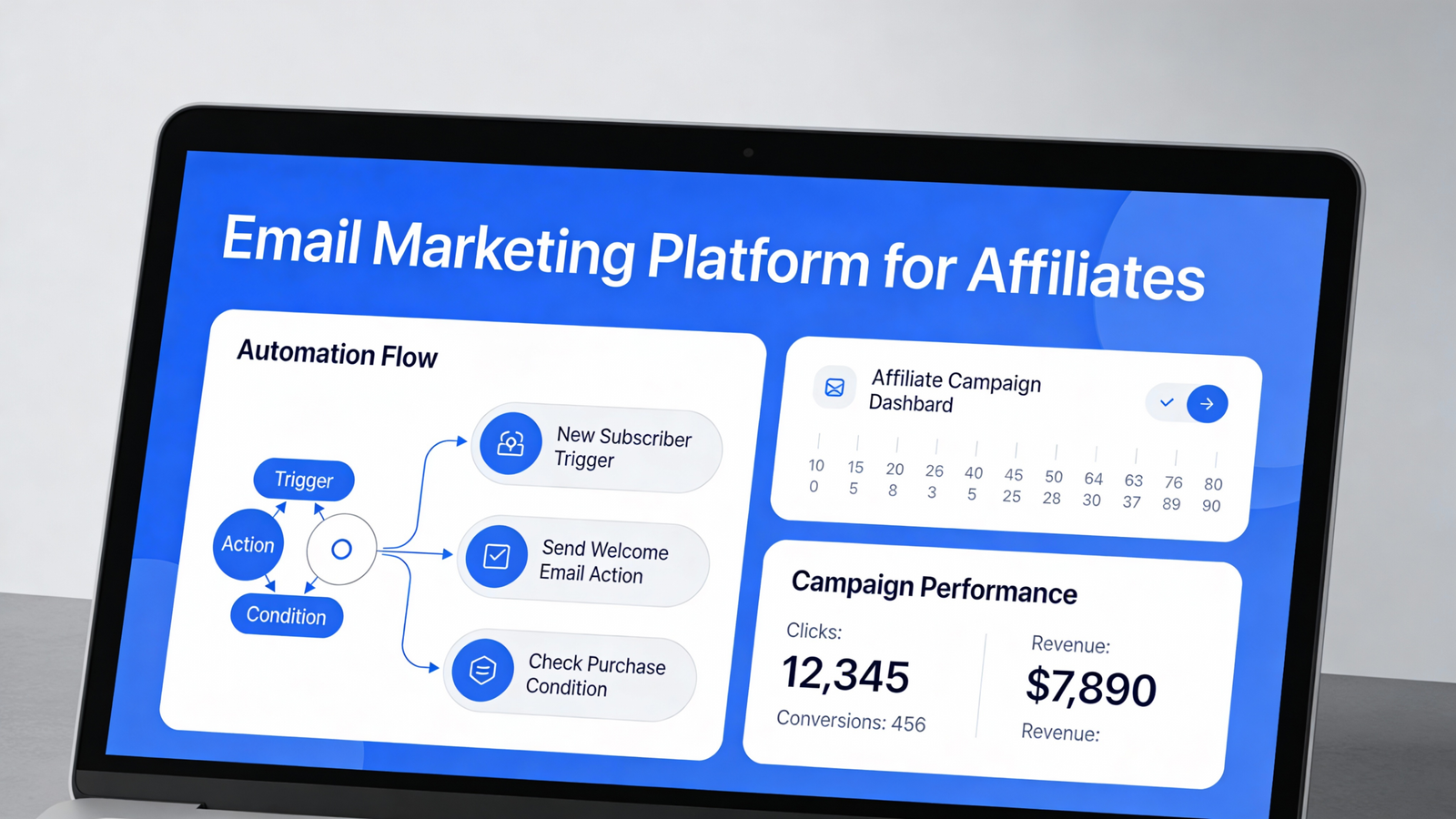
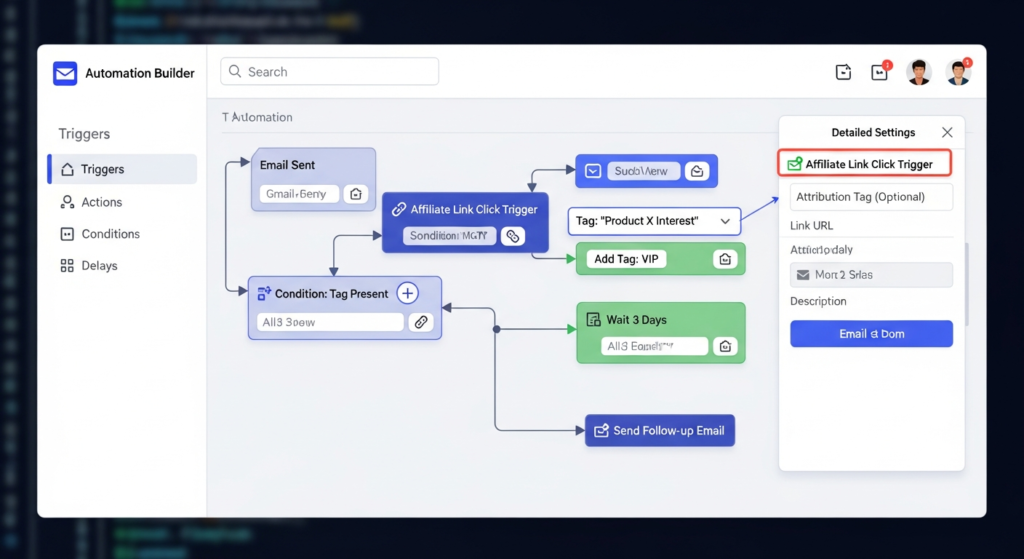
- Automation that isn’t a toy: branching logic, tags, goals, event triggers, and time delays that don’t feel like building IKEA furniture blindfolded.
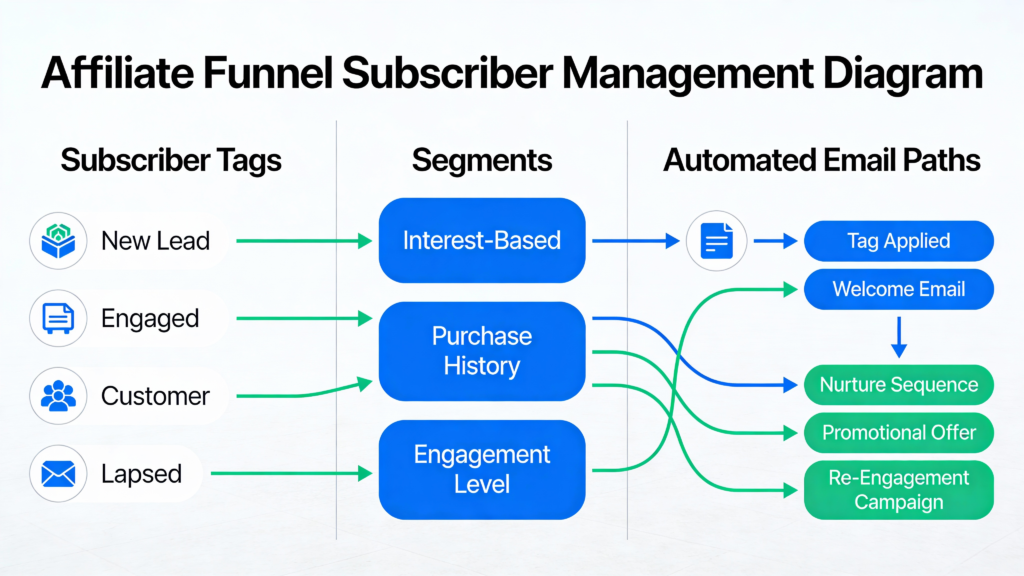
- Segmentation that’s fast: tags + custom fields + link-triggered actions, so you can treat subscribers like humans, not a single blob of “my list.”
- Deliverability tooling: domain authentication guidance, suppression lists, bounce handling, and clear reporting that doesn’t hide the bad news.
- Compliance defaults: unsubscribe links, address fields, consent tracking, and an easy way to honor opt-outs (because the law doesn’t care about your hustle).
- Affiliate-friendly tolerance: you can promote offers, but you can’t act like a scammer. Platforms can smell it. So can inbox filters.
If you want a clean way to evaluate tools without getting hypnotized by feature lists, use a scoring system. I like a “money-first” approach similar to this internal breakdown: the no-BS system for choosing tools that make you money.
Deliverability and compliance: the boring stuff that makes you rich
Fast forward to the part nobody wants to talk about: deliverability is the business. Everything else is decoration.
“Email marketing” as a channel is old enough to have back pain, but it’s still one of the highest-ROI plays when done right. And yes, it’s still “marketing” in the classic sense: sending commercial messages to a list you’re responsible for. Wikipedia’s overview is basic, but accurate for the definition-level framing. Email marketing (Wikipedia)
Now the rules. If you’re sending to the US market, CAN-SPAM isn’t optional. You need truthful headers, non-misleading subject lines, a clear way to opt out, and you must honor opt-outs. The FTC spells it out plainly. CAN-SPAM compliance guide (FTC.gov)
If you’re touching EU users, GDPR raises the bar on consent and data handling. “But I’m just an affiliate” isn’t a magical exemption spell. Read the official guidance, then set your forms and consent tracking accordingly. EU data protection rules (European Commission)
Practical deliverability moves that separate adults from amateurs:
- Use a dedicated sending domain: don’t send from your primary domain if you can avoid it. Protect the brand asset.
- Set up SPF, DKIM, and ideally DMARC: this is table stakes, not “advanced.”
- Warm up sensibly: start with engaged segments, not the whole list. Sudden volume spikes are a red flag.
- Clean your list: suppress bounces, remove chronic non-openers, and don’t be emotionally attached to dead subscribers.
- Don’t disguise affiliate intent: misleading subject lines and shady redirects are how you buy yourself a deliverability funeral.
Bottom line: you’re renting access to inboxes. Inbox providers are ruthless landlords.
Platform picks: what I’d use (and what I’d avoid)
I’m going to be opinionated because neutrality is how people stay broke.
1) ActiveCampaign (best “serious automation” for most affiliates)
If your affiliate business has multiple offers, multiple lead magnets, and you want behavior-driven sequences, ActiveCampaign is the grown-up choice. The automations are deep, the tagging is solid, and it scales with complexity.
Downside: it can feel like flying a plane. You can absolutely build a spaghetti monster if you don’t map your logic first.
2) ConvertKit (best for creators who sell + affiliate on the side)
ConvertKit is smooth, fast to implement, and it won’t make you hate your life. If your business is content-driven (blogs, YouTube, creators), ConvertKit is usually “enough” to print revenue without overengineering.
Downside: if you need CRM-like depth, you’ll hit the ceiling sooner than you think.
3) MailerLite (best budget pick that doesn’t feel like a toy)
MailerLite is the “I’m starting, but I’m not here to play games” option. Solid deliverability baseline, decent automation, clean UI, good value.
Downside: if you want advanced attribution or complex branching logic, you’ll feel the edges.
4) GetResponse (solid all-in-one, but don’t buy it for the shiny)
GetResponse has been around forever and keeps adding features—funnels, webinars, landing pages. If you’ll actually use the stack, cool. If you won’t, you’re paying for a buffet to eat one olive.
5) Brevo (Sendinblue) (good for mixed email + SMS, watch your fit)
Brevo can be great if you want email plus SMS and transactional messaging in one ecosystem. Just be clear on your sending patterns and what your affiliate promos look like.
What I’d avoid: the “mystery meat” autoresponders that promise instant riches and cost $9/month forever. If a platform’s whole brand is “cheap and unlimited,” you’re the product. Also, trying to run an affiliate operation out of Gmail/Outlook is like towing a trailer with a scooter.
If you’re pairing email with content and SEO, align your tool choices the same way you’d pick SEO tooling: based on outcomes, not vibes. This internal guide is a good mental model: SEO tools that actually move rankings (2026 picks).
Pricing and fit: choose the cheapest tool that won’t sabotage you
Here’s the truth: platform pricing is rarely what kills you. Bad fit kills you.
Think in tiers:
- Starter (0–2,000 subs): you need a clean UI, basic automations, and good deliverability hygiene. MailerLite is often the sensible pick here.
- Operator (2,000–25,000 subs): you need segmentation, real automation, and reporting you can act on. ConvertKit or ActiveCampaign dominate depending on complexity.
- Scale (25,000+ subs): you need cost control, deliverability discipline, and systems. At this stage you’re paying for stability and process, not “features.”
Two ugly truths about affiliate email economics:
- List size is a vanity metric if it’s not engaged. 5,000 buyers beats 50,000 ghosts.
- Your platform bill should be funded by one good sequence. If it isn’t, your funnel is the issue, not the tool.
When comparing plans, ignore the marketing pages and look for: automation limits, segmentation rules, “fair use” clauses, and what happens when you import a list. Some providers will review you like a nightclub bouncer. That’s not “mean.” That’s reputation management.
A simple setup playbook for affiliates
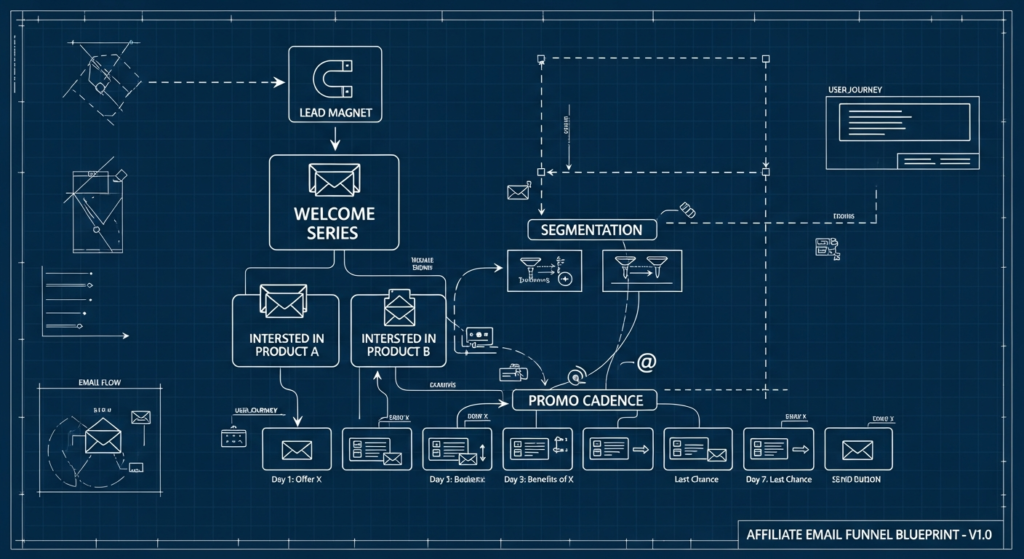
If you want a setup that works without turning your life into a dashboard hobby, do this:
Step 1: Pick one primary goal per list
Not “make money.” A concrete goal: promote a specific niche, a specific offer category, or a specific content theme. One list, one promise.
Step 2: Build a welcome sequence that earns attention
Minimum viable sequence: 5–7 emails.
- Email 1: deliver the lead magnet + set expectations (“here’s what I send and how often”).
- Email 2: the “why you should listen” story—short, real, no cosplay guru nonsense.
- Email 3: quick win tutorial (something they can do in 10 minutes).
- Email 4: soft pitch (recommend a tool/resource that matches the lead magnet intent).
- Email 5: objection handling + proof (results, screenshots, or a clear case study).
Step 3: Segment by behavior, not by “interests” people claim
Clicks beat surveys. Tag people based on what they do:
- Clicked offer link → move to a short offer-focused sequence
- Didn’t click → send a different angle or a different offer
- Never opens → suppress after a re-engagement attempt
Step 4: Make tracking boring and consistent
Use UTM parameters for campaign naming consistency, and keep your link labels uniform. You’re not doing this for fun—you’re doing it so you can answer one question: what emails made money?
If you’re unsure what tools deserve a spot in your stack, re-use a selection framework instead of trusting hype. I’ve seen too many affiliates buy software the way people buy treadmills: with optimism and zero follow-through. Start here: a no-BS system for picking tools.
Frequently Asked Questions
Do email marketing platforms allow affiliate links?
Most do, but policies vary wildly. The platform doesn’t hate affiliates—it hates deliverability risk. If your content triggers complaints or you import sketchy lists, you’ll get throttled or banned. Read the acceptable use policy before you build a whole business on it.
What matters more: price or deliverability?
Deliverability. Always. A cheap platform that lands in spam is a tax on your business. Spend your energy on list quality, authentication, and engagement—not on shaving $20 off a monthly bill.
Should affiliates use double opt-in?
If you want fewer complaints and better list hygiene, yes. Growth may slow, but your sequence performance usually improves because you’re sending to people who actually meant to subscribe.
Can I track affiliate sales inside my email platform?
You’ll track clicks easily. Purchases depend on your affiliate network and tracking approach. Use UTMs, sub-IDs, and consistent campaign naming so you can match revenue back to emails with less guesswork.
What’s the fastest way to get banned by an email platform?
Importing cold lists, misleading subject lines, missing unsubscribe links, and hammering disengaged subscribers. If you want to stay safe, follow the basics: CAN-SPAM guidance and, if relevant, EU GDPR rules.
Tools & books on Amazon that actually help
No, buying a book won’t magically fix your funnel. But the right resources can save you months of trial-and-error and a few avoidable “why did my open rate die?” episodes.
Email copy and strategy references
Pick one and implement. Reading five books and sending zero emails is performance art, not marketing.
Final takeaway
Bottom line: the best email marketing platforms for affiliates are the ones that keep your sender reputation clean while letting you run real automations—tags, triggers, segmentation, and reporting you can act on.
Insider takeaway: stop shopping for “the best platform” and start building “the best operating system.” A clean welcome sequence, behavior-based tags, and ruthless list hygiene will outperform any shiny feature you’re procrastinating with.
Now go send the email you’ve been avoiding. Your subscribers aren’t getting richer from your drafts folder. I’ll be over here, judging your subject lines in silence.
As an Amazon Associate, I earn from qualifying purchases.