

How to Build Your First Asset in 7 Days (Real Plan)
How to Build Your First Asset starts with one uncomfortable truth: most “online income” advice teaches you to chase tactics, not build something you still own 12 months later.
If you want your first real asset, build a simple machine that turns attention into an owned audience and then into revenue—without you being glued to a screen 24/7. Your job is not to be “everywhere.” Your job is to build one durable lane with compounding output: a site, a newsletter, a content library, a tool, a template pack—anything that keeps working after the post fades off the feed.
This guide gives you a clean, practical blueprint: pick the right asset type, validate fast, build the minimum viable version, ship content that actually ranks or converts, and wire in monetization that doesn’t sabotage trust.
Table of Contents
- Asset vs. income: the distinction that changes everything
- Choose your first asset type (and don’t overcomplicate it)
- Validate before you build: fast proof, not vibes
- Build the minimum viable asset in 48–72 hours
- Traffic engine: the compounding channels that actually behave
- Monetization without selling your soul
- Systems and automation: make it boring on purpose
- Common mistakes and insider tips from the trenches
- FAQ
- Resources / Tools
Asset vs. income: the distinction that changes everything
Income is a result. An asset is the thing that reliably produces results—again and again—because you control it.
If you post on a platform and the platform can throttle reach, change the rules, or delete your account, that’s not an asset. That’s borrowed distribution. Useful, yes. Durable, no.
Real beginner-friendly assets have three traits:
- Ownership: you control the domain, files, list, and analytics.
- Compounding: each new piece improves the next (content clusters, internal links, subscriber growth, reuse).
- Transferability: you can sell it, license it, or move it (site + list + content = transferable).
Want a dead-simple north star? Build an asset that grows even when you miss a week. That’s the bar.
Choose your first asset type (and don’t overcomplicate it)
You’re building your first asset, not your magnum opus. Pick something with low build time and high leverage.
The best first assets for most people
- Content site + email list: the classic. Flexible monetization (affiliate, ads later, digital products). Great compounding behavior.
- Newsletter + simple landing page: faster than a full site, but still owned distribution. Great if you can write regularly.
- Template/toolkit product: Not software. Think Notion templates, checklists, swipe files, calculators in Sheets. You can ship in days.
- Micro-course or workshop recording: One clear promise. One sales page. No fancy platform required at first.
If your goal includes affiliate income, the highest ROI beginner path is usually: content site + email list. It’s boring. It works. It scales.
A decision framework you can actually use
Pick based on your strongest constraint:
- Low time: newsletter + landing page, or a template product.
- Low confidence on camera: written content assets beat video-first.
- Need faster cash flow: template/toolkit with a clear “before/after” outcome.
- Want long-term compounding: SEO content library + list.
Insider tip: your first asset should be “one audience, one problem, one outcome.” The moment you try to serve everyone, you serve no one—especially Google.

Validate before you build: fast proof, not vibes
Validation is not asking friends if they “like the idea.” Validation is evidence that strangers already spend attention or money on the problem.
Three fast validation checks
- Search demand: Are people searching for solutions? Use Google’s own signals like Google Trends to sanity-check whether the topic is stable or spiky.
- Commercial intent: Are there products/services people buy? Scan retailer categories and affiliate programs. (If nobody sells anything related, monetization will be a struggle.)
- Content gaps: Are existing pages weak, outdated, or fluffy? That’s your opening.
For SEO validation, you don’t need perfect keyword data on day one. You need proof you can rank for something in the niche. Start with long-tail queries and build upward.
The minimum proof target
Pick one “money-adjacent” topic you can realistically win. Example: instead of “make money online,” you might target “best budget microphone for voiceover beginners” or “best invoicing app for freelancers in Italy.” Narrow wins create authority faster.
Authority shortcut: When you write, reference credible sources. Use primary documentation and research wherever possible. For example, if you discuss privacy, link to GDPR resources. If you talk email deliverability, link to Google’s bulk sender guidance. Trust compounds too.
Build the minimum viable asset in 48–72 hours
This is where people self-sabotage. They “prepare” for weeks. Meanwhile, someone else ships a basic version and starts collecting data.
Minimum viable asset blueprint (site + list version)
- Domain + basic WordPress setup (clean theme, fast hosting, caching).
- 3 core pages: Home, About (credibility), Contact (trust).
- One primary lead magnet: a checklist, cheat sheet, or short guide tied to the niche outcome.
- Email capture: a simple form + welcome email + 3-email mini sequence.
- 5 starter posts: 2 “how-to,” 2 “best/compare,” 1 “tool/resource.”
Need structure ideas? Use a simple site roadmap for beginners as your skeleton, then fill it with your niche-specific content.
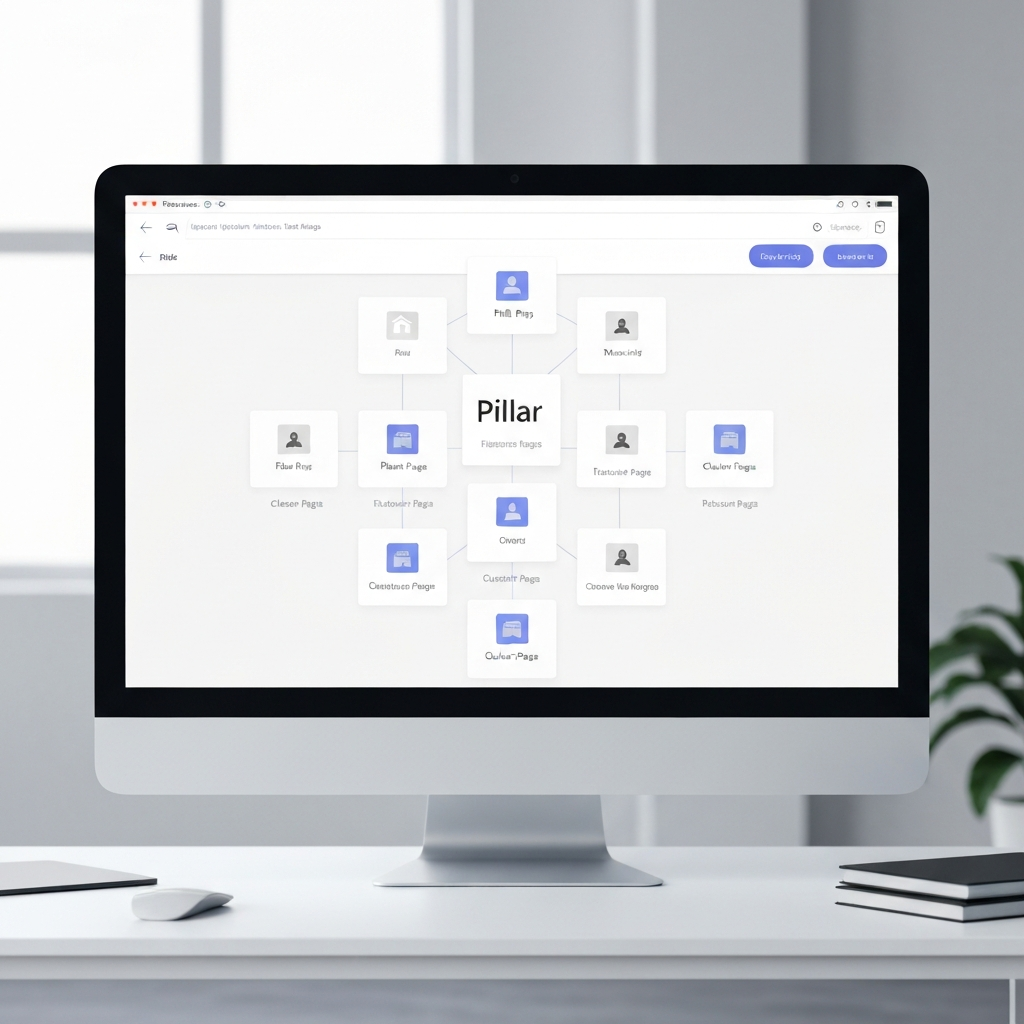
Information architecture that doesn’t suck
Your site should feel like a small library, not a random blog feed.
- One pillar page: the main “hub” for the topic (this post is a model).
- Cluster posts: narrow articles that answer one intent cleanly.
- Internal links: connect clusters back to the pillar and sideways to related posts.
If you want a practical internal linking cadence, build it into your writing workflow. You can also reference a clean internal linking strategy to avoid the “link dump” that looks spammy.
Traffic engine: the compounding channels that actually behave
You don’t need “all the platforms.” You need one compounding channel plus one fast-feedback channel.
Compounding channel: SEO (the slow power tool)
SEO is still one of the best asset-building channels because content can rank for years. But it only works if you write for intent, not ego.
Build content that:
- answers one specific question per page
- shows real selection criteria (not generic lists)
- includes experience-based tradeoffs
- uses clear structure and skim-friendly formatting
When you cite sources, pick reputable ones. For example, for web performance basics, Google’s Web Vitals documentation is a solid baseline.
Fast-feedback channel: short-form or communities
SEO compounds. Social gives you immediate signal. Use short-form or niche communities to test angles, hooks, and objections—then turn winners into evergreen posts.
Common mistake: People use social as the main business and call it an “asset.” It’s not. Use it as a distribution layer that pushes traffic to something you own (site + list).

Monetization without selling your soul
If you monetize too early, you kill trust. If you monetize too late, you build a hobby with nice analytics. The sweet spot: monetize once you can recommend things with integrity and context.
The three-layer monetization stack
- Layer 1: Affiliate (when products naturally solve the problem). Disclose clearly. Recommend with criteria.
- Layer 2: Your own simple product (template/toolkit). Highest control, usually higher margin.
- Layer 3: Services or consulting (optional). Great early cash flow, but not as scalable.
If you’re doing affiliate, your content must do more than list products. It needs to help the reader decide. Use comparison tables, “best for” scenarios, and honest tradeoffs. Link to official documentation when appropriate—example: if you reference WordPress fundamentals, point to WordPress.org documentation.
Insider tip: The highest-converting affiliate pages often have a “who this is NOT for” section. It repels bad-fit buyers and increases trust with everyone else.
Email list as the asset multiplier
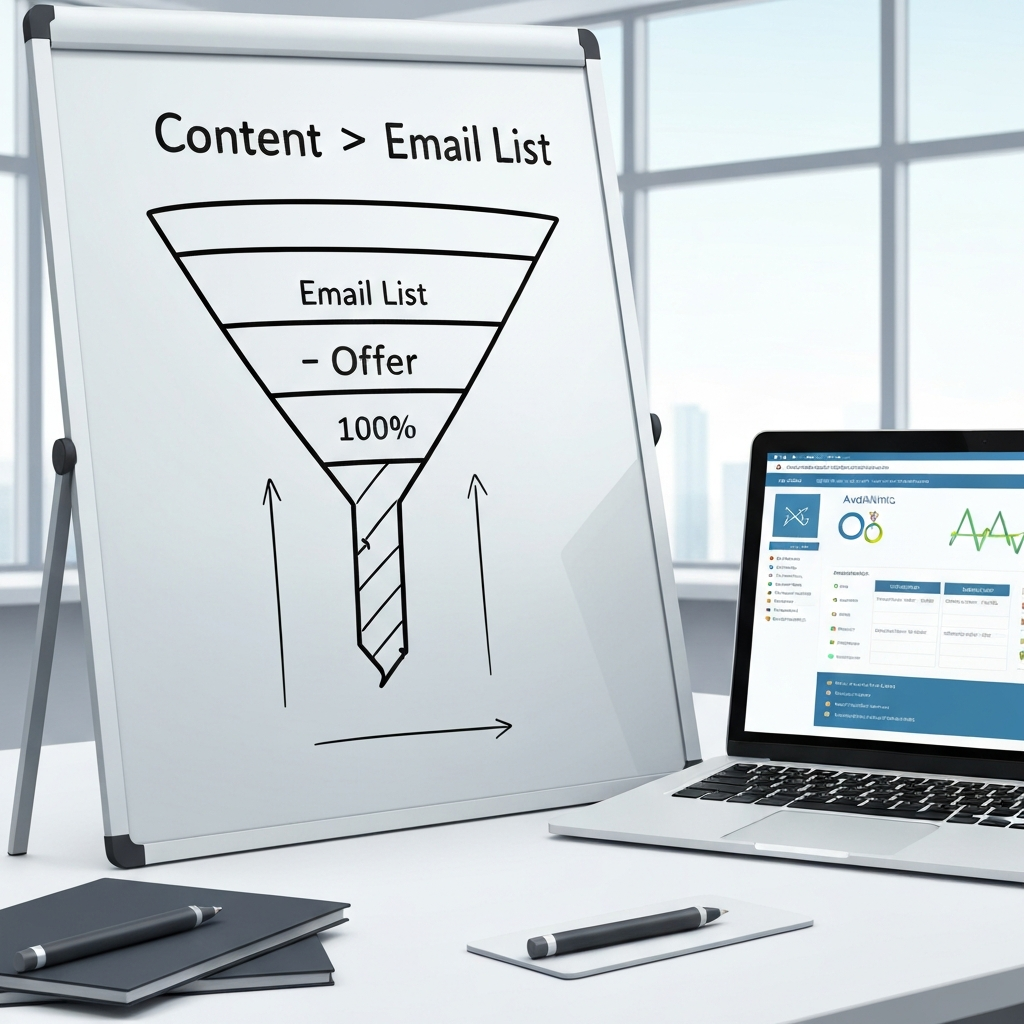
Your email list is the closest thing to a cheat code in asset building. It lets you re-activate old content, promote new posts, and monetize without begging an algorithm.
Keep it simple: one lead magnet, one weekly email, and one evergreen “welcome” sequence that introduces your best content and your top recommendations.
If you want a clean monetization and list-building flow, model it after an email-first asset strategy so your site doesn’t rely on random traffic spikes.
Systems and automation: make it boring on purpose
The best assets run on routines, not motivation. If you rely on “feeling inspired,” you’re building a mood-based business. That’s a fragile setup.
A weekly operating system (simple and effective)
- Day 1: Research and outline one piece (one intent, one promise).
- Day 2: Draft and publish. Add 2–3 internal links. Add 1–2 authority links.
- Day 3: Repurpose into 3 short posts. Drive traffic to the page.
- Day 4: Send one email: story + lesson + link back.
- Day 5: Update one old post (improve headings, add examples, refresh tools).
Common mistake: People treat publishing as “done.” Real asset builders treat publishing as “version 1.” Updates are where compounding gets real.
What to measure (so you don’t lie to yourself)
- Leading indicators: impressions, clicks, email signups, time on page, outbound clicks.
- Lagging indicators: revenue, RPM, conversion rate, affiliate earnings per page.
Don’t drown in dashboards. One weekly review is enough: what grew, what stalled, what you’ll fix next.

Common mistakes and insider tips from the trenches
Mistake #1: Building too big, too early
Launching a 40-page site with no traffic plan is the entrepreneurial version of buying gym equipment and calling it “fitness.” Ship the smallest version that can win a single query and capture a single email.
Mistake #2: Chasing trends that don’t match your timeline
If you need stable income, avoid niches that spike and die. Use Google Trends to spot hype cycles and prefer steady demand. A stable niche with modest volume beats a rollercoaster niche when you’re building your first compounding asset.
Mistake #3: Being “general” because it feels safe
General is invisible. Specific is memorable. Pick a clear reader and a clear outcome. Example: “budget RV solar for weekend campers” is a lane. “solar” is a swamp.
Insider tip #1: Write “decision content,” not “information content”
Information is cheap. Decisions are valuable. Show the reader how to choose: criteria, tradeoffs, and examples. That’s what converts and earns links naturally.
Insider tip #2: Build a reuse loop
Every pillar post should generate: 3 shorts, 1 email, 1 checklist, and 1 “tools” section update. Same thinking, different packaging. That’s leverage.
Insider tip #3: Keep a one-page “content ops” document
Write down your publishing checklist once: format, internal links, outbound links, image placeholders, CTA, disclosure. Then follow it every time. Consistency beats bursts of genius.
FAQ
How long does it take to build a real first asset?
You can build the minimum viable version in 2–3 days, but a “real” asset usually shows meaningful traction in 60–120 days if you publish consistently and improve older content.
Do I need a website, or can I start with just social media?
Start wherever you want, but route people to something you own (email list + landing page at minimum). Social alone is not an asset; it’s distribution you rent.
What’s the easiest first asset for a total beginner?
A simple niche website with a lead magnet and 5 strong posts is hard to beat. If writing is your strength, a newsletter + landing page can be even faster.
How do I pick a niche without overthinking it?
Pick a problem you can help solve, confirm people search for it, confirm products exist, then publish a few long-tail pages and see what gets clicks and signups.
How many posts do I need before monetizing?
You can monetize immediately if recommendations are natural and helpful, but most sites do better when they’ve earned trust with a handful of genuinely useful pages first (often 5–15 posts).
Is SEO still worth it in 2026?
Yes, if you write pages that satisfy intent better than what exists and you build topical clusters. SEO is slower than social, but it compounds like few channels do.
What if I don’t want to show my face?
No problem. Written content, voiceover videos, and newsletters can build assets without personal visibility. Results and clarity matter more than your face.
How do I know if my asset is “working”?
Watch leading indicators: impressions, clicks, email signups, and affiliate outbound clicks. Revenue follows if the content matches buyer intent.
Can I build an asset with only 3–5 hours per week?
Yes, if you focus. One solid post per week plus one email and small updates beats sporadic bursts. Keep the scope tight and don’t add platforms.
What’s the biggest mindset shift?
Stop thinking “content” and start thinking “inventory.” Each piece is a business asset you can upgrade, interlink, and repurpose.
Resources / Tools
Below are practical Amazon search links for tools that help you build, manage, and monetize your first asset. These aren’t mandatory—think of them as accelerators.
- Webcam for clear calls and recording
Short benefit: Helps you record tutorials, consult clients, or create credible on-camera content without looking like a blurry witness interview.
Best for: Creators doing video, workshops, or coaching calls.
Search on Amazon - USB microphone for clean audio
Short benefit: Audio quality upgrades perceived professionalism faster than almost anything else.
Best for: Voiceovers, webinars, and YouTube narration.
Search on Amazon - Ring light or softbox lighting kit
Short benefit: Better lighting makes basic cameras look premium and reduces editing time.
Best for: Video creators and product demo content.
Search on Amazon - Tripod for phone or camera
Short benefit: Stabilizes shots and makes batching content way less annoying.
Best for: Shorts, Reels, and simple talking-head clips.
Search on Amazon - External SSD for backups
Short benefit: Protects your content files, assets, and project folders so one laptop issue doesn’t wipe months of work.
Best for: Anyone publishing regularly.
Search on Amazon - Notebook + index cards (content ops system)
Short benefit: A simple analog system reduces cognitive overload and helps you plan content clusters faster.
Best for: Weekly publishing cadence and outlining.
Search on Amazon - Blue light blocking glasses (optional)
Short benefit: Helps reduce eye strain during long writing/editing sessions.
Best for: Heavy screen-time workflows.
Search on Amazon - Ergonomic keyboard
Short benefit: Makes long writing sprints more sustainable, which matters when consistency is the game.
Best for: Writers and editors publishing weekly.
Search on Amazon - Ergonomic mouse
Short benefit: Reduces wrist fatigue during editing, design tweaks, and repetitive tasks.
Best for: Anyone doing daily computer work.
Search on Amazon - Desk cable management kit
Short benefit: Cleaner setup, fewer distractions, easier batching when your workspace isn’t a spaghetti disaster.
Best for: Home office creators.
Search on Amazon - Whiteboard for planning content clusters
Short benefit: Makes your pillar/cluster map visible so you stop guessing what to publish next.
Best for: SEO content planning and weekly execution.
Search on Amazon - Noise-cancelling headphones
Short benefit: Creates focus on demand, especially if your environment is chaotic.
Best for: Writing, editing, and deep work blocks.
Search on Amazon
As an Amazon Associate I earn from qualifying purchases.



One Comment
Comments are closed.