
Make Money Online: 7 Models That Don’t Waste Time

Make Money Online sounds like the internet’s favorite magic trick: say the words, buy a course, wait for “passive income” to fall from the sky.
Here’s the truth: most people fail because they chase shortcuts instead of building a system.
The problem is not that the opportunities are gone. The problem is that the average approach is sloppy, under-skilled, and allergic to math.
Table of Contents
- The Truth (and the Math) Behind Online Income
- Pick a Lane: Models That Actually Work
- The Skill Stack That Makes You Unfireable
- Traffic: The Part Everyone Tries to Skip
- Conversion: Turning Clicks into Cash
- Systems: Tools, Automation, and Not Burning Out
- Scams, Red Flags, and “Guru Physics”
- A 30-Day Execution Plan (No Fantasy Required)
- Tools & Gear That Pay for Themselves
- Frequently Asked Questions
- Exit Strategy: The Insider Takeaway
The Truth (and the Math) Behind Online Income
Make Money Online works when you build a repeatable system that creates value, puts it in front of the right people, and captures demand. Pick a model, master one monetization path, build an audience you can reach again, then iterate based on real numbers. Anything else is vibes, not business.
Let’s yank the curtain.
Online income is not “passive” at the start. It’s compounding. There’s a difference.
Compounding is work that keeps paying after the day you do it. A helpful article that ranks. A YouTube video that answers a common question. An email sequence that sells while you sleep. You still had to earn the right to sleep.
Most beginners do the exact opposite: they do work that resets to zero every morning. Random posting, random offers, random “hustle.” Then they wonder why nothing sticks.
Here’s the math that matters:
- Attention: How many targeted people see your message?
- Trust: Do they believe you can help, or do you sound like a used-car dealership with Wi-Fi?
- Offer: Is the value clear, and is the outcome worth the price?
- Conversion: Do you capture the lead or sale, or do you “hope” they come back?
If you’re building a site, start with a real roadmap. Not “post 100 blogs.” A roadmap.
Use this as your anchor: the Start Here roadmap page. It’s where you keep the plan from turning into a pile of half-finished ideas.
Now, a quick reality check that saves you months: you don’t need 10 income streams. You need one that works, then you can stack later.
And yes, you’ll hear people say, “Just do affiliate marketing,” like it’s a cheat code. Affiliate marketing is real, but it’s not magic. It’s performance publishing.
If you want a baseline definition without the hype, Wikipedia has a straightforward explanation of affiliate marketing and how it typically works.
The fastest path usually starts with skills. That’s not motivational. That’s operational.
Pick a Lane: Models That Actually Work
People fail because they mix models like a toddler mixing paint. You don’t get a masterpiece. You get brown.
Here are the lanes that consistently work, and what makes them work.
1) Services (Fastest cash, least glamorous, most reliable)
If you need money soon, start here. Services are paid problem-solving.
- Examples: SEO audits, WordPress speed fixes, content briefs, video editing, ad creative, email sequences.
- Why it works: Someone already has the pain today, and they’ll pay to make it stop.
- Why people screw it up: They sell “hours” instead of outcomes.
Want to make services scalable? Productize them. A fixed scope, fixed price, fixed delivery timeline. You become easier to buy.
Keep your long-term plan visible inside your own operating hub. Again: your roadmap page is where you decide what you do this week and what you ignore.
2) Affiliate content (Slow burn, strong compounding)
Affiliate income works when you earn trust, target specific intent, and write the content people actually search for.
Translation: “Best X for Y” pages, comparisons, hands-on reviews, and problem-solving guides that naturally recommend tools.
What sucks: spammy “top 10” lists with zero experience and 12 popups.
Search engines have gotten better at spotting that. Humans have too.
3) Digital products (High margin, requires credibility)
Templates, mini-courses, checklists, paid communities, calculators, scripts.
The win: You build once, sell many.
The trap: People ship a product before they’ve validated the problem.
4) E-commerce (Viable, but not “easy money”)
Physical products can work, but they come with operations: inventory, returns, customer support, cash flow.
If you want macro context, the U.S. Census Bureau publishes e-commerce data that shows the category is very real and very competitive. See U.S. Census retail and e-commerce reports.
Pick one lane for 90 days. Not forever. Just long enough to get signal.
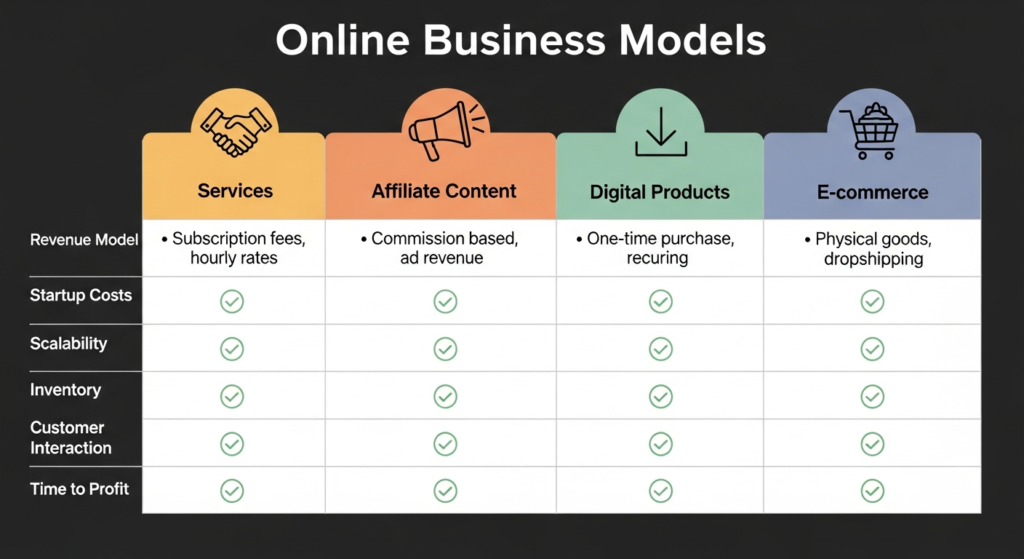
Bottom line: if you’re new, start with services or affiliate content. Services buy time. Content builds assets.
Do both eventually. Just not at the same time on day one.
The Skill Stack That Makes You Unfireable
Here’s the part that “overnight success” gurus hate: skills are the moat.
Platforms change. CPMs change. Algorithms change. Skills travel.
So what skills actually move the needle for making money online?
The Core Stack
- Copywriting: Not “clever.” Clear. Outcome-focused. Objection-aware.
- Offer design: Who is it for, what do they get, why is it worth it, why now?
- Distribution: SEO, short-form, communities, partnerships, email.
- Analytics: You don’t need a data science degree. You need to know what’s working.
- Basic web ops: Site speed, tracking, publishing workflow, and not breaking WordPress weekly.
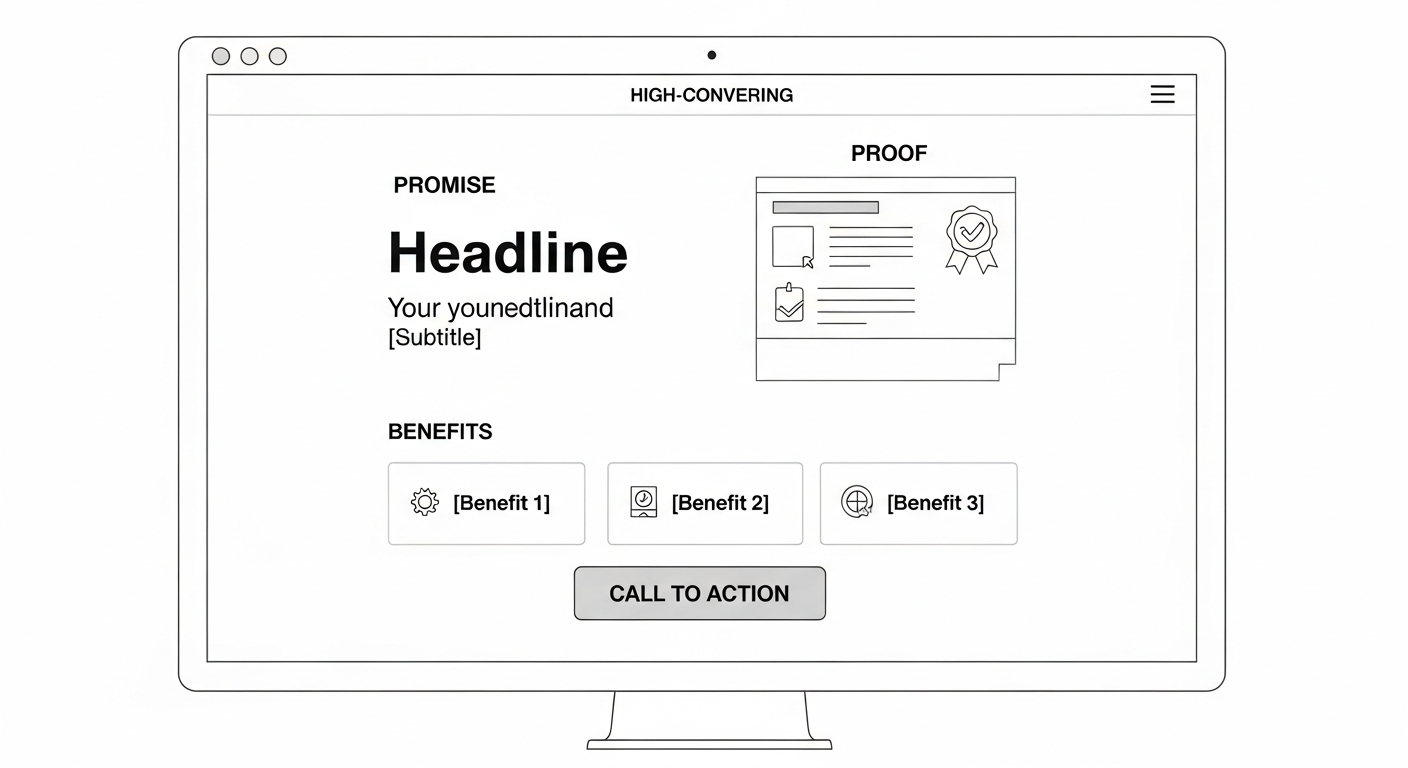
If you want a single “starter superpower,” learn how to write pages that convert.
That means your page answers the question, proves credibility, and tells people what to do next. No mystery tours.
You’ll also want a working “system brain” so your process doesn’t collapse when you get busy. Document it in your Start Here plan so you aren’t reinventing your week every Monday.
One more thing: your skill stack should match your lane.
- Services: sales + delivery + client management.
- Affiliate content: SEO + writing + trust building.
- Digital products: positioning + audience + support.
- E-commerce: ops + margin management + customer experience.
Fast forward to what most people skip: traffic.
Traffic: The Part Everyone Tries to Skip
Traffic is the oxygen. No oxygen, no fire. Just smoke and motivational quotes.
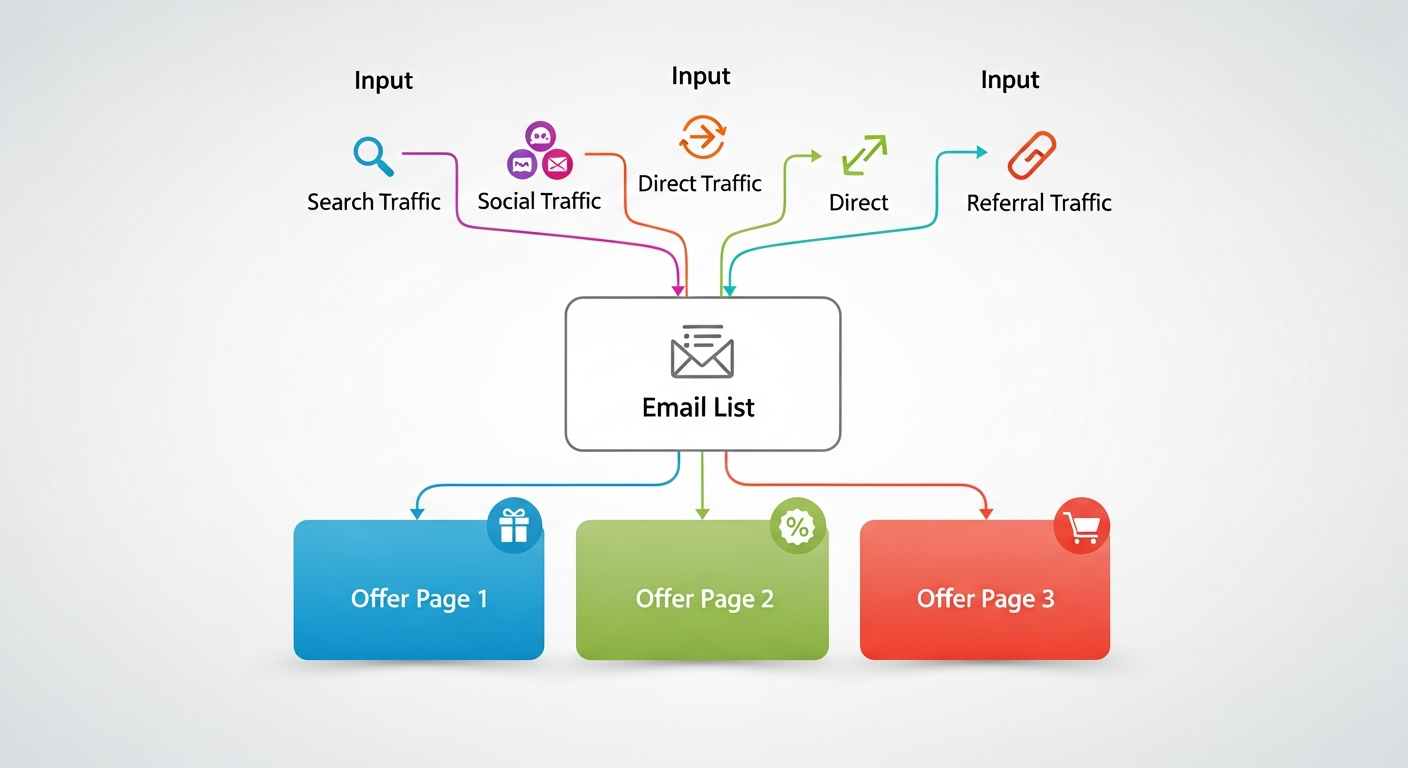
There are three traffic buckets that matter:
- Search: People already looking for the answer.
- Social: You borrow attention by earning engagement.
- Direct: Email lists, communities, repeat visitors.
Beginners should bias toward search + email. Social can work, but it’s volatile. Search is slower, but it’s intent-rich.
Search traffic (SEO) without the fairy dust
SEO is not “write a blog and pray.” It’s matching intent and proving usefulness.
Here’s what actually works:
- Pick problems people type into Google. Not topics you feel like writing about.
- Answer fast. Put the solution near the top. Make it scannable.
- Build clusters. One pillar + supporting posts that link intelligently.
- Update winners. Improve what ranks instead of endlessly publishing new stuff.
And yes, internal linking matters. Not as a “SEO hack,” but as a way to move people through your system.
Use your roadmap hub as the “home base” link you weave naturally: Start Here roadmap.
Social traffic (use it, don’t marry it)
Short-form can spike views. Great. But views are not revenue.
Your job is to convert attention into an owned channel. That means pushing to email, a community, or a clear offer page.
Direct traffic (the asset everyone underestimates)
Email is still the closest thing to printing money that’s legal and boring.
Build a simple lead magnet: a checklist, a template, a short guide. Then automate follow-up.
If you don’t know what to build first, write it down as a 30-day plan on your roadmap page. Decisions beat motivation.
Conversion: Turning Clicks into Cash
This is where most “make money online” attempts die. Not because they don’t get traffic.
Because they waste it.
Conversion is the discipline of not letting interested people disappear.
Step 1: Clarify the next action
Every page should have one primary outcome:
- Subscribe
- Buy
- Book a call
- Click to a recommendation
If your page has five competing calls-to-action, you’re basically yelling in five directions and wondering why no one moves.
Step 2: Reduce friction
Friction is anything that makes a user think, “Ugh.”
- Slow site
- Walls of text
- Vague promises
- No proof
- Confusing navigation
One of the cheapest conversion boosts: rewrite the first 120 words so the user immediately sees they’re in the right place.
Step 3: Capture leads (even if you sell affiliates)
Affiliate marketers love sending people away to Amazon and then… goodbye forever.
That’s not a business. That’s a leak.
Capture email first when possible. Offer a checklist like “10 tools I’d buy again” or a “30-day plan.” Then recommend products inside emails and content.
Keep your funnel logic documented where you’ll actually look at it: your Start Here roadmap.
Step 4: Use proof like an adult
Proof is not “I made $10,000 yesterday.” Proof is:
- Screenshots with context
- Case studies
- Before/after metrics
- Specific outcomes for specific people
And if you don’t have proof yet? Use process proof: show your method, your tools, your checklist, your decision rules.
Systems: Tools, Automation, and Not Burning Out
Online income isn’t hard because the tactics are complex.
It’s hard because you repeat tasks manually until you hate your own project.
Systems win when motivation dies.
Your minimum viable operating system
- Idea capture: One place for content and offer ideas (not 12 sticky notes and a half-forgotten app).
- Publishing checklist: Titles, intro, CTA, internal links, images, schema, indexing.
- Promotion routine: What happens after you publish (this is where adults separate from dabblers).
- Measurement: Weekly review: traffic, clicks, leads, sales.
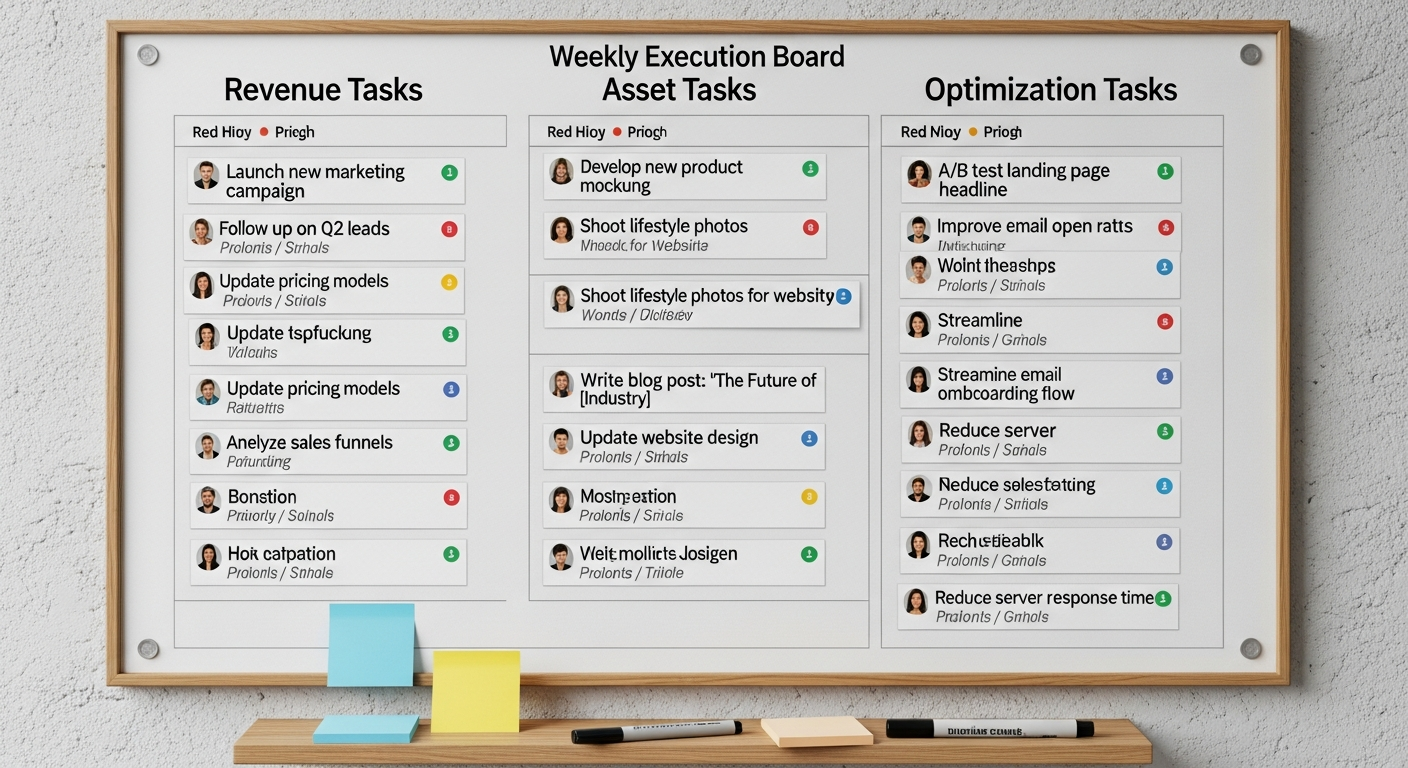
You want a ruthless weekly cadence:
- Monday: choose 1 revenue action + 1 asset action.
- Wednesday: ship the asset (post/video/email).
- Friday: promote + update one existing page.
Write that cadence into your operating hub so you don’t “forget” when life gets busy: Start Here roadmap page.
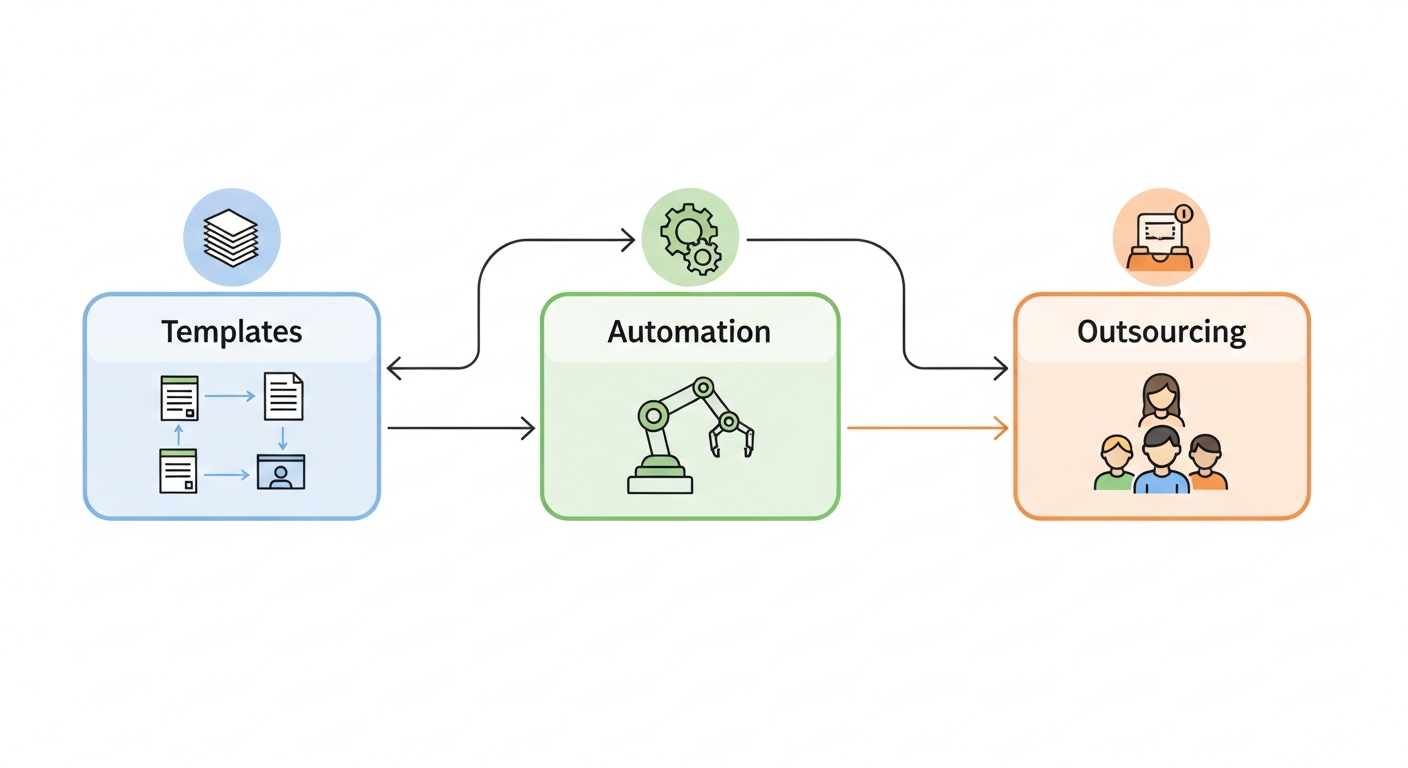
Automation that’s worth it (and what isn’t)
Worth it:
- Email onboarding sequence
- Template-based content briefs
- Reusable page blocks in WordPress
- Checklists that prevent stupid mistakes
Not worth it (early):
- Complex “AI content factories” that publish 200 pages you can’t maintain
- Buying five tools you don’t understand
- Obsessing over logo design while your offer is unclear
Bottom line: automate after you have a process that works. Otherwise you’re just automating confusion.
Scams, Red Flags, and “Guru Physics”
This section will save you money. Possibly your dignity.
Red flag #1: The business model is vague.
If someone can’t explain how money is made in one sentence, it’s either a scam or a cult with a checkout page.
Red flag #2: It’s “easy” and “anyone can do it.”
Any legit model has a constraint: skills, capital, time, distribution, or relationships. If they pretend constraints don’t exist, they’re selling fantasy.
Red flag #3: Recruiting is the product.
If the main way to “win” is getting others to join, that’s not entrepreneurship. That’s musical chairs.
Red flag #4: They hide behind “mindset” when asked for proof.
Mindset matters. It’s not a substitute for a working offer and a conversion path.
Red flag #5: They sell tools before teaching fundamentals.
Tools are multipliers. Multiplying zero still gets you zero.
Want a practical filter? Ask three questions:
- Who pays?
- For what outcome?
- Why would they choose you?
If you can’t answer those, you don’t have a business yet. You have a hobby with ambition.
Put your answers into a one-page plan and keep it visible inside your roadmap. Clarity compounds.
A 30-Day Execution Plan (No Fantasy Required)
This is the part where you stop collecting ideas like Pokémon cards and start building something that pays.
Goal of 30 days: prove a repeatable process. Not perfection. Proof.
Days 1–3: Choose the lane and the offer
- Pick one model: services OR affiliate content OR a simple digital product.
- Define one audience: “small local businesses” beats “everyone.”
- Write one offer: what you do, for whom, what result, what price.
One sentence offer example (services): I help WordPress sites load in under 2 seconds so they rank and convert better.
Days 4–10: Build the minimal platform
- A simple site or landing page
- One lead magnet (checklist/template)
- One email sequence (5–7 emails)
- One “proof” asset (case study, teardown, or process walkthrough)
Use your Start Here hub as your checklist HQ: Start Here roadmap page.
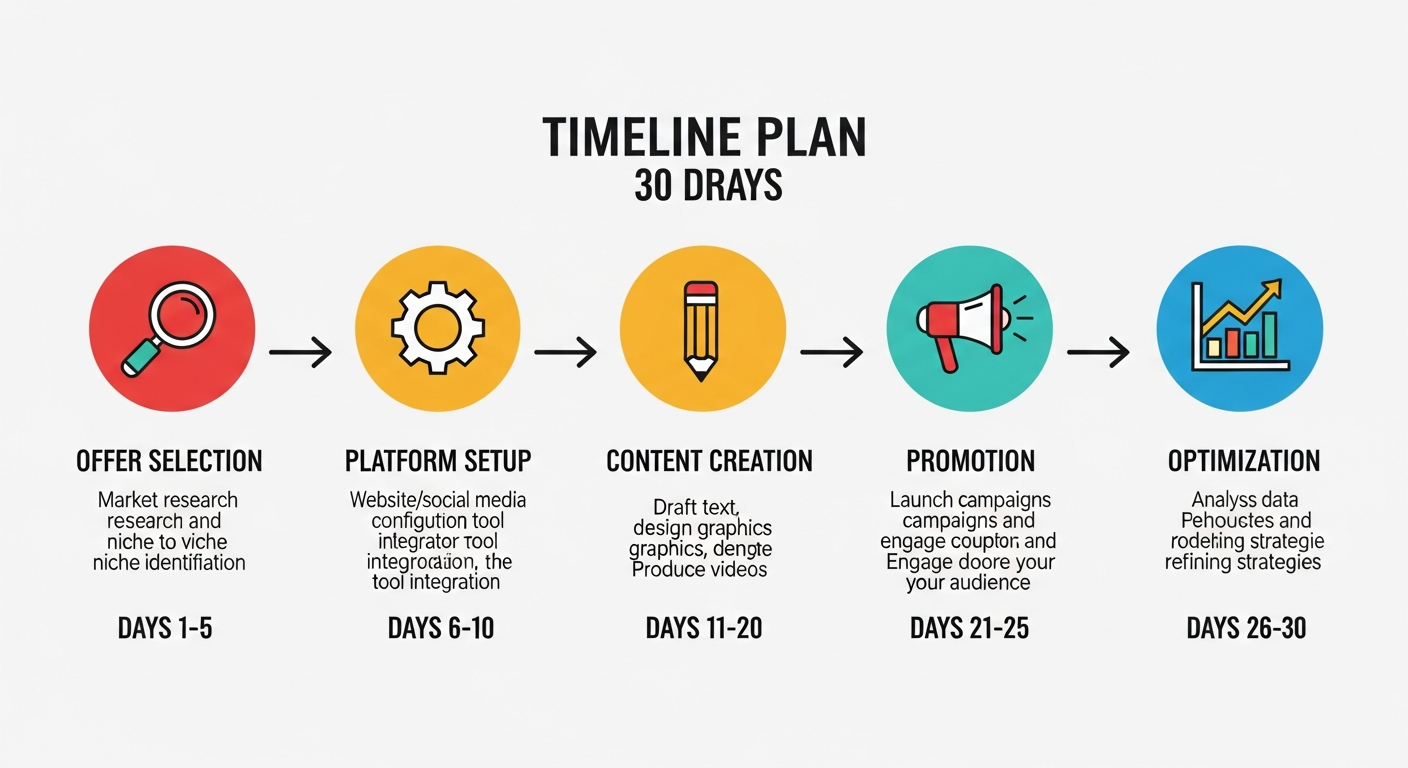
Days 11–20: Publish and distribute (the real work)
Pick one distribution channel and go deep:
- SEO: publish 3–5 posts that target long-tail intent
- Short-form: 10–20 clips that point to one lead magnet
- Outreach: 30–50 targeted messages with a clear offer
Rule: every piece of content points to the same next step.
No “link in bio” chaos. No 14 different CTAs. One path.
Days 21–30: Optimize what moved
- Double down: expand the post/video that got traction
- Improve conversion: rewrite the first 120 words, simplify CTAs
- Add internal links: connect related pages so authority flows
- Collect objections: turn questions into FAQs and new content
This is where compounding starts. Not when you “learn another method.”
When you improve the method you’re already running.
Bottom line: if you do this for 30 days, you’ll be ahead of 90% of people who are still “researching.”
Tools & Gear That Pay for Themselves
Let’s be adults about tools: tools don’t create skill, but they can remove friction.
If you’re building content, doing calls, recording videos, or running a site, a few basics are worth buying once.
Recommended gear for content + client work
1) A decent USB microphone (because sounding like you’re calling from inside a washing machine is not a brand strategy).
2) A webcam or simple camera upgrade (trust is visual; muddy video screams “low effort”).
3) Basic lighting (cheap upgrade, huge perceived quality jump).
4) A notebook you actually use (yes, analog still wins for thinking and planning).
5) A solid book on persuasion and direct response (because “winging it” is expensive).
Notice what’s missing: overpriced “guru tool stacks” with 19 subscriptions. Start lean.
And keep your execution plan visible so tools don’t become procrastination cosplay: Start Here roadmap.
Frequently Asked Questions
How much money can a beginner realistically make online in the first 30 days?
Most beginners won’t replace a salary in 30 days. The realistic win is proving a repeatable process: landing a first client, making the first few affiliate commissions, or collecting leads. If you can consistently create value, distribute it, and convert it, income can scale after the first month.
Do I need a big social following to make money online?
No. You need targeted attention, not mass attention. Search traffic, communities, partnerships, and direct outreach can outperform a huge but unfocused audience. The better question is whether you can match a specific intent with a specific offer.
What’s the fastest legit online business model for beginners?
Service-based work is usually the fastest because someone pays you for a result right now. Freelancing, consulting, or productized services can generate cash while you build longer-term assets like content, email lists, and digital products.
Is affiliate marketing still worth it in 2026?
Yes, if you treat it like performance publishing, not lottery tickets. The winners build trust, publish helpful comparisons, capture email, and focus on long-tail intent. If you’re spamming links on social, you’re competing in the worst arena with the worst players.
How do I avoid scams when trying to make money online?
Use a simple filter: if it hides the business model, requires payment to access vague “secrets,” promises easy results without skills, or relies on recruiting over selling a real product, walk away. Legit models have clear customers, clear value, and clear math.
Exit Strategy: The Insider Takeaway
Here’s the insider takeaway that actually matters: Make Money Online is not a tactic. It’s a system.
Pick a lane. Build the skill stack. Get targeted traffic. Capture attention into an owned channel. Convert with one clear next step. Then optimize what works until it feels boring.
And if you want the simplest way to stay on track, keep one page as your command center: the Start Here roadmap page.
Bottom line: if your plan relies on luck, it’s not a plan.
Build the machine. Then let the machine pay you back.
Personal sign-off: If you catch yourself buying another course, close the tab and ship one thing today. Your future self will be obnoxiously grateful.
As an Amazon Associate, I earn from qualifying purchases.